The Thomistic Institute
2,030 episodes — Page 23 of 41
A Thomistic Take on Emotional Tumult | Sister Anna Wray, O.P.
This lecture was given on April 26, 2023 at the University of Arizona. For more information on upcoming events, please visit our website at www.thomisticinstitute.org. About the Speaker: Sr. Anna Wray is a native of Connecticut and a member of the Dominican Sisters of Saint Cecilia. Sister received her PhD in philosophy from The Catholic University of America, having written her dissertation on Aristotle’s account of the activity of contemplation. Sister is on faculty in CUA's School of Philosophy.
What Natural Rights Do I have? w/ Prof. V. Bradley Lewis (Off-Campus Conversations)
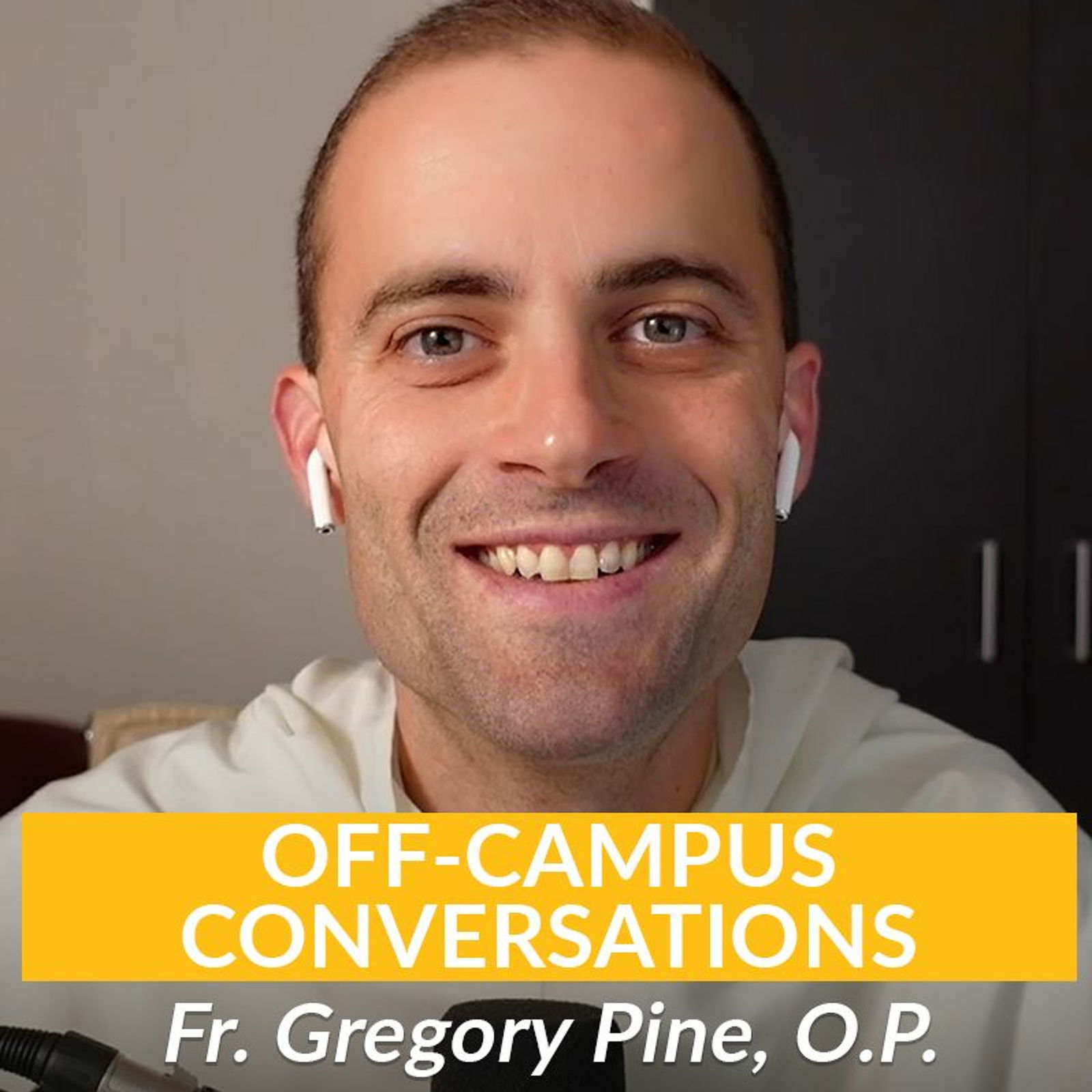
Join Fr. Gregory Pine, O.P. of Aquinas 101, Godsplaining, and Pints with Aquinas for an off-campus conversation with Dr. V. Bradley Lewis about his latest Thomistic Institute, "It's My Right: What Are Natural Rights and What Rights Do We Have?". What Natural Rights Do I Have? w/ Dr. V. Bradley Lewis and Fr. Gregory Pine (Off-Campus Conversations) You can listen to the original lecture here: https://soundcloud.com/thomisticinstitute/prof-v-bradley-lewis-its-my-right-what-are-natural-rights-and-what-rights-do-we-have For more information please visit thomisticinstitute.org. About the speaker: V. Bradley Lewis is associate professor in the School of Philosophy in the Catholic University of America. He specializes in political and legal philosophy, especially that of the classical Greeks and in the Thomistic tradition, and is currently working on a book on the idea of the common good. In addition to these things he has served as a consultant on ethics to the federal government, testified before a congressional subcommittee about immigration, and currently serves as associate editor of the American Journal of Jurisprudence.
Affliction, Sorrow, and Human Flourishing | Prof. Thomas Hibbs
This talk was given on April 12th, 2023 at the University of South Carolina. For more information please visit thomisticinstitute.org. About the speaker: Thomas Hibbs is currently J. Newton Rayzor Sr. Professor of Philosophy at Baylor University, where he is also Dean Emeritus, having served for 16 years as Dean of the Honors College and as Distinguished Professor of Ethics and Culture. Hibbs received a Ph.D. from the University of Notre Dame and has served as tutor at Thomas Aquinas College, Full Professor and Department Chair of Philosophy at Boston College, and President of the University of Dallas. Hibbs works in the areas of medieval philosophy, especially Thomas Aquinas, contemporary virtue ethics, and aesthetics. He has published more than thirty scholarly articles and seven books, as well as 100 reviews and discussion articles on film, theater, art, and higher education in a variety of venues.
Can a Biologist Believe in the Existence of Life? | Prof. Stephen Meredith
This lecture was given on March 8, 2023 at Vanderbilt University. The handout for this lecture can be found here: https://tinyurl.com/yw4y92cn. For more information on upcoming events, please visit our website at www.thomisticinstitute.org. About the speaker: Stephen Meredith is a professor at the University of Chicago’s Departments of Pathology, Biochemistry and Molecular Biology, and Neurology. He is also an associate faculty member in the University of Chicago Divinity School. He has published more than 100 journal articles, focusing on the biophysics of protein structure. Much of his work has been the application of solution and solid-state NMR to the study of amyloid proteins associated with neurodegenerative diseases such as Alzheimer’s Disease. He has also published articles on literature and philosophy in diverse aspects of medical humanities and bioethics. His teaching includes courses to graduate students in biochemistry and biophysics, medical students, and undergraduates and graduate students in the humanities, including courses on James Joyce’s Ulysses, St. Thomas Aquinas, Augustine, Dostoevsky (focusing on Brothers Karamazov), Thomas Mann and David Foster Wallace. He is currently working on a book examining disease and the theological problem of evil. Other current writing projects include a study of James Joyce and the problem of evil.
Does God Exist? | Prof. Gaven Kerr
This lecture was given on March 29, 2023 at Trinity College Dublin. For more information on upcoming events, please visit our website at www.thomisticinstitute.org. About the speaker: Gaven Kerr is a married father of three and a third order Dominican. He has degrees in scholastic philosophy and philosophy from Queen’s University Belfast: BA, MPhil, and PhD. His doctoral research was on the thought of Thomas Aquinas and Immanuel Kant. Gaven’s research focuses on the thought of St Thomas Aquinas and his connection with other important thinkers in the history of philosophy and theology. He has published articles in the Thomist, the American Catholic Philosophical Quarterly, International Philosophical Quarterly, Journal of Philosophical Research, Yearbook of the Irish Philosophical Society. Gaven has two books with Oxford University Press. The first was published in 2015, Aquinas’s Way to God, and it dealt with Aquinas’s proof of God in the De Ente et Essentia. His second book which is due out later this year is on Aquinas and the metaphysics of creation. Gaven has taught philosophy at Queen’s University Belfast, St. Malachy’s Seminary Belfast, and Maynooth University. He has taught theology at Mary Immaculate College Limerick. He currently teaches philosophy at St. Patrick’s College, Maynooth.
The Trouble with AI: It’s Not What You Think! | Prof. James Madden
This lecture was given on March 7, 2023 at North Carolina State University. The handout for this lecture can be found here: https://tinyurl.com/3t2jnkc4. For more information on upcoming events, please visit our website at www.thomisticinstitute.org. About the speaker: James Madden is Professor of Philosophy at Benedictine College. He lives in Atchison, Kansas with his wife (Jennifer) and their six children; William, Martha, J. Patrick, Brendan, Jack, and Cormac. He is originally from Wisconsin, where he received a B.A. from St. Norbert College, and did his graduate work at Kent State (MA, 1998) and Purdue (Ph.D., 2002). He was awarded the Benedictine College Distinguished Educator of the Year Award in 2006.
Saved by Works? The Catholic Theology of Salvation | Prof. Matthew Thomas
This lecture was given at the University of Washington on January 27, 2023. For more information about upcoming events, please visit our website at thomisticinstitute.org About the speaker: Dr. Matthew J. Thomas is Assistant Professor of Biblical Studies and Theology Department Chair at the Dominican School of Philosophy and Theology in Berkeley, CA, and an instructor in Theology with Regent College, Vancouver. He received a D.Phil in Theology (New Testament and Patristics) from the University of Oxford. He is the author of Paul's 'Works of the Law' in the Perspective of Second Century Reception, which received the Jesus Creed Book of the Year award in 2018. His research areas include Pauline theology, patristics (particularly the ante-Nicene period), and early Christian interpretation of Scripture. Matthew and his wife Leeanne live in California with their four children, Camille, Raphael, Michael and Agnes, who are also aspiring theologians.
How Does Christ Save Us? w/ Prof. Ross McCullough (Off-Campus Conversations)
Join Fr. Gregory Pine, O.P. of Aquinas 101, Godsplaining, and Pints with Aquinas for an off-campus conversation with Prof. Ross McCullough. How Does Christ Save Us? w/ Prof. Ross McCullough and Fr. Gregory Pine (Off-Campus Conversations) You can listen to the original lecture here: https://soundcloud.com/thomisticinstitute/making-sense-of-the-atonement-prof-ross-mccullough For more information please visit thomisticinstitute.org. About the speaker: Ross McCullough joined George Fox University as an assistant professor of theology and faculty fellow in the George Fox University Honors Program in 2018. He studied patristic theology at the University of Notre Dame before doing a doctorate at Yale University at the intersection of systematic theology and analytic philosophy of religion. Dr. McCullough's first book, Freedom and Sin: Evil in a World Created by God (Eerdmans, 2022) reconciles traditional Christian commitments to, on the one hand, God causing all that is and, on the other, God in no way being responsible for sin. He also has academic publications on the doctrine of hell, the Eucharist, the hermeneutics of Scripture, and liberation theology. His popular articles have appeared in First Things, Commonweal, and America Magazine, among other venues. Dr. McCullough lives with his wife and four children across the street from St. Peter parish in Newberg, where he is on the pastoral council and leads RCIA.
Are Quality of Life' Judgments Ethical? | Prof. Gina Noia
This talk was given on April 10th, 2023 at Ohio State University. For more information please visit thomisticinstitute.org. About the speaker: Gina Maria Noia is an Assistant Professor of Theology and Resident Bioethicist at Belmont Abbey College. She received her Ph.D. in Theology and Health Care Ethics from Saint Louis University. She has served as a clinical ethicist for OSF Saint Francis Medical Center in Peoria, IL and St. Alexius Hospital in St. Louis, MO, and she is published in Christian Bioethics and the Journal of Moral Theology. She and her husband, Justin, love spending time with their vivacious one-year-old boy.
Making Sense of the Atonement | Prof. Ross McCullough
This talk was given at the University of Oregon on March 15, 2023. For more information please visit thomisticinstitute.org. About the speaker: Ross McCullough joined George Fox University as an assistant professor of theology and faculty fellow in the George Fox University Honors Program in 2018. He studied patristic theology at the University of Notre Dame before doing a doctorate at Yale University at the intersection of systematic theology and analytic philosophy of religion. Dr. McCullough's first book, Freedom and Sin: Evil in a World Created by God (Eerdmans, 2022) reconciles traditional Christian commitments to, on the one hand, God causing all that is and, on the other, God in no way being responsible for sin. He also has academic publications on the doctrine of hell, the Eucharist, the hermeneutics of Scripture, and liberation theology. His popular articles have appeared in First Things, Commonweal, and America Magazine, among other venues. Dr. McCullough lives with his wife and four children across the street from St. Peter parish in Newberg, where he is on the pastoral council and leads RCIA.
Thomistic Philosophy as a Remedy for Today's Crisis of Faith | Prof. Francis Beckwith
This talk was given on March 28th, 2023 at Regent University. For more information please visit thomisticinstitute.org. About the speaker: Francis J. Beckwith is Professor of Philosophy & Church-State Studies and Affiliate Professor of Political Science at Baylor University, where he also serves as Associate Director of the Graduate Program in Philosophy. Among his over one dozen books are Never Doubt Thomas: The Catholic Aquinas as Evangelical and Protestant (Baylor University Press, 2019), Defending Life: A Moral and Legal Case Against Abortion Choice (Cambridge University Press, 2007), and Taking Rites Seriously: Law, Politics, and the Reasonableness of Faith (Cambridge University Press, 2015), winner of the American Academy of Religion's prestigious 2016 Book Award for Excellence in the Study of Religion in Constructive-Reflective Studies. He is a graduate of the Washington University School of Law, St. Louis (MJS) as well as Fordham University (PhD, MA, philosophy).
The Error of Beginnings and the Beginning of Errors: Cosmology and Creation | Prof. Warren Carroll
This talk was given on March 23, 2023 at the University of Dallas. For more information please visit thomisticinstitute.org. About the speaker: Dr. William E. Carroll is Distinguished Visiting Professor in the School of Philosophy at Zhongnan University of Economics and Law (Wuhan, China) and Senior Research Fellow at the Collegium of Anton Neuwirth (Bratislava, Slovakia). His specialty is the relationship among the natural sciences, philosophy, and theology, with an emphasis on Thomas Aquinas’s understanding of the doctrine of creation. He is the author of works and articles including Creation and Science: Has Science Eliminated God?; Galileo: Science and Faith; and (with Steven Baldner) Aquinas on Creation. Beginning in 2013, he has spent several weeks each year giving lectures and seminars at various Chinese universities in Beijing, Shanghai, Hangzhou, and Wuhan.
Why is Creation So Central in Early Christian Teaching? | Prof. Lewis Ayres
This talk was given on March 6th, 2023 at Oxford University. For more information please visit thomisticinstitute.org. About the speaker: Lewis Ayres is Professor of Catholic and Historical Theology at Durham University in the United Kingdom. He specializes in the study of early Christian theology, especially the history of Trinitarian theology and early Christian exegesis. He is also deeply interested in the relationship between the shape of early Christian modes of discourse and reflection and the manner in which renewals of Catholic theology during the last hundred years have attempted to engage forms of modern historical consciousness and sought to negotiate the shape of appropriate scriptural interpretation in modernity, even as they remain faithful to the practices of classical Catholic discourse and contemplation. His publications include Augustine and the Trinity (2010) and Nicaea and Its Legacy: An Approach to Trinitarian Theology (2004). He is co-editor of the Cambridge History of Early Christian Literature (2004) and of the Oxford Handbook of Catholic Theology (forthcoming). Professor Ayres has co-edited the Blackwell Challenges in Contemporary Theology series (since 1997), the Ashgate Studies in Philosophy and Theology in Late Antiquity series (since 2007), and has just co-founded with Fortress Press the Renewal: Conversations in Catholic Theology series. He serves on the editorial boards of Modern Theology, the Journal of Early Christian Studies, and Augustinian Studies. He has also served on the board of the North American Patristics Society.
The Influence of Virgil and St. Augustine on Brideshead Revisited | Prof. Patrick Callahan
This talk was given on April 27th, 2023 at Georgetown University. The slides for the lecture can be found here: https://tinyurl.com/yus8cvkx For more information please visit thomisticinstitute.org. About the speaker: Patrick Callahan is director of the Newman Institute for Catholic Thought & Culture at the University of Nebraska-Lincoln as well as Assistant Professor of English & Humanities at St. Gregory the Great Seminary. He did his undergraduate work at the University of Dallas and his graduate work at Fordham University in Classical Philology. While his doctoral work focused on ancient Greek commentaries to the lyric poet Pindar, his recent work focuses on early Jesuit Latin texts.
Overcoming the Science and Religion Divide | Dr. Karin Oberg
This talk was given on March 3rd, 2023 at New York University. For more information please visit thomisticinstitute.org. About the speaker: Karin Öberg is Professor of Astronomy at Harvard University. Her specialty is astrochemistry and her research aims to uncover how chemical processes affect the outcome of planet formation, especially the chemical habitability of nascent planets. Dr. Öberg obtained her B.Sc. in chemistry at Caltech in 2005, and her Ph.D. in astronomy, with a thesis focused on laboratory astrochemistry, from Leiden University in 2009. She did postdoctoral work at Harvard-Smithsonian Center for Astrophysics as a NASA Hubble fellow, focusing on millimeter observations of planet-forming disks around young stars. In 2013 she joined the Harvard astronomy faculty as an assistant professor. She was promoted and named the Thomas D. Cabot Associate Professor in Astronomy in 2016, and promoted to full professor with tenure in 2017. Dr. Öberg’s research in astrochemistry has been recognized with a Sloan fellowship, a Packard fellowship, the Newton Lacy Pierce Award from the American Astronomical Society, and a Simons fellowship. Here recent TED talk explaining some of her research can be found here.
Death and Immortality | Sr. Elinor Gardner, O.P.
This lecture was given on February 8, 2023 at Trinity University, San Antonio. The handout for this lecture can be found here: https://tinyurl.com/yczkuphu. For more information on upcoming events, please visit our website at www.thomisticinstitute.org. About the speaker: Sister Elinor Gardner is a member of the Dominican Sisters of St. Cecilia. Before arriving at University of Dallas, she taught at Aquinas College in Nashville, TN and at The Catholic University of America in Washington, D.C. Her doctoral work (Boston College) was on the ethics of Thomas Aquinas ("St Thomas Aquinas on the Death Penalty").
Classical and Contemporary Answers to the Meaning of Life | Prof. Michael Gorman
This talk was given on February 7th, 2023 at Texas A and M University. For more information please visit thomisticinstitue.org. About the speaker: Michael Gorman is professor of philosophy at The Catholic University of America. He has doctorates in philosophy and theology. He has authored over thirty-five academic papers and a book entitled Aquinas on the Metaphysics of the Hypostatic Union (Cambridge University Press, 2017). His main interests are metaphysics, human nature, and ethics. He is working on a textbook in metaphysics and on a short book on human nature and human dignity.
Are We Our Brains? Neuroscience And The Soul | Doctor Paul LaPenna
This talk was given on February 23, 2023 at the University of South Carolina. For more information please visit thomisticinstitute.org. About the speaker: Dr. Paul LaPenna is a neurologist in Greenville, SC and Associate Professor of Neurology at the Edward Via College of Osteopathic Medicine, Carolinas Campus. Dr. LaPenna completed his neurology residency at Indiana University School of Medicine in 2018. As a neurohospitalist, Dr. LaPenna’s skill set is focused on treatment of neurological emergencies and performing and interpreting electrophysiological studies of the brain and peripheral nervous system. As an Associate Professor of Neurology, Dr. LaPenna has won numerous teaching awards, including Clinical Medicine Professor of the neuroscience curriculum in 2019, 2020, and 2021. For the 2020-2021 academic year, Dr. LaPenna was awarded the Preceptor of the Year. For his care towards patients, he was elected to the Arnold P. Gold Humanism Honor Society in 2016. Dr. LaPenna has an interest in the relationship between science and faith—in particular, the relationship between neuroscience and the soul, the overreaching claims of science, and the dignity of the human person, to name a few. Saint Thomas Aquinas has been a major influence in Dr. LaPenna’s intellectual and faith journey. Dr. LaPenna was previously a collegiate runner and now enjoys running recreationally, hiking, and spending time outdoors. Most of all, he loves his wife Nicole and their two daughters, Catherine and Susanna.
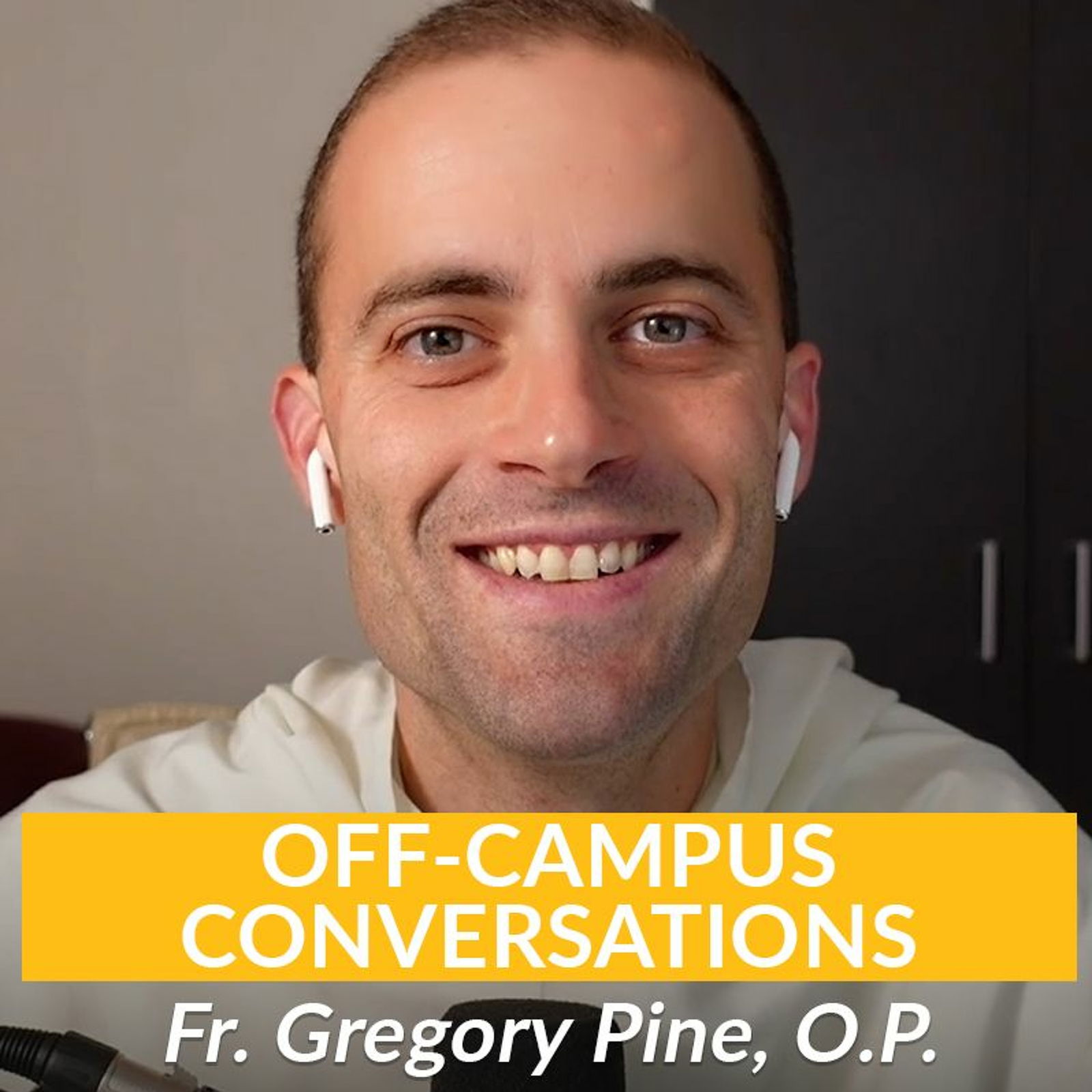
Why the Roman Catholic Church? w/ Prof. Paige Hochschild (Off-Campus Conversations)
Join Fr. Gregory Pine, O.P. of Aquinas 101, Godsplaining, and Pints with Aquinas for an off-campus conversation with Prof. Paige Hochschild. Why the Roman Catholic Church? w/ Prof. Paige Hochschild and Fr. Gregory Pine (Off-Campus Conversations) You can listen to the original lecture here: https://soundcloud.com/thomisticinstitute/why-the-roman-catholic-church-prof-paige-hochschild For more information on upcoming events, please visit our website at www.thomisticinstitute.org. About the speaker: Dr. Paige Hochschild is a professor of historical and systematic theology at Mount St. Mary's University (MD), specializing in Augustine, Thomas Aquinas and the early Church. She also teaches philosophy courses at the Seminary at Mount St. Mary's. She has written a book on the place of memory in Augustine's theological anthropology, and publishes on the Church, education, tradition, 20th c. theological debates within the Church (Scripture, history; marriage).
Peace in the Lives of Gregory of Nazianzus and Augustine of Hippo | Fr. Andrew Hofer, O.P.
This talk was given on February 16th, 2023 at the University of Texas at Austin. For more information please visit thomisticinstitute.org. About the speaker: Fr. Andrew Hofer, O.P., grew up as the youngest of ten children on a farm in Kansas, and studied history, philosophy, and classics at Benedictine College. He then went to St Andrews, Scotland for a Master of Letters in medieval history. He entered the Order of Preachers as a son of the Province of St. Joseph, and was ordained a priest in 2002. After finishing his S.T.L. and serving as an associate pastor for a brief time, he was sent to Kenya as a missionary for two years. He taught at the Tangaza College of The Catholic University of Eastern Africa and other institutions in Nairobi. He returned to the U.S. and completed a Ph.D. in theology at the University of Notre Dame, with the primary area of history of Christianity, specializing in patristic theology with additional studies in medieval theology, and the secondary area of systematic theology. His research appears in such journals as Vigiliae Christianae, Augustinianum, International Journal of Systematic Theology, New Blackfriars, Nova et Vetera, Pro Ecclesia, The Thomist, Communio, and Angelicum and in books published by Catholic University of America Press and Ignatius Press. He is the author of Christ in the Life and Teaching of Gregory of Nazianzus (Oxford Early Christian Studies), Oxford University Press, 2013, and the editor of Divinization: Becoming Icons of Christ through the Liturgy, Hillenbrand Books, 2015.
A Thomistic Approach to Friendship Between the Sexes| Prof. John Cuddeback
This talk was given on February 21st, 2023 at Hillsdale College. For more information please visit thomisticinstitute.org. About the speaker: John A. Cuddeback, PhD, is professor of Philosophy at Christendom College, where he has taught for twenty-five years. He lectures widely on topics including virtue, fatherhood, friendship, and household, and his professional writings appear in various academic journals and books. His book True Friendship is being republished by Ignatius Press. His blogging at BaconFromAcorns and LifeCraft is renowned for applying an ancient wisdom to life today.
Spirit, Soul, and Body According to Thomas Aquinas | Fr. James Brent, O.P.
This talk was given on February 18th, 2023 at the Dominican House of Studies in Washington, D.C. For more information please visit thomisticinstitute.org. About the speaker: Fr. James Brent, O.P. holds a Ph.D. in philosophy from Saint Louis University. While there, he specialized in the rationality of faith. He currently teaches at the Dominican House of Studies in Washington, D.C.
Descartes and 'The Aristotelians' on the Soul as the Life of the Body | Prof. Sarah Byers
This talk was given on Feburary 18th 2023, at the Dominican House of Studies in Washington, D.C. For more information please visit thomisticinstitute.org. About the author: Dr. Sarah Byers is a professor of philosophy at Boston College. Aside from specializing in Augustine, she has also published on Rene Descartes. She received her Ph.D. from the University of Toronto.
Descartes's Soul | Prof. Jorge Secada
This talk was given on February 17th, 2023 at the Dominican House of Studies in Washington, D.C. For more information please visit thomisticinstitute.org. About the speaker: Prof. Jorge Secada is a professor of philosophy from the University of Virginia. He is originally from Peru and received his Ph.D. from the University of York in the United Kingdom. He specializes in late medieval and Renaissance philosophy, as well as early modern philosophy with a special interest in the work of Descartes. He is the author of Cartesian Metaphysics: The Scholastic Origins of Modern Philosophy (Cambridge University Press, 2005).
The Ethics of Human Gene Editing with CRISPR | Fr. Nicanor Austriaco, O.P.
This talk was given on October 5th, 2022 at Dartmouth College. For more information please visit thomisticinstitute.org. About the speaker: Fr. Nicanor Austriaco, O.P., completed his Bachelor’s Degree (B.S.E.) in Bioengineering, summa cum laude, at the University of Pennsylvania, and then earned his Ph.D. in Biology from M.I.T. in the laboratory of Professor Leonard Guarente, where he was a fellow of the Howard Hughes Medical Institute (HHMI). He was ordained a priest in the Order of Preachers in May of 2004. He completed his Pontifical License in Sacred Theology (S.T.L.) in Moral Theology, summa cum laude, at the Dominican House of Studies in Washington, DC, in 2005, and a Pontifical Doctorate in Sacred Theology (S.T.D.), magna cum laude, at the University of Fribourg in Switzerland, in 2015. Fr. Austriaco currently serves as Professor of Biological Sciences & Professor of Sacred Theology at the University of Santo Tomas in Manila, Philippines. Before this position, he was Professor of Biology and of Theology at Providence College in Providence, Rhode Island. His NIH-funded laboratory at Providence College is investigating the genetics of programmed cell death using the yeasts, Saccharomyces cerevisiae and Candida albicans, as model organisms. Papers describing his research have been published in PLoS ONE, FEMS Yeast Research, Microbial Cell, Cell, the Journal of Cell Biology, and the Proceedings of the National Academy of Sciences USA, among others. In philosophy and theology, his essays have been published in the National Catholic Bioethics Quarterly, Theological Studies, Nova et Vetera, The Thomist, Science and Theology, and the Linacre Quarterly. His first book, Biomedicine and Beatitude: An Introduction to Catholic Bioethics, was published by the Catholic University of America Press in 2011. It was recognized as a 2012 Choice outstanding academic title by the Association of College and Research Libraries.
St. Thomas's Five Ways: How to Prove God Exists w/ Dr. Edward Feser(Off-Campus Conversations)
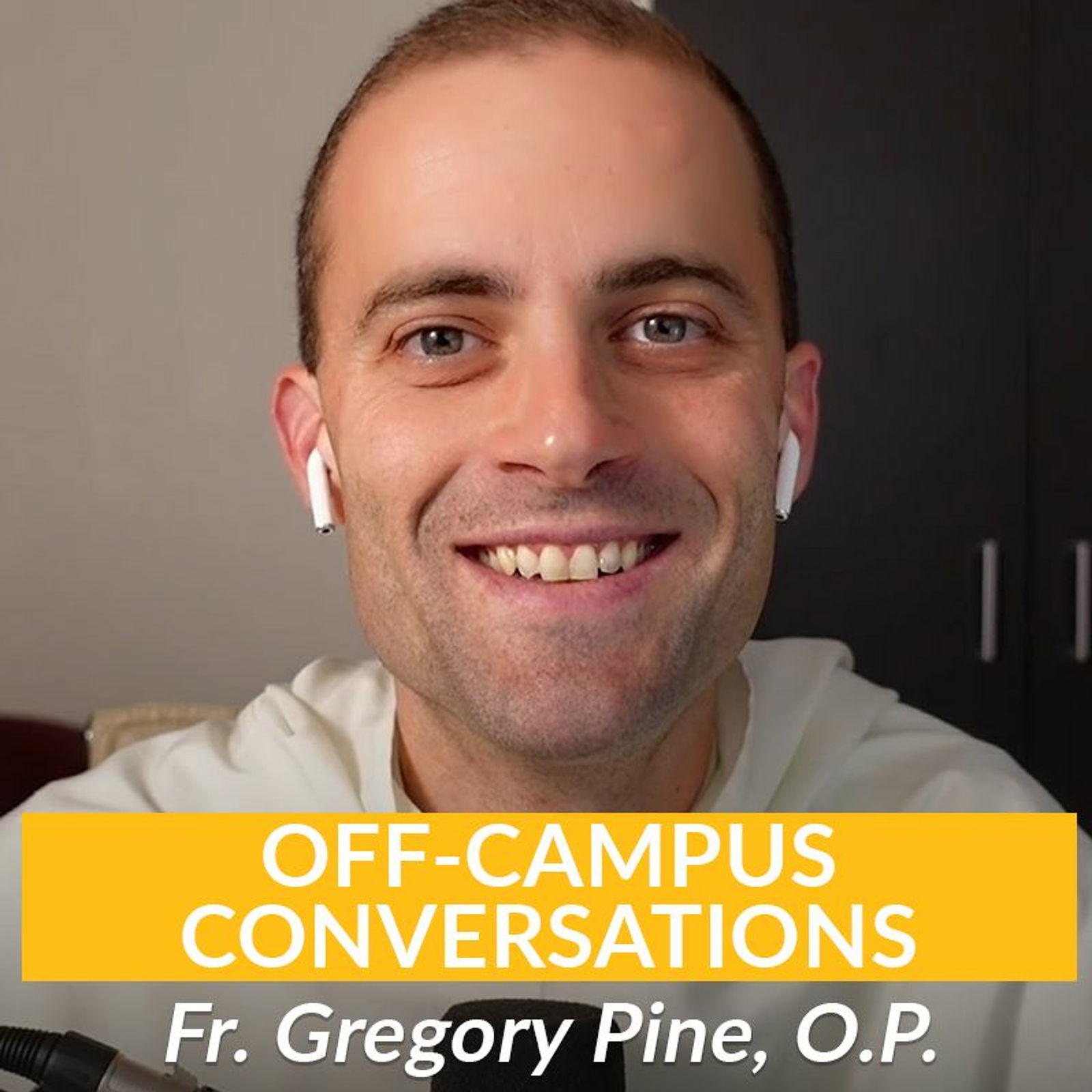
Join Fr. Gregory Pine, O.P. of Aquinas 101, Godsplaining, and Pints with Aquinas for an off-campus conversation with Dr. Edward Feser. St. Thomas's Five Ways: How to Prove God Exists w/ Dr. Edward Feser and Fr. Gregory Pine (Off-Campus Conversations) You can listen to the original lecture here: https://soundcloud.com/thomisticinstitute/demonstrating-the-existence-of-god-prof-ed-feser For more information on upcoming events, please visit our website at www.thomisticinstitute.org. About the speaker: Edward Feser is Professor of Philosophy at Pasadena City College in Pasadena, California. He has been a Visiting Assistant Professor at Loyola Marymount University in Los Angeles and a Visiting Scholar at the Social Philosophy and Policy Center at Bowling Green State University in Bowling Green, Ohio. He holds a Ph.D. in philosophy from the University of California at Santa Barbara, an M.A. in religion from the Claremont Graduate School, and a B.A. in philosophy and religious studies from the California State University at Fullerton.
Proofs for the Existence of God | Prof. Robert Koons
This talk was given on Feburary 7th, 2023 at the University of North Carolina Chapel Hill. For more information please visit thomisticinstitute.org. About the speaker: Robert C. (“Rob”) Koons is a professor of philosophy at the University of Texas at Austin, where he has taught for 33 years. M. A. Oxford, Ph.D. UCLA. He is the author or co-author of four books, including: Realism Regained (Oxford University Press, 2000), and The Atlas of Reality: A Comprehensive Guide to Metaphysics, with Timothy H. Pickavance (Wiley-Blackwell, 2017). He is the co-editor (with George Bealer) of The Waning of Materialism (Oxford University Press, 2010), and co-editor (with Nicholas Teh and William Simpson) of Neo-Aristotelian Perspectives on Contemporary Science (Routledge, 2018). He has been working recently on an Aristotelian interpretation of quantum theory, on defending and articulating Thomism in contemporary terms, and on arguments for classical theism.
Aquinas on the Union of Body and Soul | Prof. Gyula Klima
This talk was given on February 1st, 2023 at Fordham University. For more information please visit thomisticinstitute.org. About the speaker: Born, raised, and educated in Budapest, Hungary, Prof. Klima held postdoc positions in Helsinki, St. Andrews and Copenhagen in the eighties. In 1991, he was hired at Yale University, moved to Notre Dame in 1995, and landed his current position at Fordham in 1999, where he has been a full professor since 2002. He founded and still runs the Society for Medieval Logic and Metaphysics, and edits (together with Prof. Alex Hall) its Proceedings. Recently, he started and has been directing the new Research Center for the History of Ideas (R.C.H.I. --"Archie") in Budapest; currently he divides his time between Budapest and NY, directing Archie in the fall and teaching at Fordham in the Spring. For his detailed CV and list of publications, as well as a number of his papers online, you may wish to visit https://faculty.fordham.edu/klima/ and https://fordham.academia.edu/GyulaKlima
St. Edmund Campion and the Jesuit English Mission of 1580 | Prof. Fionnuala O'Neill Tonning
This lecture was given on November 21, 2022, at the University of Edinburgh. For more information, please visit our website at thomisticinstitute.org. About the speaker: Dr. Fionnuala O’Neill Tonning earned her PhD from University of Edinburgh in 2013. Her dissertation was titled "Beyond Tragedy: Genre and the Idea of the Tragic in Shakespearean Tragedy, History and Comedy.”
The Search for Happiness: Wisdom from Aquinas | Fr. Aquinas Guilbeau. O.P.
This talk was given on February 4th, 2023 at the University of Rochester. For more information please visit thomisticinstitute.org. About the speaker: A native of Louisiana, Fr. Aquinas Guilbeau, O.P., entered the Dominican Province of St. Joseph in 2005. After several years of pastoral work in New York City, Fr. Guilbeau began doctoral studies in moral theology at the University of Fribourg, where he completed a dissertation on St. Thomas Aquinas’s doctrine of the common good. In addition to his teaching, Fr. Guilbeau serves as senior editor of Aleteia.org (English edition).
Does God Exist? | Prof. Michael Gorman
This talk was given on February 17, 2023 at Vanderbilt University. For more information please visit thomisticinstitute.org. About the speaker: Michael Gorman is professor of philosophy at The Catholic University of America. He has doctorates in philosophy and theology. He has authored over thirty-five academic papers and a book entitled Aquinas on the Metaphysics of the Hypostatic Union (Cambridge University Press, 2017). His main interests are metaphysics, human nature, and ethics. He is working on a textbook in metaphysics and on a short book on human nature and human dignity.
Does God Create Through Evolution? | Fr. Mariusz Tabaczek, O.P.
This talk was given on February 16th, 2023 at Trinity College Dublin. For more information please visit thomisticinstitute.org. About the speaker: Mariusz Tabaczek, O.P. is a Polish Dominican and theologian. He holds a Ph.D. in philosophical theology from the Graduate Theological Union in Berkeley, CA and Church Licentiate from the Adam Mickiewicz University in Poznan, Poland. He is a professor of theology and member of the Thomistic Institute at the Pontifical University of Saint Thomas Aquinas in Rome. He is interested in the science-theology dialogue, especially in the issues concerning science and creation theology, divine action, and evolutionary theory. His research also goes to other subjects related to systematic, fundamental, and natural theology, philosophy of nature, philosophy of science (philosophy of biology, in particular), philosophy of causation, and metaphysics. His works address a whole range of topics, including: the notion of species, metaphysics of evolutionary transitions, concurrence of divine and natural causes in evolutionary transitions, definition and role of chance and teleology in evolution, classical and new hylomorphism, classical and contemporary (analytical) concepts of causation, emergence, science-oriented panentheism and its critique, and various aspects of divine action in the universe. He published a number of articles on metaphysics and the issues concerning the relation between theology and science, and two monographs: Emergence. Towards A New Metaphysics and Philosophy of Science (University of Notre Dame Press 2019) and Divine Action and Emergence. An Alternative to Panentheism (University of Notre Dame Press 2020). His upcoming third monograph will concentrate on the contemporary Aristotelian-Thomistic view of theistic evolution (Cambridge University Press, 2023).
The God of the Bible and the God of the Philosophers | Prof. Eleonore Stump
This talk was given via Zoom to the students at Trinity Western University on February, 9th 2023. For more information please visit thomisticinstitute.org. About the speaker: Eleonore Stump is the Robert J. Henle Professor of Philosophy at Saint Louis University, where she has taught since 1992. She is also Honorary Professor at Wuhan University and at the Logos Institute, St.Andrews, and she is a Professorial Fellow at Australian Catholic University. She has published extensively in philosophy of religion, contemporary metaphysics, and medieval philosophy. Her books include her major study Aquinas (Routledge, 2003), her extensive treatment of the problem of evil, Wandering in Darkness: Narrative and the Problem of Suffering (Oxford, 2010), and her far-reaching examination of human redemption, Atonement (Oxford, 2018). She has given the Gifford Lectures (Aberdeen, 2003), the Wilde lectures (Oxford, 2006), the Stewart lectures (Princeton, 2009) and the Stanton lectures (Cambridge, 2018). She is past president of the Society of Christian Philosophers, the American Catholic Philosophical Association, and the American Philosophical Association, Central Division; and she is a member of the American Academy of Arts and Sciences.
Aquinas’s ‘First Way’ Argument: In What Way Does it Prove God’s Existence? | Prof. Gregory Doolan
This talk was given at the United State Military Academy at West Point on February 7th, 2023. For more information please visit thomisticinstitute.org. About the speaker: Gregory T. Doolan received his B.A. in political theory from Georgetown University in 1993 and his Ph.D. in philosophy from The Catholic University of America in 2003. He taught philosophy at the Dominican House of Studies in Washington, D.C. from 2004–05 and joined the faculty of the School of Philosophy at the Catholic University of America in 2005. Dr. Doolan’s research interest is in the area of Aquinas’s metaphysics; in recent years, his focus has been on Aquinas’s account of the Aristotelian categories of being. A native of Philadelphia, Dr. Doolan currently lives in Washington, D.C. with his wife and three children.
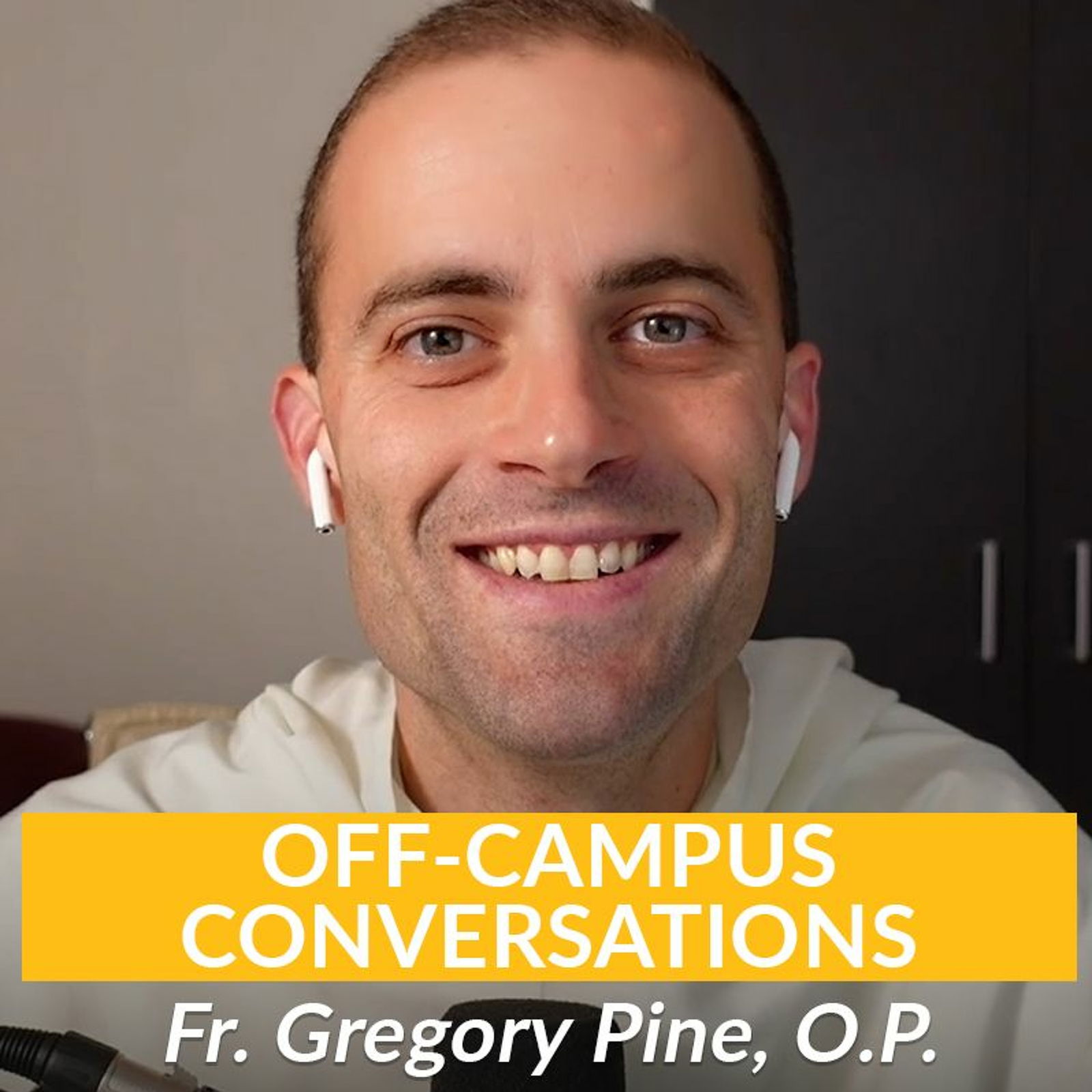
Adam and Eve after the Pill, Revisited w/ Mary Eberstadt (Off-Campus Conversations)
Join Fr. Gregory Pine, O.P. of Aquinas 101, Godsplaining, and Pints with Aquinas for an off-campus conversation with Mary Eberstadt about her latest book, "Adam and Eve after the Pill, Revisited" Adam and Eve after the Pill, Revisited w/ Mary Eberstadt and Fr. Gregory Pine (Off-Campus Conversations) For more information on upcoming events, please visit our website at www.thomisticinstitute.org. To read more about Mary Eberstadt, please visit her website at https://maryeberstadt.com/
God, Creation, and the Act of Existence | Prof. Gaven Kerr
This talk was given on February 6th, 2023 at Oxford University. For more information on upcoming events, please visit our website at thomisticinstitute.org. About the speaker: Gaven Kerr is a third-order Dominican and philosophy professor at St. Patrick's Pontifical University. He is the author of numerous academic papers and two books on Aquinas' metaphysics. He is also a father and MMA fighter.
Can a Catholic Be a Classical Liberal? | Prof. Erik Dempsey
The handout for this lecture may be found here: https://tinyurl.com/5f2ebxm5 This lecture was given on February 2, 2023, at the University of Kansas. For more information about upcoming events, please visit our website at www.thomisticinstitute.org. About the speaker: Erik Dempsey (PhD, Boston College) is the Assistant Director of University of Texas at Austin's Thomas Jefferson for the Study of Core Texts and Ideas. He completed his doctorate at Boston College in June 2007. He is interested in understanding human virtue, and the proper place of politics in a well-lived human life, the different ways in which human virtue is understood in different political situations, and the ways in which human virtue may transcend any political situation. His dissertation looks at Aristotle's treatment of prudence in the Nicomachean Ethics, and Aristotle's suggestion that virtue should be understood as an end in itself. He is adding a discussion of Thomas's discussion on Aristotle in order to prepare the dissertation as a book. He teaches many classes for the Thomas Jefferson Center, including, Jerusalem and Athens (on the ethical and political teaching of the Bible and Aristotle); Theoretical Foundations of Modern Politics; The Bible and Its Interpreters; The Question of Relativism; Ancient Philosophy and Literature; and American Political Thought.
Fire in the Head: Paganism in Irish Christianity | Fr. Conor McDonough, O.P.
The handout for the lecture may be found here: https://tinyurl.com/3fd6hsvh This lecture was given on January 26, 2023, at Trinity College Dublin. For more information on upcoming events, please visit our website at www.thomisticinstitute.org. About the speaker: Fr. Conor McDonough, O.P., is a Dominican friar from Galway. He studied science and theology at the University of Cambridge and taught theology at secondary school before joining the Order of Preachers in 2009. He was ordained a priest in 2016 and undertook further studies in theology at the University of Fribourg (Switzerland), focusing on the writings of St. Thomas Aquinas and John Calvin. He is currently based in Dublin where he teaches theology to the students at the Dominican House of Studies in Dublin.
The Problem of Evil, Dystopia, and Dostoevsky's ‘The Brothers Karamazov' | Prof. Stephen Meredith
The speaker's handout may be found here: https://tinyurl.com/mry498c9 This lecture was given on February 15, 2023, at the University of Nebraska-Lincoln. For more information on upcoming events, please visit our website at thomisticinstitute.org. About the speaker: Stephen Meredith is a professor at the University of Chicago’s Departments of Pathology, Biochemistry and Molecular Biology, and Neurology. He is also an associate faculty member in the University of Chicago Divinity School. He has published more than 100 journal articles, focusing on the biophysics of protein structure. Much of his work has been the application of solution and solid-state NMR to the study of amyloid proteins associated with neurodegenerative diseases such as Alzheimer’s Disease. He has also published articles on literature and philosophy in diverse aspects of medical humanities and bioethics. His teaching includes courses to graduate students in biochemistry and biophysics, medical students, and undergraduates and graduate students in the humanities, including courses on James Joyce’s Ulysses, St. Thomas Aquinas, Augustine, Dostoevsky (focusing on Brothers Karamazov), Thomas Mann and David Foster Wallace. He is currently working on a book examining disease and the theological problem of evil. Other current writing projects include a study of James Joyce and the problem of evil.
Neuroscience and Human Freedom | Prof. James Madden
This lecture was given on February 2, 2023, at the University of California, Santa Barbara. For more information on upcoming events, please visit our website at www.thomisticinstitute.org. About the speaker: James Madden is Professor of Philosophy at Benedictine College. He lives in Atchison, Kansas with his wife (Jennifer) and their six children; William, Martha, J. Patrick, Brendan, Jack, and Cormac. He is originally from Wisconsin, where he received a B.A. from St. Norbert College, and did his graduate work at Kent State (MA, 1998) and Purdue (Ph.D., 2002). He was awarded the Benedictine College Distinguished Educator of the Year Award in 2006.
Wrath and Love: Do the Old and New Testaments Have the Same God? | Prof. Paul Gondreau
Professor Paul Gondreau discusses the perceived dichotomy between the wrathful God of the Old Testament and the loving God of the New Testament, arguing that they are the same God, with the differences in portrayal being due to the principle of accommodation and the incremental moral development of humanity.This lecture was given on January 31, 2023, at Yale University. For more information on upcoming events, please visit our website at www.thomisticinstitute.org. About the speaker:Paul Gondreau earned his doctorate in sacred theology from the University of Fribourg, Switzerland, writing under the renowned Thomist scholar Rev. Jean-Pierre Torrell, O.P. He is professor of theology at Providence College in Rhode Island, where he teaches/has taught courses on marriage, Christology, the theology of Thomas Aquinas, the Church, the Eucharist, the Sacraments, and the Catholic thought of J.R.R. Tolkien. He has a published manuscript on Christ's human passions in the theology of St. Thomas Aquinas and has published numerous essays in the area of Thomistic Christology, Thomistic anthropology, a Thomistic account of human sexuality, and a Thomistic theology of disability. He is associate editor of the theological journal Nova et Vetera, and has served as a consultant to the USCCB's committee on marriage and family.
Humanity's Original State | Prof. Reinhard Hütter
This lecture was given on January 27, 2023, at the Dominican House of Studies in Washington, D.C., for the annual Aquinas Lecture in honor of St. Thomas Aquinas. For more information on upcoming events, please visit our website at www.thomisticinstitute.org. About the speaker: Dr. Reinhard Huetter is Ordinary Professor of Fundamental Theology at the School of Theology and Religious Studies of The Catholic University. Professor Huetter is a native of Lichtenfels, Germany. He received his Dr. theol. (summa cum laude) in 1990, and his Habilitation in 1995, both from the University of Erlangen. He taught for nine years theological ethics and systematic theology at the Lutheran School of Theology at Chicago and for seventeen years systematic theology at Duke University Divinity School. In 2004, he and his wife entered into the full communion of the Catholic Church. His teaching and research focuses on fundamental theological questions of the relationship between faith and reason, nature and grace, revelation and faith, theology and philosophy, dogma and history, on questions of theological anthropology (grace and freedom), and the theology and epistemology of faith. He has an abiding interest in the thought of Thomas Aquinas and has, in more recent years, developed also an intense interest in the thought of John Henry Newman. Huetter is the author of numerous books, most recently Dust Bound for Heaven: Explorations in the Theology of Thomas Aquinas (2012) and Divine Happiness: Aquinas on the Journey to Beatitude, the Ultimate Human End (forthcoming 2018) and has contributed numerous chapters to handbooks and edited collections. He is presently working on a theological commentary on Psalm 119, a small book on John Henry Newman, and a theological treatise on Doctrine: Its Nature and Development.
The Spousal Meaning of the Body and Chastity in Christian States of Life | Fr. Thomas Petri, O.P.
This talk was given on January 28, 2023, at the Dominican House of Studies in Washington, D.C., as part of the intellectual retreat entitled, "Theology of the Body." For more information on upcoming events, please visit our website at www.thomisticinstitute.org. About the speaker: Father Thomas Petri, O.P. is the President of the Immaculate Conception at the Dominican House of Studies, where he also serves as an assistant professor of moral theology and pastoral studies. Ordained a priest in 2009, he holds a Doctorate in Sacred Theology from The Catholic University of America.
Does Tradition 'Develop' Over Time? w/ Prof. Lewis Ayres (Off-Campus Conversations)
Join Fr. Gregory Pine, O.P. of Aquinas 101, Godsplaining, and Pints with Aquinas for an off-campus conversation with Dr. Lewis Ayres about his latest Thomistic Institute, "Does Tradition Live? Do Doctrines 'Develop'?" Does Tradition 'Develop' Over Time? w/ Prof. Lewis Ayres and Fr. Gregory Pine (Off-Campus Conversations) You can listen to the original lecture here: https://soundcloud.com/thomisticinstitute/does-tradition-live-do-doctrines-develop-prof-lewis-ayres For more information on upcoming events, please visit our website at www.thomisticinstitute.org. About the speaker: Lewis Ayres is Professor of Catholic and Historical Theology at Durham University in the United Kingdom. He specializes in the study of early Christian theology, especially the history of Trinitarian theology and early Christian exegesis. He is also deeply interested in the relationship between the shape of early Christian modes of discourse and reflection and the manner in which renewals of Catholic theology during the last hundred years have attempted to engage forms of modern historical consciousness and sought to negotiate the shape of appropriate scriptural interpretation in modernity, even as they remain faithful to the practices of classical Catholic discourse and contemplation. His publications include Augustine and the Trinity (2010) and Nicaea and Its Legacy: An Approach to Trinitarian Theology (2004). He is co-editor of the Cambridge History of Early Christian Literature (2004) and of the Oxford Handbook of Catholic Theology (forthcoming). Professor Ayres has co-edited the Blackwell Challenges in Contemporary Theology series (since 1997), the Ashgate Studies in Philosophy and Theology in Late Antiquity series (since 2007), and has just co-founded with Fortress Press the Renewal: Conversations in Catholic Theology series. He serves on the editorial boards of Modern Theology, the Journal of Early Christian Studies, and Augustinian Studies. He has also served on the board of the North American Patristics Society.
Theology of the Body vs. Gender Ideology | Prof. John Grabowski
The speaker's powerpoint slides may be found here: https://tinyurl.com/4m7fr7ws This lecture was given on January 28, 2023, at the Dominican House of Studies in Washington, D.C., as part of the intellectual retreat entitled, "Theology of the Body." For more information on upcoming events, please visit our website at thomisticinstitute.org About the speaker: A native of Wisconsin, Dr. Grabowski earned his B.A. in theology at the University of Steubenville and his Ph.D. at Marquette University. For the last thirty years he has been on the faculty of the Catholic University of America in Washington, D.C. where he is currently Ordinary Professor of Moral Theology/ Ethics. He and his wife were appointed to the Pontifical Council for the Family by Pope Benedict XVI in the fall of 2009 where they served as a member couple. He has served two terms as a theological advisor to the U.S.C.C.B. Committee on Laity, Marriage, Family, and Youth and one term as an advisor to the subcommittee which produced the Pastoral Letter Marriage: Love and Life in the Divine Plan (2009). In 2015 he was appointed by Pope Francis to serve as an expert (adiutor) at the Synod of Bishops on the Family. Dr. Grabowski has published widely in the areas of moral theology, marriage, sexuality, and bioethics. His articles have appeared in scholarly journals as Nova et Vetera, The Thomist, The Heythrop Journal, and the National Catholic Bioethics Quarterly as well as more popular publications such as America, Commonweal, The Living Light, and Our Sunday Visitor. His books include Sex and Virtue: An Introduction to Sexual Ethics (CUA Press, 2003), Transformed in Christ: Essays on the Renewal of Moral Theology (Sapientia Press, 2017), One Body: A Program of Marriage Formation for the New Evangelization with Claire Grabowski (Emmaus Road Press, 2018), A Catechism for Family Life with Sarah Bartel (CUA Press, 2018), and Raising Catholic Kids for Their Vocations with Claire Grabowski (TAN, 2019). Dr. Grabowski has lectured and presented at conferences across the United States. He and his wife Claire are regular guests on Greg and Lisa Popcak’s radio show More 2 Life on EWTN. They have five children, six grandchildren, and reside in the Archdiocese of Washington.
Theology of the Body: An Overview | Fr. Thomas Petri, O.P.
This lecture was given on January 28, 2023, at the Dominican House of Studies in Washington, D.C., as part of the intellectual retreat entitled, "Theology of the Body." For more information on upcoming events, please visit our website at www.thomisticinstitute.org. About the speaker: Father Thomas Petri, O.P. is the President of the Immaculate Conception at the Dominican House of Studies, where he also serves as an assistant professor of moral theology and pastoral studies. Ordained a priest in 2009, he holds a Doctorate in Sacred Theology from The Catholic University of America.
Theology of the Body: Sources, Context & Genre | Prof. John Grabowski
The speaker's powerpoint slides may be found here: https://tinyurl.com/2mwjyaup This lecture was given on January 27, 2023, at the Dominican House of Studies in Washington, D.C., as part of the intellectual retreat entitled, "Theology of the Body." For more information on upcoming events, please visit our website at thomisticinstitute.org About the speaker: A native of Wisconsin, Dr. Grabowski earned his B.A. in theology at the University of Steubenville and his Ph.D. at Marquette University. For the last thirty years he has been on the faculty of the Catholic University of America in Washington, D.C. where he is currently Ordinary Professor of Moral Theology/ Ethics. He and his wife were appointed to the Pontifical Council for the Family by Pope Benedict XVI in the fall of 2009 where they served as a member couple. He has served two terms as a theological advisor to the U.S.C.C.B. Committee on Laity, Marriage, Family, and Youth and one term as an advisor to the subcommittee which produced the Pastoral Letter Marriage: Love and Life in the Divine Plan (2009). In 2015 he was appointed by Pope Francis to serve as an expert (adiutor) at the Synod of Bishops on the Family. Dr. Grabowski has published widely in the areas of moral theology, marriage, sexuality, and bioethics. His articles have appeared in scholarly journals as Nova et Vetera, The Thomist, The Heythrop Journal, and the National Catholic Bioethics Quarterly as well as more popular publications such as America, Commonweal, The Living Light, and Our Sunday Visitor. His books include Sex and Virtue: An Introduction to Sexual Ethics (CUA Press, 2003), Transformed in Christ: Essays on the Renewal of Moral Theology (Sapientia Press, 2017), One Body: A Program of Marriage Formation for the New Evangelization with Claire Grabowski (Emmaus Road Press, 2018), A Catechism for Family Life with Sarah Bartel (CUA Press, 2018), and Raising Catholic Kids for Their Vocations with Claire Grabowski (TAN, 2019). Dr. Grabowski has lectured and presented at conferences across the United States. He and his wife Claire are regular guests on Greg and Lisa Popcak’s radio show More 2 Life on EWTN. They have five children, six grandchildren, and reside in the Archdiocese of Washington.
Literature, St. Thomas, and the Sacraments | Fr. Albert Trudel, O.P.
This lecture was given on November 7th, 2022, at Harvard University. For more information on upcoming events, please visit our website at www.thomisticinstitute.org. About the speaker: Fr. Trudel received his doctorate from the University of Oxford in 2000, and after receiving the post-doctoral License in Mediaeval Studies in 2002, he served as a Junior Fellow at the Pontifical Institute of Mediaeval Studies until 2006. He has taught courses in English Literature at the University of Toronto, Providence College, and Aquinas College (Nashville, TN). His academic interests are in editing medieval Latin and vernacular texts.
Death, Resurrection, and Transformation in Christ | Fr. Jordan Schmidt, O.P.
This lecture was given on December 3, 2022, at the Thomistic Institute's West Coast Intellectual Retreat entitled, "The Eschaton: An Intellectual Retreat on the End of the World." For more information on upcoming events, please visit our website at www.thomisticinstitute.org. About the speaker: Fr. Jordan Schmidt was born in Fargo, ND, and attended St. John’s University in Collegeville, MN for his undergraduate studies. After entering the Order of Preachers, he came to Washington DC to study theology, graduating from the PFIC in 2009 with an STB/MDiv in theology, and from CUA in 2012 with an STL in biblical theology. Upon his ordination to the priesthood, he was appointed associate pastor of St Mary’s parish in New Haven, CT where he served until 2013. Fr. Jordan next returned to the Dominican House of Studies in Washington, DC to pursue doctoral studies at CUA. Since earning his PhD in biblical studies in 2018, he has been teaching various courses in Sacred Scripture at the Pontifical Faculty of the Immaculate Conception at the Dominican House of Studies.
Raised to Life: St. Thomas on the Resurrection of the Dead | Fr. Bryan Kromholtz, O.P.
This talk was given on December 3, 2022, at St. Albert's Priory in Oakland, California. For more information on upcoming events, please visit our website at www.thomisticinstitute.org. About the speaker: Fr. Bryan Kromholtz is a Dominican and professor of theology at the Dominican School of Philosophy and Theology in California. He did his STD/PhD of Dogmatic Theology at the University of Fribourg in Switzerland.