
Simply Science
29 episodes
S4 Ep 5Open Problem in Physics Explained - Reinforcement and Laws of Physics
Can machines learn the laws of physics? Sounds cool, but it’s not as easy as it seems! In this episode of Simply Science, we dive into the wild world of AI trying to grasp the universe's rules. From transfer learning giving machines a head start, to multi-task learning making them multitask like pros (sometimes), to reinforcement learning teaching them through trial and error—it’s a rollercoaster of breakthroughs and roadblocks. But physics is no pushover, and blending AI with nature’s laws comes with plenty of challenges. Tune in for a fun, mind-bending journey through the intersection of AI and the ultimate rulebook: the laws of physics!
S4 Ep 4Open Problem in Physics Explained - Data Driven Optimization
In this episode of Simply Science, we explore how data-driven evolutionary optimization is reshaping the way we solve complex problems. Unlike traditional methods relying on straightforward objective functions, this cutting-edge approach uses data from simulations, experiments, and real-world observations to evaluate solutions.However, real-world data often comes with challenges like noise and heterogeneity, making optimization more complicated. Enter physics-informed models—AI-inspired frameworks that integrate physical knowledge to reduce computational costs and improve generalization. Coupled with knowledge-driven AI, which condenses and interprets data for greater efficiency, these advancements are driving a shift toward smarter, more interpretable optimization methods.We discuss the exciting potential of combining knowledge- and data-driven optimization strategies to tackle some of AI’s toughest challenges. If you’re curious about the future of AI in solving real-world problems with efficiency and precision, this episode is a must-listen!

S4 Ep 3Open Problem in Physics Explained - Catastrophic Forgetting
In this episode of Simply Science, we explore the fascinating parallels between the brain's memory system and artificial intelligence. The brain acts as an information filter, much like a computer clearing disk space—it deletes outdated or irrelevant data to make room for new insights. This process, known as “catastrophic forgetting” in neuroscience, involves the weakening or resetting of neural connections, allowing the brain to rewire itself and adapt. While this may seem like a flaw, it’s a feature that enhances flexibility, helps us let go of negative experiences, and improves decision-making in dynamic environments.For artificial intelligence, forgetting is just as essential. To achieve artificial general intelligence, AI systems must learn, adapt, and selectively forget outdated information. This ability prevents overfitting, enhances algorithm generalization, and enables AI to tackle real-world problems effectively.Join us as we dive into how selective forgetting, both in humans and machines, holds the key to adaptability, better learning, and the pursuit of artificial general intelligence. If you’ve ever wondered why forgetting is just as important as remembering, this episode is for you!

S4 Ep 2Open Problem in Physics Explained - Causation
Join us in this thought-provoking episode of Simply Science as we unravel the ambitious goal of artificial intelligence: enabling machines to “think” and “decide” like the human brain. While AI has made incredible strides, it still lags behind the brain's unmatched ability to process incomplete information, navigate complex scenarios, and solve time-sensitive problems.We dive into the critical distinction between correlation and causation in AI models, highlighting why most current systems excel at recognizing patterns but falter in understanding the why. Drawing on pioneering works in time-series causality, we explore how integrating causal reasoning, principles of statistical physics, and brain-inspired cognitive activities could transform AI, enhancing its ability to generalize in unpredictable environments.This episode sheds light on the exciting challenges and breakthroughs at the intersection of neuroscience, physics, and artificial intelligence. Whether you’re an AI enthusiast, a science lover, or just curious about the future of machine learning, this is an episode you won’t want to miss!
S4 Ep 1Open Problem in Physics Explained - Interpretability
Welcome to Simply Science, the podcast where we break down the complex mysteries of the universe into ideas we can all understand. We are Max and Enola, and today, we’re diving into an intriguing open problem in physics and artificial intelligence: the mystery of neural networks and the challenge of making them explainable.Neural networks, the AI systems that mimic how our brains work, are revolutionizing physics. From predicting complex systems to analyzing massive datasets, these networks are becoming indispensable. But there’s a catch. They’re often called "black boxes" because, while they produce results, we don’t always know how they get there. Join us this Season 4, as we explore these open problems, why they matter, and how researchers are working to crack the code of these mysterious AI systems.

S3 Ep 8Speech Recognition and Noise Explained
In this episode of Simply Science, we delve into groundbreaking research that tackles the challenge of making speech recognition systems work better in noisy environments. Ever tried talking to your virtual assistant in a crowded room? This innovative approach could be the solution!The study introduces a clever technique: adding "well-behaved" masking noise to both training and test data. By doing so, it effectively masks the bad noise and creates consistency between training and testing conditions, leading to remarkable improvements in speech recognition accuracy—especially for tricky noises like cross-talk.But it doesn’t stop there! We also explore how combining multiple recognizers with different masking noises and using a ROVER strategy can push accuracy even further. Tune in for an engaging discussion on the science, the math, and what this could mean for the future of AI-powered communication.Whether you're a tech enthusiast or just curious about how machines are learning to understand us better, this episode is packed with insights and innovation!
S3 Ep 7Noise Driven Computations Explained
In this episode of Simply Science, we explore a fascinating new approach to machine learning inspired by how our brain works. Imagine using a system of elements that can switch between two states, like light switches being on or off. These elements are influenced by random noise, just like neurons firing unpredictably. Instead of relying on exact values, this system stores information in patterns of probabilities.The researchers show how this method can solve the XOR problem, which is important for creating complex machine-learning systems. Their findings suggest this approach could be useful for applications that need to be both energy-efficient and resilient to noise.If you're interested in learning more about this cutting-edge research, please send us an article at [email protected]!
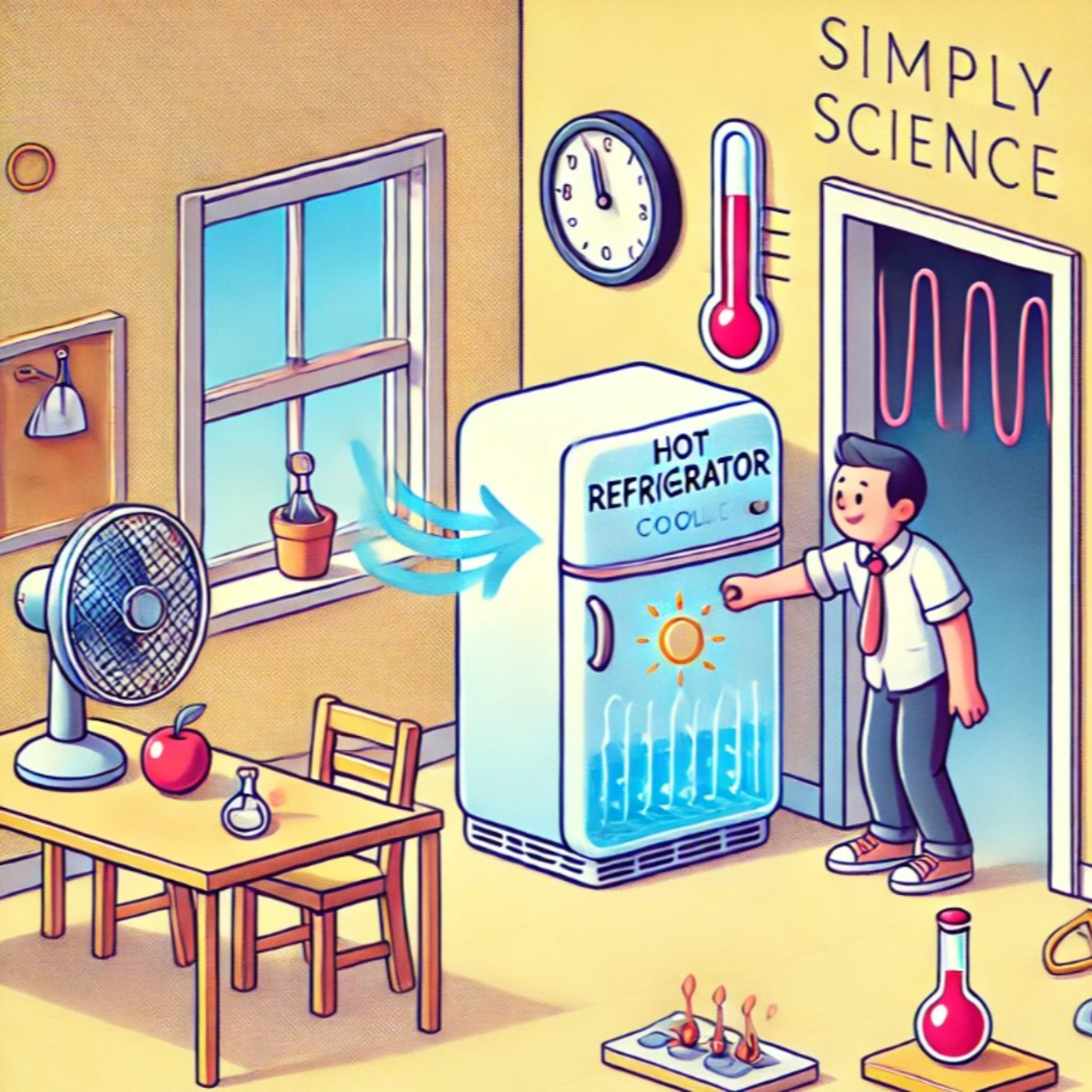
S3 Ep 6Science of Cooling Explained
In this episode of Simply Science, we dive into the fascinating (and often misunderstood) world of home cooling techniques. Ever thought about opening your refrigerator to cool off your house? Spoiler alert: It doesn’t work! We explain simple physics demonstrations, like rubber bands and a Peltier device, to show why this technique is a no-go.We also take a closer look at electric fans. While they feel great on a hot day, Allain explains why fans actually raise the room's temperature slightly due to the motor’s heat output. It’s a surprising revelation that might make you think twice about cranking up the fan to beat the heat.Tune in for a fun, myth-busting episode where physics meets everyday life, and learn why your best bet to stay cool might be a bit different than you think!
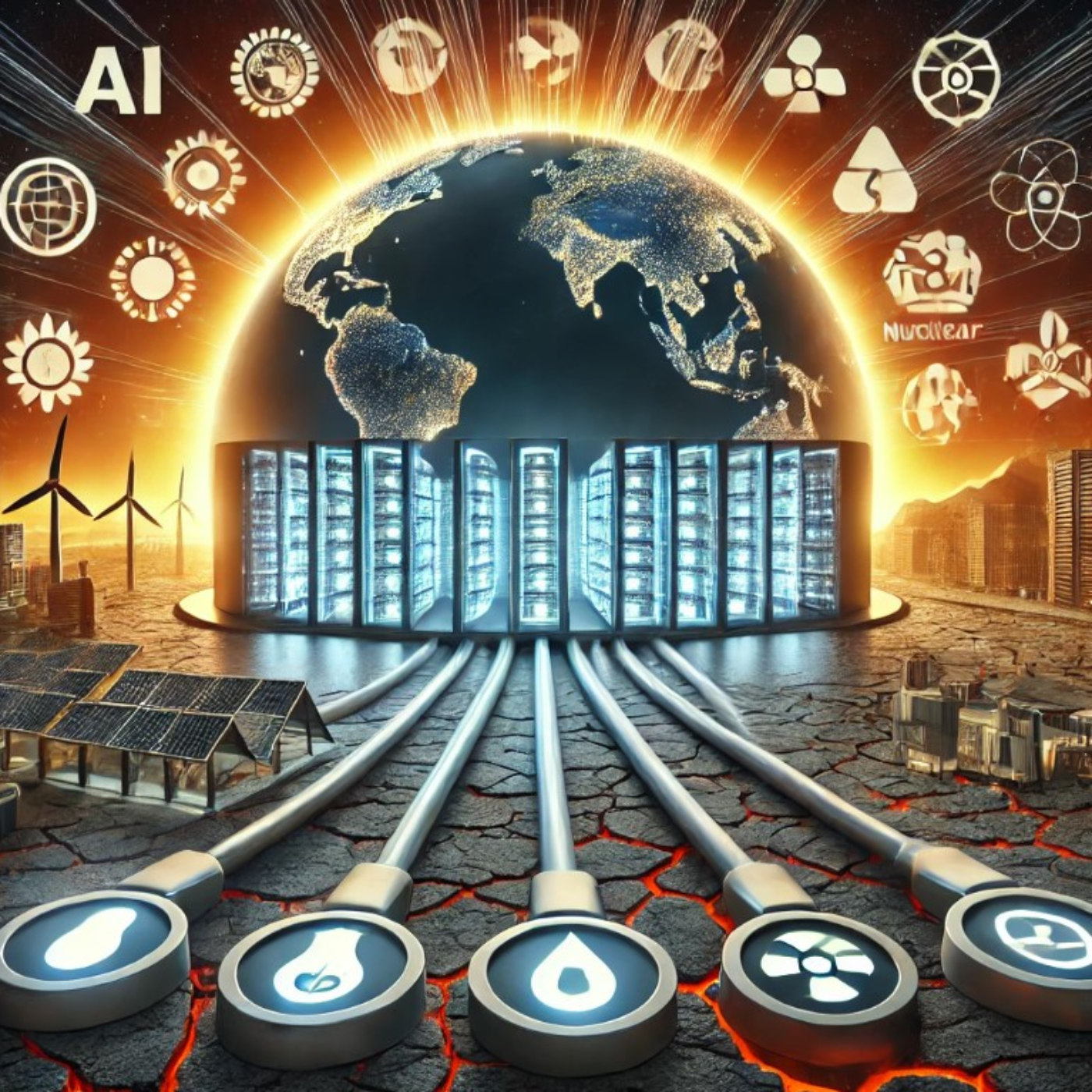
S3 Ep 4AI Sustainability Explained
In this episode of Simply Science, we dive into the escalating energy demands of artificial intelligence (AI) and the critical questions it raises for our future. As AI technology advances, its need for power is projected to surge, with AI data centers potentially consuming as much electricity as entire nations by 2026. We’ll explore the sustainability challenges this poses, especially with climate change and limited resources in play. Could nuclear power provide a solution to AI’s vast energy appetite, or do the risks outweigh the benefits? Join us as we unpack the environmental impact of AI’s growth, the potential hard limits of its expansion, and the urgent need for innovative, sustainable energy sources to support the next generation of AI.

S3 Ep 3Brownian Motion Explained - Part 2
In this episode of Simply Science, we are getting ready to uncover how Albert Einstein proved atoms are real with the unexpected help of dancing pollen! In this episode, we explore the curious mystery of Brownian Motion—first spotted by botanist Robert Brown in 1827, who watched pollen grains jitter in water. Scientists scratched their heads for decades, wondering what caused this strange dance.Enter Einstein! In 1905, he connected these wiggles to invisible collisions with molecules, using math to finally prove atoms exist. French physicist Jean Perrin later put Einstein’s theory to the test, sealing the deal on atomic reality and winning a Nobel Prize:)Join us as we trace this epic journey from curious pollen to scientific proof, showing how Einstein’s clever calculations made the invisible, visible.
S3 Ep 5Physics Informed Neural Networks Explained
In this episode of Simply Science, we’re diving into a new twist on artificial intelligence that’s shaking up the world of physics and engineering! While neural networks are famous for powering self-driving cars and understanding our cat memes, there’s a lesser-known frontier where they’re doing something pretty wild: solving equations!Join us as we explore the fascinating world of Physics-Informed Neural Networks, or PINNs for short. These clever networks don’t just crunch data; they follow the laws of physics to solve complex equations called partial differential equations (PDEs). Whether you're a physics fan, a math enthusiast, or just curious about the next frontier for AI, this episode is packed with fun facts and groundbreaking ideas. Tune in to see how PINNs are reshaping science one equation at a time!

S3 Ep 2Brownian Motion Explained - Part I
In this episode of Simply Science, we are getting ready to uncover how Albert Einstein proved atoms are real with the unexpected help of dancing pollen! In this episode, we explore the curious mystery of Brownian Motion—first spotted by botanist Robert Brown in 1827, who watched pollen grains jitter in water. Scientists scratched their heads for decades, wondering what caused this strange dance.Enter Einstein! In 1905, he connected these wiggles to invisible collisions with molecules, using math to finally prove atoms exist. French physicist Jean Perrin later put Einstein’s theory to the test, sealing the deal on atomic reality and winning a Nobel Prize:)Join us as we trace this epic journey from curious pollen to scientific proof, showing how Einstein’s clever calculations made the invisible, visible.

S3 Ep 1Reinforcement Learning Explained
In this episode of Simply Science, we unpack Reinforcement Learning (RL) and how it’s being used to control complex systems where even tiny changes can lead to big impacts. Imagine controlling a robot or a vehicle that needs to adapt to unpredictable environments—that's where RL shines. Through trial and error, RL algorithms can learn to make smart decisions, even without knowing all the details about how a system works.But there’s a catch -training these algorithms is data-hungry and computationally heavy, and even small tweaks in setup, or hyperparameters can greatly affect their performance. Still, RL holds huge promise for advancing technology in fields like robotics and autonomous systems. Whether you're a tech enthusiast or just curious about the science behind smart systems, tune in for a clear and simple look at how RL is shaping the future!
S2 Ep 8Supernatural Sensations Explained
In this spine-tingling episode, we dive into the science behind the paranormal, exploring whether “hauntings” could be explained by natural phenomena. From the eerie effects of infrasound to the unsettling sensations from electromagnetic fields, we’re looking at the research that sheds light on the science behind ghostly encounters. You’ll learn how carbon monoxide poisoning, sleep paralysis, and even the power of suggestion can play tricks on the mind, creating sensations that many interpret as supernatural.With real-life examples and intriguing research, we break down each phenomenon, discussing how our bodies and minds can lead us to see—or hear—things that aren’t there. Join us as we uncover the science behind the supernatural and find out if ghosts might just have an explanation grounded in physics, biology, and psychology.Get ready for a rational yet eerie exploration into what might be behind those bumps in the night!

S2 Ep 7Hydrophones Explained
Ever wanted to know what the ocean is talking about? Grab your headphones and get ready to dive deep—Simply Science is tuning into the underwater world with hydrophones! In this episode, we’re uncovering the hidden lives of marine creatures and exploring how scientists use these underwater microphones to “eavesdrop” on everything from whale love songs to territorial fishy arguments.We’ll start with the basics: how do hydrophones work? Capturing the soft clicks of dolphins and the low rumbles of deep-sea giants isn’t easy, but these clever devices are up to the task. Once you understand how they work, we’ll dive into the ocean’s soundscapes, where you’ll hear some unexpected underwater voices, from snapping shrimp to the haunting calls of whales.
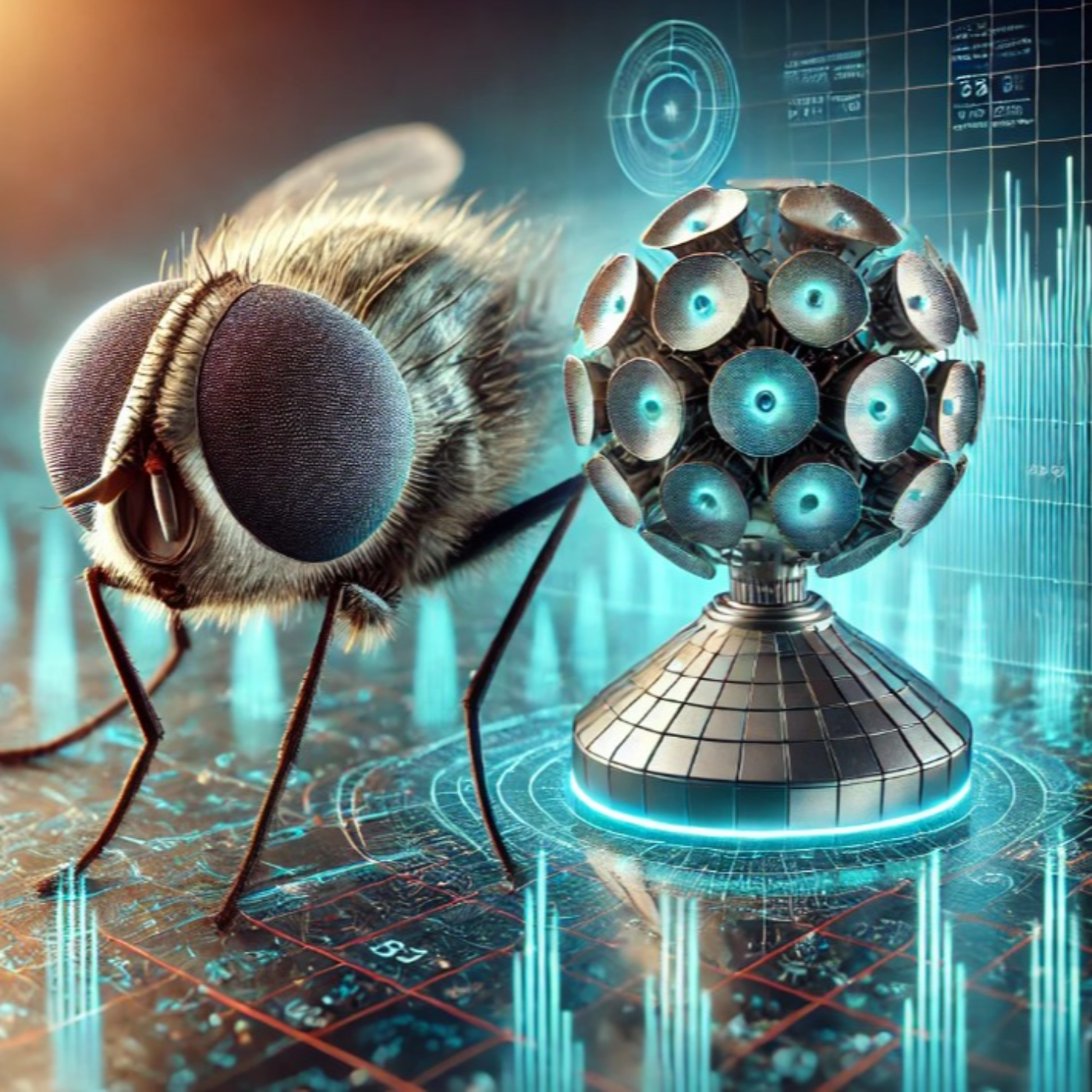
S2 Ep 6Nature Inspired Radars Explained
Get ready to see the world through a fly’s eyes—literally! In this episode of Simply Science, we’re diving into a mind-bending new tech inspired by the compound eyes of flies. Imagine an antenna array with superpowers: dozens of tiny “eyes” (aka antennas) working together to give wide-area coverage and laser-precise direction-finding. We’ll break down how this “fly’s-eye” tech lets us spot, track, and analyze anything in its path with insane speed, catching details down to an object’s shape, using something called phase-shift magic.But it doesn’t stop there. This tech can operate across different frequency bands, detect signals from miles away, and might even end up on fleets of robotic carriers—hello, sci-fi surveillance! Whether you’re into high-speed radar, next-level navigation, or just love seeing nature inspire cool new tech, this episode has it all. Buckle up and join us for a peek at a world where science fiction meets real life!
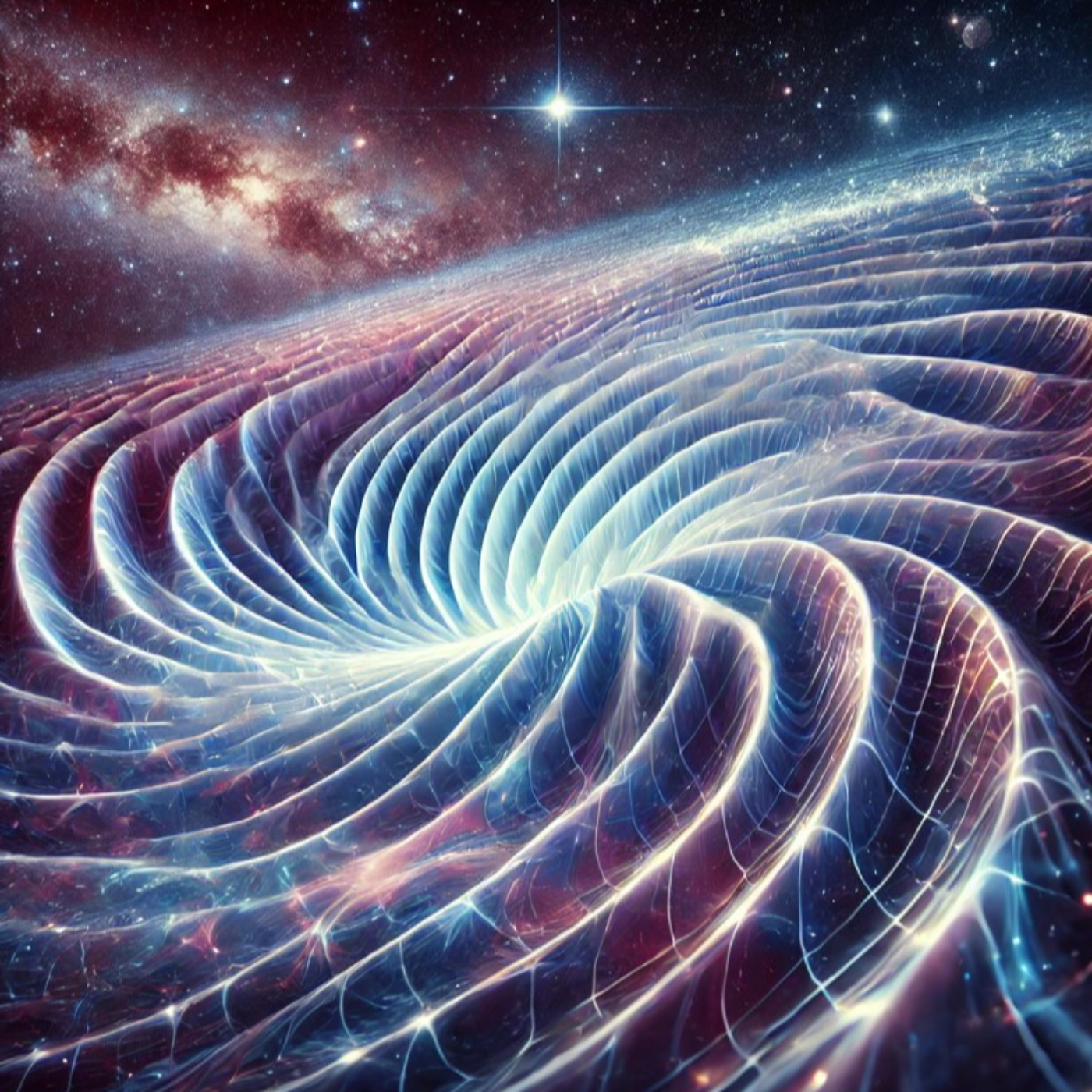
S2 Ep 5Gravitational Waves Explained
Join us through the cosmos in this episode of Simply Science! We dive into the intriguing world of gravitational waves—ripples in spacetime caused by the acceleration of massive objects like colliding black holes or neutron stars.Discover how these elusive waves were first predicted by Einstein's theory of general relativity and the groundbreaking technology behind their detection. We'll break down complex concepts into bite-sized pieces, making them accessible for everyone, regardless of their scientific background.Hear from experts in the field, listen to captivating stories from recent discoveries, and explore what gravitational waves can tell us about the universe's most violent events. Whether you’re a science enthusiast or just curious about the universe, this episode promises to enlighten and inspire. Tune in and let’s ride the waves of discovery together!
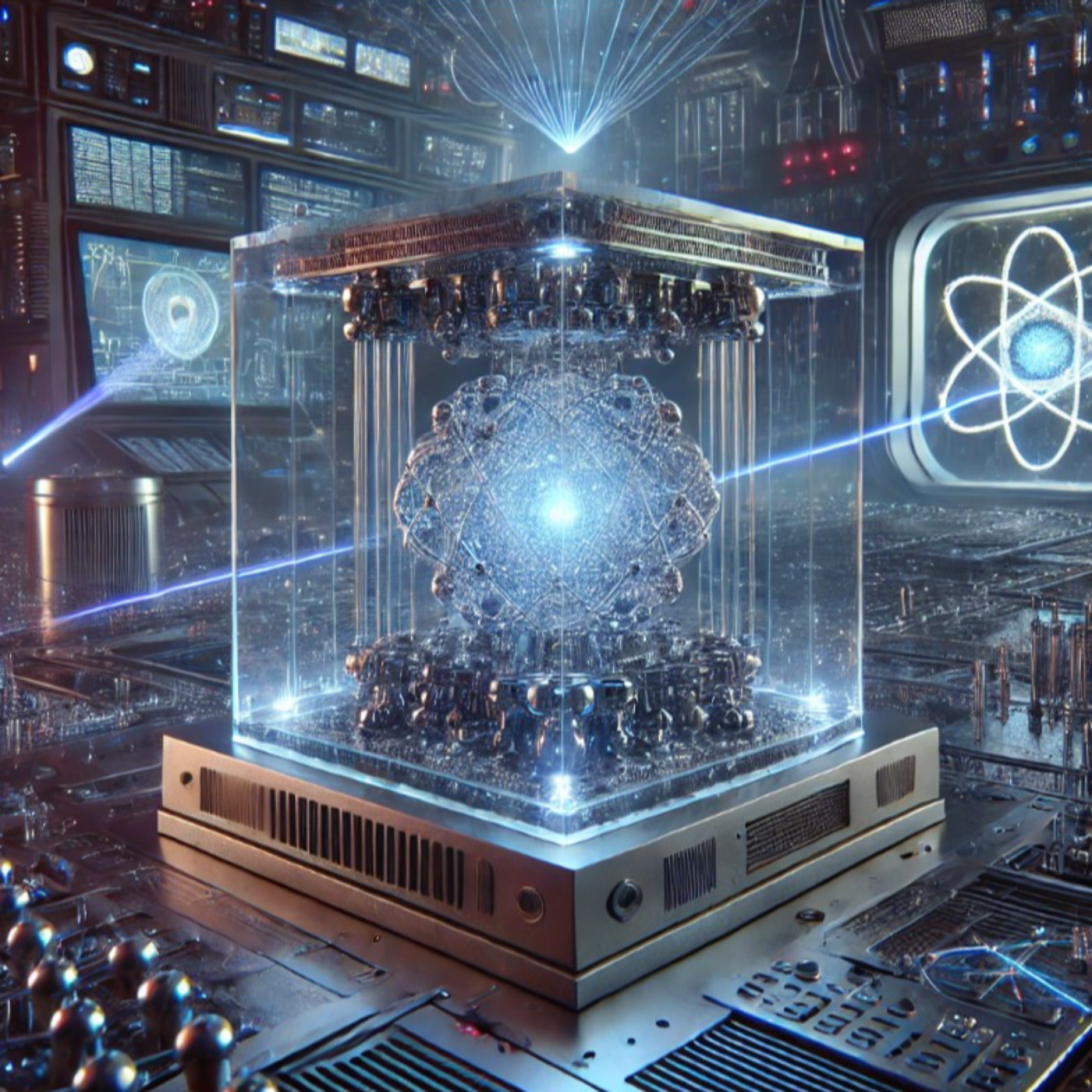
S2 Ep 4Quantum Computing Explained
In this episode of Simply Science where we break down the cutting-edge world of quantum computing and explore its massive potential to reshape technology and tackle global challenges. The UK has just unveiled its first National Quantum Computing Centre (NQCC), sparking new interest in the powerful future of quantum technology. But what makes quantum computing different from the computers we use daily? And why could it soon become essential across industries from finance to healthcare?Join us as we demystify quantum computing’s fascinating principles—from qubits and superposition to entanglement—and reveal how this technology, with only six operational quantum computers currently in the UK, is gearing up to be a trillion-pound powerhouse by 2035. We’ll dive into the mind-bending physics behind qubits, explore how quantum computers solve problems faster than ever imagined, and discuss real-world applications, like rapid drug discovery and climate modeling.
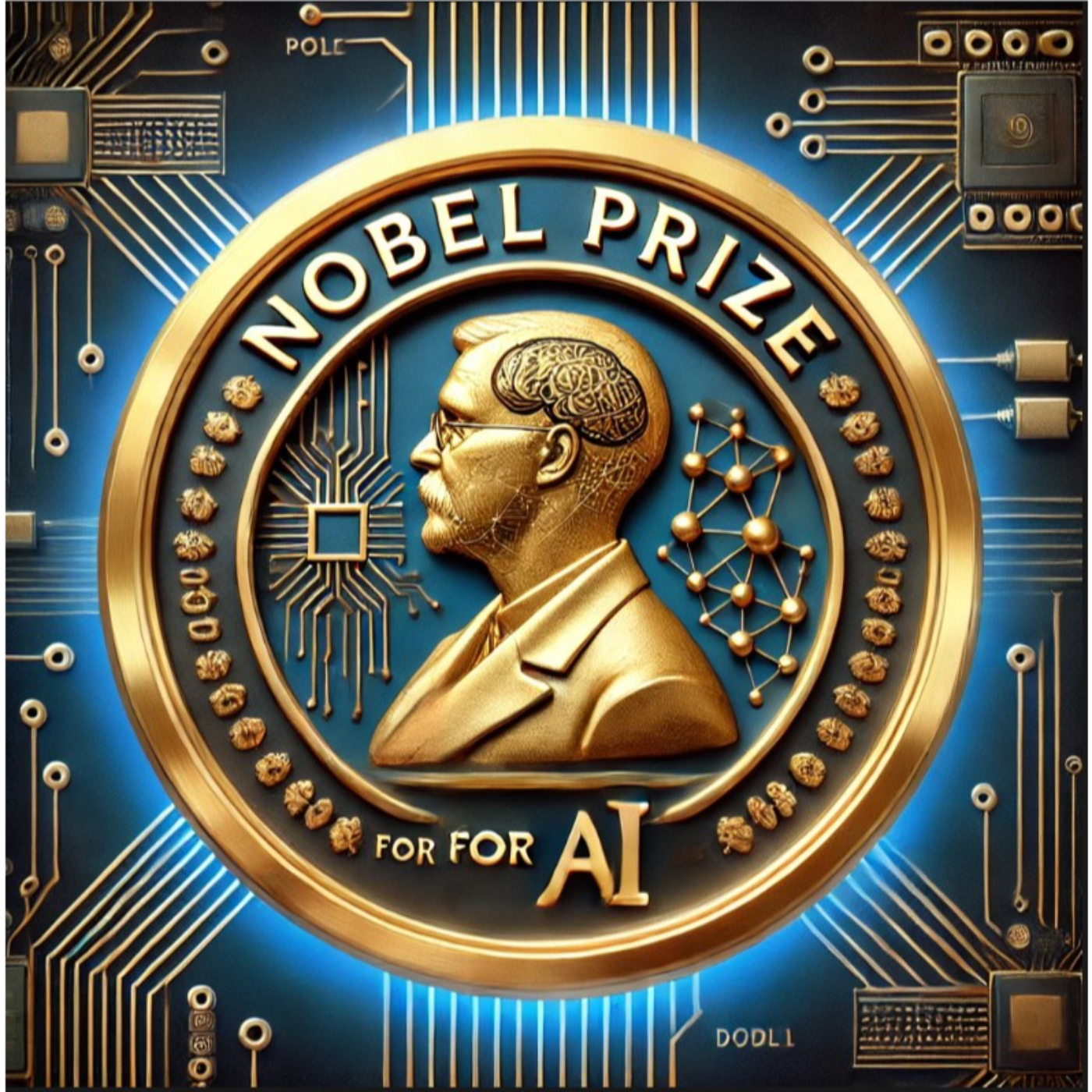
S2 Ep 3Science of AI Nobel Prize Explained
Buckle up, science fans! In this episode of SimplyScience, we're diving into a mash-up that’s changing the world: physics meets machine learning! This year’s Nobel Prize in Physics went to two rockstars, John Hopfield and Geoffrey Hinton, whose work decades ago set the stage for today’s AI revolution. Ever wonder how machines “learn”? Well, it all started with these guys taking inspiration from magnetic spins, brainy neurons, and good old physics principles. We’ll break down how their groundbreaking models, the Hopfield network and Boltzmann machine, use energy levels and "temperature" to help computers make decisions. It’s like watching AI perform a dance choreographed by physics—and trust us, it’s got some moves!

S2 Ep 1Colors of the Noise Explained
In this episode of Simply Science, we dive into the intriguing spectrum of noise "colors," uncovering the unique qualities and uses of each. From white and pink to brown, violet, and blue noise, we'll explain how these sounds differ in frequency patterns and why each resonates with us in distinct ways. Using real-world examples, we'll explore their applications in audio engineering, sleep aids, and tinnitus therapy, shedding light on how sound influences our brain and body. Wrapping up with a playful look at "black noise," we invite you to join the conversation and share your questions and ideas for future topics!
S2 Ep 1Muon Tomography Explained
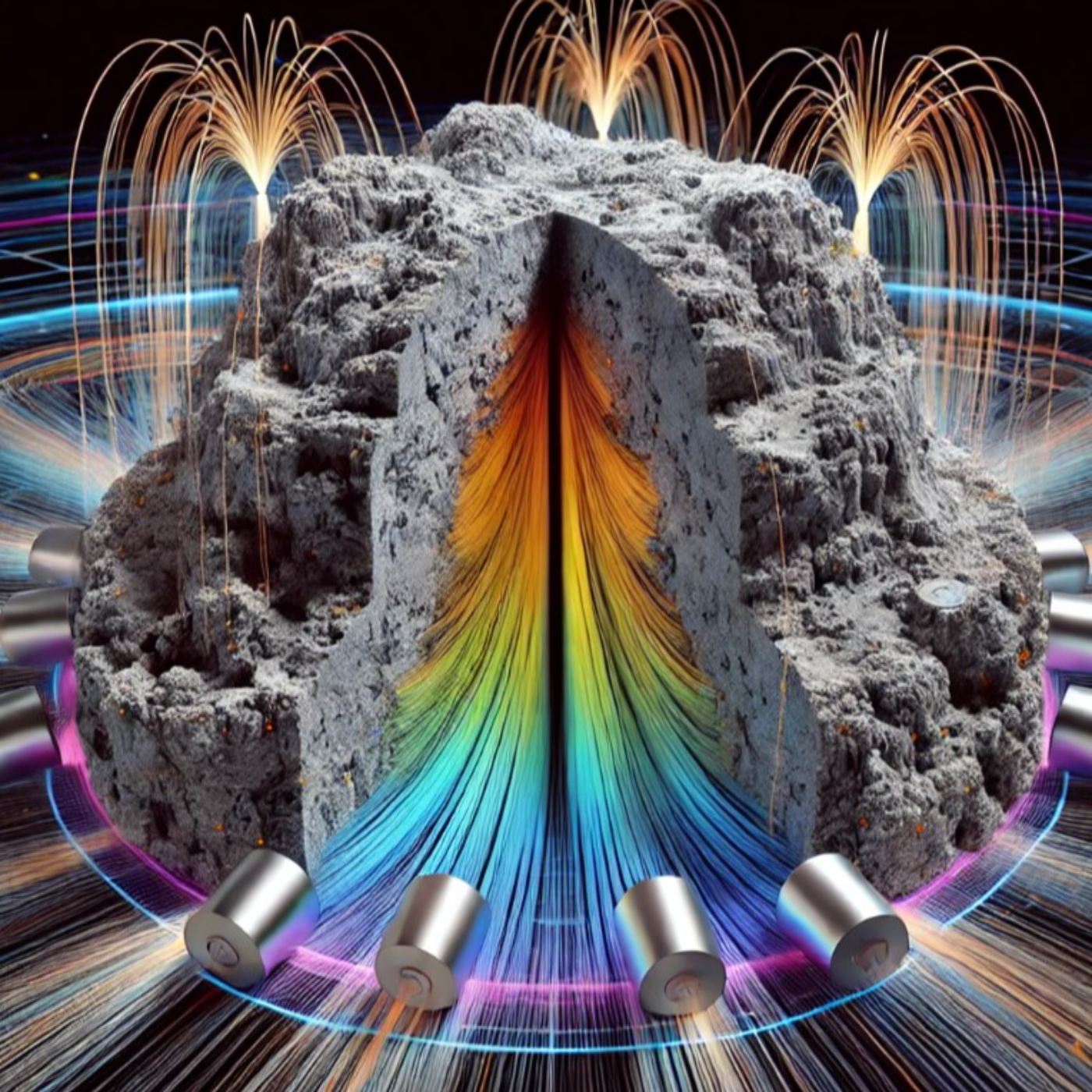
Welcome to Simply Science, where we uncover complex science in simple terms. In this episode, we dive into muon tomography, a groundbreaking imaging technique that uses cosmic particles to "see" inside massive objects like volcanoes, ancient pyramids, and even nuclear reactors. Unlike traditional X-rays, muon tomography is safe, passive, and ideal for visualizing dense materials. Join us as we explore how scientists harness naturally occurring muons to create 3D images of hidden structures and what this technology could mean for archaeology, geology, and beyond. Tune in to discover the power of cosmic rays right beneath our feet!Let us know if you’re ready to learn about this cosmic imaging method that’s transforming the way we look at the world—one particle at a time.
S1 Ep 8Science of Human Voice in Opera Explained
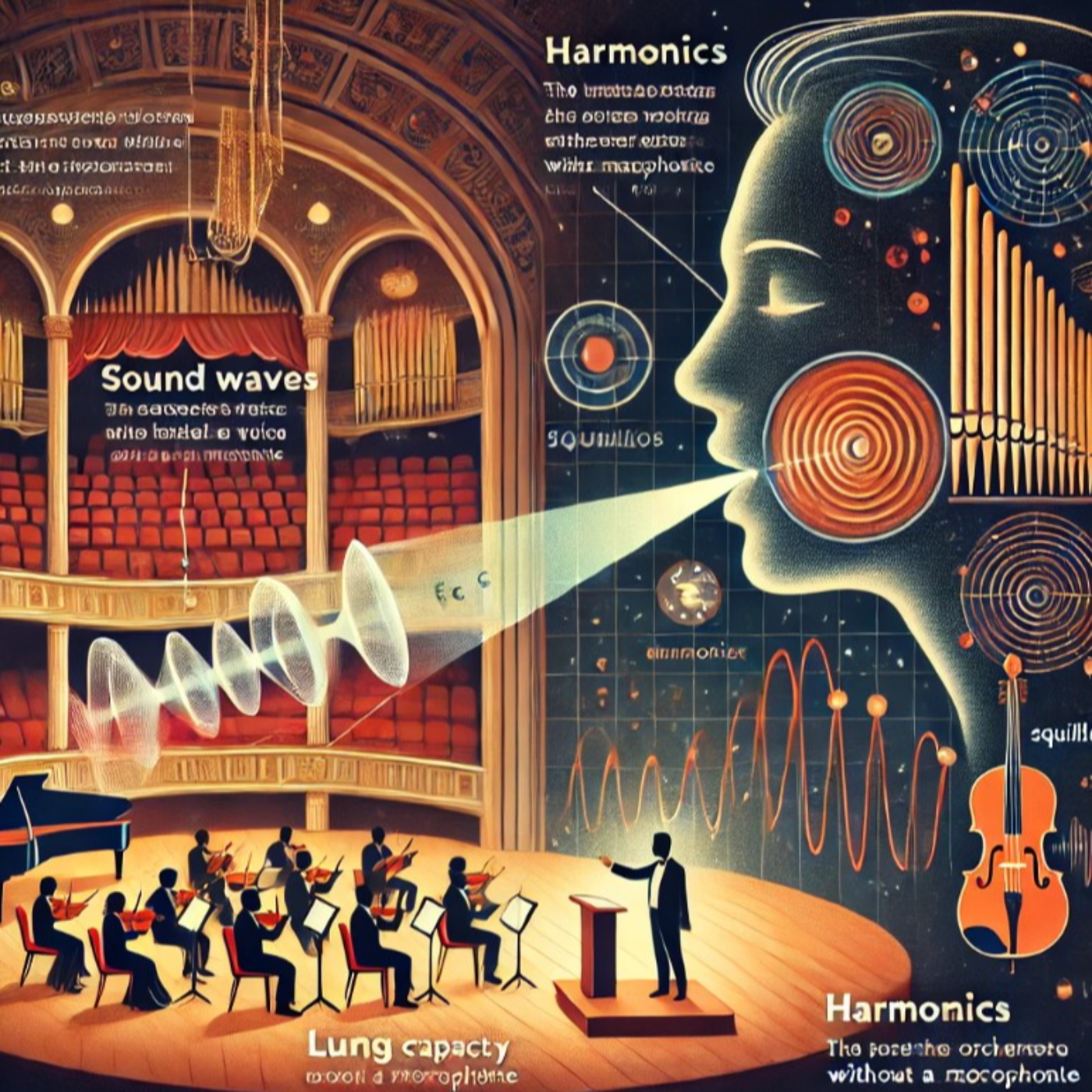
Welcome to Simply Science, the podcast where we break down complex scientific phenomena into simple, fascinating insights. Today, we're stepping into the world of music—specifically, the power and mystery of the human voice in opera. Have you ever wondered how opera singers, without any microphones, can fill an entire concert hall with their voices, projecting over a full orchestra? How do they make their voices carry so far and so clearly? Well, the answer lies not just in talent, but in some incredible science.In this episode, we’ll explore how opera singers use advanced vocal techniques to manipulate sound and make their voices soar. We’ll break down the physics behind this feat, from the concept of harmonics to the precise control of breath and airflow. Opera singing is not just an art form, it’s also a masterclass in vocal science, and we’re here to explain how it all works.
S1 Ep 7Atomic Clocks Explained
In this episode of Simply Science, we take a deep dive into the world of atomic clocks—the most precise timekeeping devices ever invented. Although this episode begins with a request to explain atomic clocks in simple terms, we use it as a starting point for an educational journey into the fascinating science that powers these ultra-accurate timepieces.We’ll explore how atomic clocks work, why they are so important for technologies like GPS and telecommunications, and how they have revolutionized our ability to measure time with unparalleled precision. We also delve into the history of timekeeping, from early mechanical clocks to the atomic age, and explain the physics behind how atoms, lasers, and microwaves come together to keep time ticking perfectly. Tune in to learn about the incredible technology behind the devices that help synchronize the world down to the nanosecond!

S1 Ep 6Nonlinear Dynamics Explained
In this episode of Simply Science, we break down the concept of nonlinear dynamics in a way that's easy to understand, even for those without a background in science. Nonlinear dynamics is all about systems that don’t follow straightforward, predictable rules—instead, they behave in ways that can seem chaotic and complex, with small changes sometimes leading to big consequences.We’ll explore examples of nonlinear systems from nature, like weather patterns, ecosystems, and even the human brain. Along the way, we’ll explain why these systems are so hard to predict and how scientists study them to find hidden patterns in the chaos. If you’ve ever wondered how something as simple as a flap of a butterfly’s wings could theoretically change the course of a hurricane, this episode is for you.

S1 Ep 5Random Walk Explained
Welcome to Simply Science, the show where we break down complex ideas and make them… well, simply fascinating! I’m your host, and today we’re diving into the intriguing world of random walks. Don’t worry—this isn’t just about taking a stroll in the park!Imagine you’re walking in the woods and, bump into the same couple over and over again. Strange, right? Well, it’s an example mathematician George Polya used to illustrate the concept of a random walk—a series of unpredictable steps that can take you anywhere, sometimes even back to where you started.In today’s episode, we’ll explore how these random walks behave, their quirky mathematical properties, and why they often resemble those classic bell curves. We’ll also dig into the difference between recurrent random walks, where you can end up revisiting your starting point, and transient ones, where you never come back. And, finally, we’ll take a look at biased random walks, where some directions are more likely than others—and how this simple idea is applied to everything from computer algorithms to financial modeling and even gambling!So stick around, and get ready to discover the randomness behind the steps we take, here on Simply Science.

S1 Ep 4The Hidden Paths of Attraction Explained
Ever wondered why systems—from weather patterns to financial markets—settle into certain predictable behaviors while remaining highly sensitive to initial conditions? In this episode of Simply Science, we explore the concept of the basin of attraction. Learn how dynamic systems, whether in nature or, in technology, are pulled toward specific outcomes, known as attractors, and how tiny variations in starting points can lead to vastly different results. We’ll unpack real-world examples, from climate science to economics, to explain how understanding these basins can help predict the unpredictable. Join us to discover the hidden forces guiding complex systems and their seemingly chaotic behaviors!

S1 Ep 3The Math Behind the Gamble Explained
In this episode of Simply Science, we explore the exciting intersection of gambling and mathematics to better understand probability and decision-making. Through the lens of games of chance, we’ll break down complex mathematical concepts like dynamic programming, Bayesian statistics, and stochastic processes, showing how they apply not only to gambling but also to broader real-world scenarios.We begin by introducing the gambler's problem, a mathematical framework used to describe a gambler's choices, resources, and desired outcomes. From here, we dive into the world of casino games, exploring how casinos maintain a statistical advantage through subfairness—designing games that appear fair, but actually tip the scales in their favor. We'll also explore how gamblers use various strategies and how mathematical tools can optimize decision-making in uncertain environments.
S1 Ep 2Listening to the Ice, Acoustic Tomography Explained
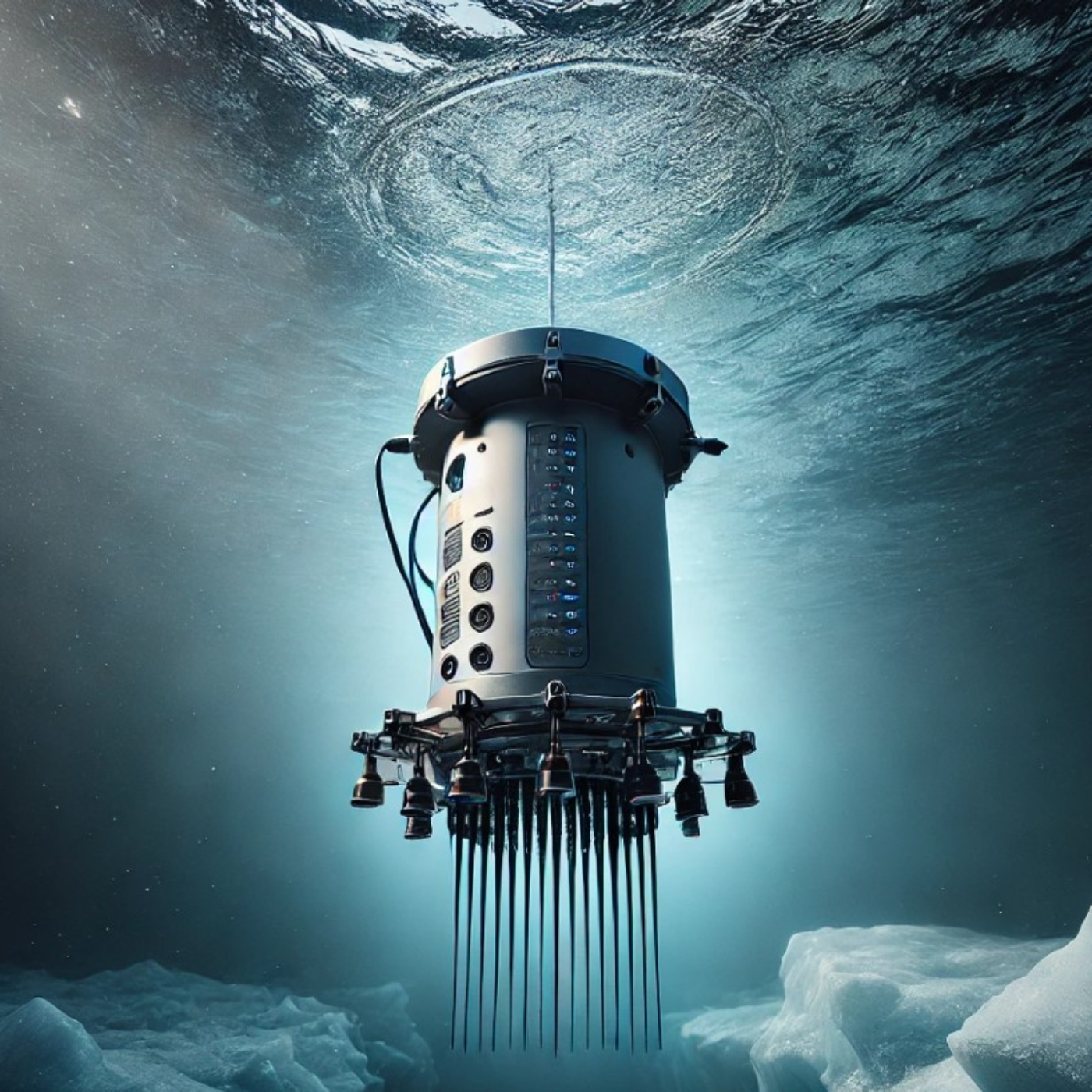
In this episode of Simply Science, we delve deep into the fascinating world of acoustic thermometry research in the Arctic Ocean. With its rapidly changing environment, the Arctic serves as a crucial focal point for understanding climate change and ocean dynamics. We explore how scientists are using sound to measure ocean temperature and track changes in water mass structure and sound speed profiles in response to thinning ice, warmer waters, and human activities.We’ll also discuss the challenges researchers face, from harsh ice conditions to logistical hurdles, as well as the technological advancements that are making this critical work possible. From impacts on climate models and ocean circulation to the broader ecological consequences, join us as we uncover why the Arctic is more than just a frozen frontier—it's a key to our understanding of Earth's future climate.
S1 Ep 1Stochastic Resonance Explained
In Simple Science, we break down complex ideas into something you can easily understand. In this episode, we explore the fascinating concept of stochastic resonance—a surprising phenomenon where a little bit of noise can actually help make weak signals clearer! Whether it's helping animals hear better in noisy environments or improving medical devices, you'll learn how randomness can sometimes be a good thing. No complicated math or jargon, just clear explanations and fun examples that show how this quirky part of science plays a role in our everyday lives.