More or Less
1,451 episodes — Page 9 of 30
Bonus episode: the first ever More or Less
A chat with More or Less's founding producer and presenter plus the first episode in full. Tim talks to Michael Blastland and Sir Andrew Dilnot about how More or Less came into being (after several rejections), whether politicians and journalists are more numerate now, and where the name come from. Then, the very first episode of More or Less, originally broadcast on Radio 4 on 13 November 2001.
Twenty years of More or Less
A look back at our origins, plus the usual mix of numerical nous and statistical savvy.It’s two decades since More or Less first beamed arithmetic into the unsuspecting ears of Radio 4 listeners. We revisit the show’s genesis with the original presenter and producer.Why are there two different figures about our vaccination rate doing the rounds and how does the UK now compare internationally?Plus listener questions on how the colour of your front door affects your house price, TVs on standby mode, and more. And we try to respond to a meteor storm of complaints about our earlier item asserting that Star Trek’s Mr Spock is in fact highly illogical.
The Gender Pay Gap
Tim Harford talks to Planet Money’s Stacey Vanek Smith about the gender pay gap in the US and the UK – and how Renaissance writer, Machiavelli might be an unlikely source of inspiration for women in the workplace.
Is it easy being green?
Is our electricity extra expensive and our insulation inadequate? And a tale of tumbling trees.Internet infographics suggest we’re paying way more for our energy than countries in the EU. Are they being interpreted correctly? And what part, if any, has Brexit had to play?Insulation Britain activists have been gluing themselves to motorway slip-roads to raise awareness about poor home insulation. Their website says we have the least energy efficient homes in Europe. What’s the evidence?Plus, what do the numbers tell us about migrants trying to cross the Channel in small boats? Are stereotypes about different generations backed up by the data? And is it or is it not true that the UK has lots of trees?
Covid trends, face mask use, and the universal credit cut
A coronavirus check-in, our daily mask use measured, and a minister's claim on the universal credit cut questioned.There was a time when the latest Covid statistics were headline news daily, but as the pandemic has stretched on into its second year and third wave people don't pay as much attention. But on More or Less we still keep an eye on them because that’s how we roll.A recent article estimated that 129 billion single-use face masks are used every day around the world. It sounds wrong, but how wrong is it? And how did it get so wrong?Making up the shortfall from the £20 weekly cut in the universal credit benefit means working an extra two hours a week - or an extra nine, depending on who you listen to. We run the numbers.Plus, has the number of periods women have in a lifetime increased fourfold? And how many holes does a drinking straw have?
How many holes are there in a drinking straw?
Tim Harford talks to Jordan Ellenberg, professor of mathematics at the University of Wisconsin at Madison, about the pandemic, geometry and drinking straws.(multi-coloured straws/Getty images)
Death, Tax and Dishwashers
New data appears to show that double vaxxed people between 40 and 79 are getting Covid at higher rates than people who are unvaccinated, but that's not the case. It's all down to how Public Health England estimates the size of different populations. The Office for National Statistics described 2020 as "the deadliest year in a century". Now that we're more than two-thirds into 2021, we examine how this year is shaping up. We answer your questions on the new health and social care levy, and have words of congratulations and caution following Emma Raducanu's astonishing win in the US Open. Plus, where do you stand on in the dishwasher vs kitchen sink debate? GUESTS: Mathematician James Ward Adele Groyer of the Covid-19 Actuaries Response Group Helen Miller of the Institute for Fiscal Studies.
Vaccine waning, hot dogs and Afghanistan
Should we be worried that the protection against Covid-19 provided by the vaccines is going down? Could it really be the case that eating a hot dog takes 36 minutes from your life? The Bank of England holds 35% of Government debt. Who owns the other 65%? Has the UK spent more on Test and Trace than on its operations in Afghanistan?
The Bill for Afghanistan
American President Joe Biden has said the war in Afghanistan cost more than $2 trillion. Todd Harrison, a senior fellow at the Centre for Strategic International Studies helps us unpick what’s included in this figure.
Covid, HGV driver shortages and protest costs
English Covid restrictions were lifted in July. Back then, some predicted that there could be as many as 6,000 hospital admissions a day by the following month. So, what happened?The Metropolitan Police says it’s spent £50 million on policing Extinction Rebellion since 2019. They’re on the streets again – can it really be that costly?The economics correspondent at The Economist Duncan Weldon puts government borrowing during the pandemic into context and talk about his new book, 200 Years of Muddling Through.Are we running out of lorry drivers? And to what extent is Brexit to blame? We look at the numbers behind a claim that there is a shortfall of 100,000 lorry drivers in the UK.Plus, disturbing evidence that Star Trek’s Mr Spock may actually be terrible at logic.
Reason, numbers and Mr Spock
Writer Julia Galef talks to Tim Harford about the role of numbers in helping us think more rationally, and what Star Trek’s Mr Spock can teach us about making predictions. Julia is author of The Scout Mindset, a book about how our attempts to be rational are often clouded or derailed by our human impulses, and the ways we can avoid these traps. Producer: Nathan Gower(Image: Leonard Nimoy as Mr Spock. Credit: Bettmann/Contributor via Getty Images)
The extraordinary life of Robert Moses
Dr Robert Moses, a pioneer in African-American civil rights and mathematics education has died at the age of 86. Charmaine Cozier looks at an extraordinary life, from the courthouses of 1960s Mississippi to the classrooms of modern public schools, and traces the philosophy and values that threaded their way through his life. Presenter: Charmaine Cozier Producer: Nathan GowerPortrait of American Civil Rights activist Robert Parris Moses, New York, 1964. (Photo by Robert Elfstrom/Villon Films/Gety Images)
How good were the performances at the Tokyo Olympics?
A year later than planned, The Tokyo Olympics, have now finished. Thousands of athletes have competed in events that few thought might go ahead and there’s been record success. This week we take a look at Olympic numbers – how many records were broken in Tokyo, what factors might have influenced the races and what else can the data tell us?Tim Harford speaks to Dr Joel Mason, who runs the blog, Trackademic. Producer: Olivia Noon
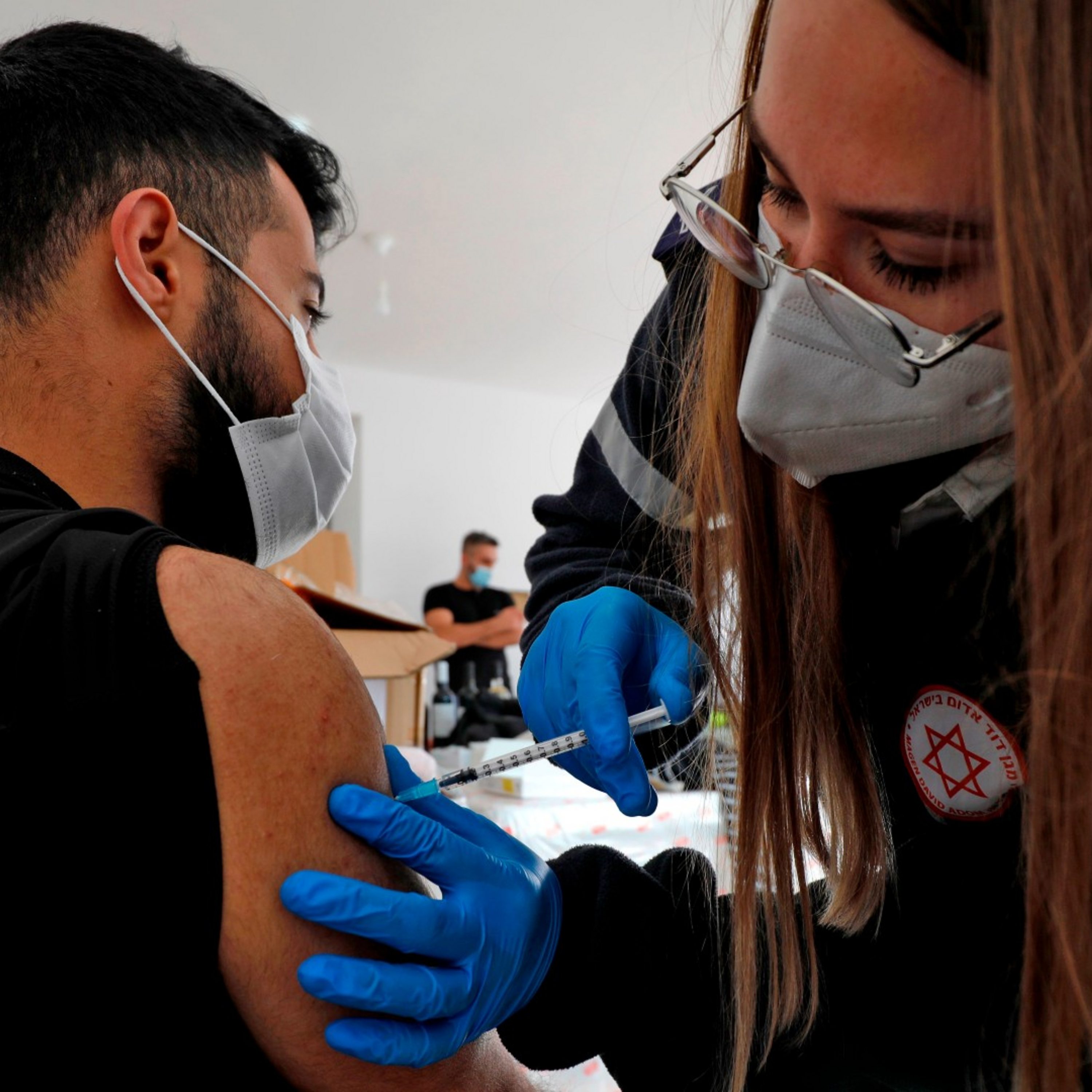
Jab fears explained: a base rate fallacy
As some countries rapidly roll out vaccination programmes, there have been concerns that increases in infection rates amongst vaccinated groups mean vaccines are less effective than we hoped, especially in the face of the feared Delta variant. Epidemiologist Dr Katelyn Jetelina from the University of Texas Health Science Centre School of Public Health explains why this isn’t what the numbers show – rather than decreasing vaccine effectiveness, increasing rates can be explained by a statistical phenomenon known as ‘base rate fallacy’. Presenter: Charlotte McDonaldProducer: Nathan Gower
Breaking Climate Records
June saw a brutal heatwave shatter a number of all-time temperature records in Canada and the Northwest of the USA. But when can we attribute new records to man-made climate change, rather than natural variation? Peter Stott, an expert in climate attribution at the UK’s Met Office, explains how climate change has dramatically increased the probability of seeing such extremes.Presenter: Tim HarfordProducer: Nathan Gower
The Rise of Delta
The Delta Variant was first identified in India, fuelling a huge wave of cases and deaths. It is now spreading around the world, becoming the most dominant variant in many countries. This week we take a look at the numbers - where’s it spreading, how is this different to previous waves and what can be done to stop it?Tim Harford speaks to Professor Azra Ghani, Chair in Infectious Disease Epidemiology at Imperial College, London and John Burn-Murdoch, the chief data reporter at The Financial Times.
The Freedom Day Gamble
On the day the Government plans to drop the remaining Covid restirictions, Tim Harford and the More or Less team try to work out how long cases will continue to rise and whether we can be sure the link with deaths and hospitalisations has been broken. Is this “freedom day" or an unnecessary gamble with people’s lives?
Are there 40 million Nigerians on Twitter?
In recent months, Twitter has rarely been out of the headlines in Nigeria. After it deleted a tweet by the country’s president, the Nigerian government responded by banning it altogether. In the media coverage of the story it has been commonly claimed that Nigeria has 40 million Twitter users – but could this really be true? We spoke to Allwell Okpi of the fact-checking organisation AfricaCheck.Also, which places have the best full vaccination rates in the world? Turns out, its some of the smallest. We run through the top five.Producer: Nathan Gower
Is Ivermectin a Covid ‘wonder drug’?
To some on the internet, the cheap anti-parasitic drug Ivermectin is a potential wonder drug that could dramatically change the global fight against Covid-19. It has passionate proponents, from a small group of scientists to the more conspiratorially-minded. But with a scattered evidence base of varying quality, what - if anything - do we know for sure about Ivermectin? And is uncovering the truth a more complex process than some appreciate?With Gideon Meyerowitz-Katz from the University of Wollongong, Australia.Producer: Nathan Gower
Scotland cases, flood risk and taxing the poor
The UK’s Covid cases are still rising and Scotland is being hit particularly hard - so are we speeding up our vaccination programme in response?Will many of the UK’s coastal towns, not to mention central London, be underwater in the next few years?Do the country’s poorest households really pay more than half their income in tax?What are the top five places with the best vaccination rates in the world? The answers may surprise you.We speak to Tom Chivers, a science journalist who has written a book called “How to Read numbers” with his cousin the economist David Chivers.
Maths and the Mayflower
This year sees the delayed 400th anniversary celebrations of the Mayflower voyage, an event seen as a crucial moment in the history of the United States. But how many people alive today can trace back their lineage to those first 102 passengers? Tim speaks to Rob Eastaway and Dr Misha Ewen about maths and the Mayflower.
Delta cases, blue tits and that one-in-two cancer claim
The Delta variant is behind the big increase in the number of new Covid 19 cases in the UK since April. We take a look at what impact vaccines have had on infections, hospitalisations and deaths.Chris Packham told viewers on the BBC’s Springwatch that blue tits eat 35 billion caterpillars a year. We get him onto the programme to explain.How much does Type 2 diabetes cost the NHS a year? While exploring a dubious claim we find out why its hard to work that out.Is it true that on in two people will get cancer? We’ve looked at this statistic before but listeners keep spotting it on TV.We also ask: if the SarsCov2 RNA is 96% similar to the RNA of a virus found in bats - is that similar, or not?
The origins of Covid
To find out where a virus comes from, researchers compare it to other viruses to try to trace its origin. This leads to claims like SARS-CoV-2 is 91 or even 96% similar to other known viruses. But what does that really mean? Tim Harford talks to the virus ecologist Marilyn J Roossinck.
Covid deaths, outdoor swimming and care homes
The official number of deaths attributed to Covid 19 around the world in the whole of 2020 is 1.88 million. The global toll this year surpassed this figure on 11th of June. We look at how things are worse worldwide, despite vaccines and lock downs. Does the UK have the worst bathing sites in Europe? That’s certainly a claim made by a number of newspapers. We show why this is not the case. Health Secretary Matt Hancock has been in the news again with comments regarding care homes during the pandemic. Just how good was the government’s ‘ring of protection’ around care homes during the first wave - and the second? We speak to Steven Johnson about his book ‘Extra Life: A Short History of Living Longer.’
The doubling of life-expectancy
Steven Johnson, author of Extra Life, tells the fascinating history of life expectancy, and the extraordinary achievements of the last century, in which it has practically doubled.It’s a story that has data at its heart, from the ground-breaking invention of the category itself in 17th century London to the pioneering social health surveys of W.E.B. Du Bois in 1890s Philadelphia. Tim Harford spoke to Steven about the numbers beneath possibly the most important number of all.
Third wave fears, smart motorways and bra sizes
Covid cases are rising again in the UK – should we be worried about a third wave? Tim Harford speaks to David Spiegelhalter, Winton Professor of Risk at the University of Cambridge.How safe are smart motorways? Many listeners have concerns that they seem more dangerous than conventional motorways. We take a look at the numbers.What proportion of adults in England have been vaccinated? Listeners have spotted a potential discrepancy in the public data online.Are 80% of women wearing the wrong size bra? This frequently repeated statistic has been around for decades – could it possibly be true?
Bolton vaccines, Yorkshire versus Scotland and the average gamer
Health Minister Matt Hancock recently told the House of Commons that: “The number of vaccinations happening in Bolton right now is phenomenal - tens of thousands every single day.” We explain why this is not the case.The recent SNP election success has turned attention to the question of independence. We compare Scotland’s finances to the comparably sized Yorkshire and Humber region.How do you work out 28 + 47 in your head? We speak to mathematician Katie Steckles.A listener asked us to find out if it is true that the average age of a gamer is over 40.Plus, we take a look at this claim from Netflix documentary Seaspiracy: “if current fishing trends continue we will see virtually empty oceans by the year 2048.”
The Seaspiracy “virtually empty ocean” claim
Popular Netflix documentary Seaspiracy has sparked a lot of debate recently, including some controversy over some of the claims the documentary makes and the numbers behind them. One of the most striking is that: “if current fishing trends continue we will see virtually empty oceans by the year 2048.” Although overfishing is a global problem, we take a look and find that this scenario is unlikely.
Wales jab success, Eurovision and living with your parents
Wales has given one vaccination dose against Covid 19 to a larger proportion of their population than any other country except a couple of super tiny ones. They’ve given one vaccine dose to over 80% of their adult population. We explore some reasons why they seem to be doing so well.The UK continues to do poorly at Eurovision – we take a look back over the years to examine why the UK used to do well, and why it doesn’t any more.Waiting lists for NHS treatment across the UK have grown – but why are things so bad in Northern Ireland?Is it true that 42% of young people are living at home with their parents? We find out what a young person is and why they haven’t flown the nest.
The medical trial that proved Trump wrong
The Recovery Trial, a nation-wide clinical study in the UK, helped identify treatments for Covid 19 in the early months of the pandemic. Tim Harford speaks to Professor Martin Landray of Oxford University whose team established the randomised trial.
Explaining maths without Numbers
Tim Harford interviews Milo Beckman - a young mathematician, still in his twenties, who has written a book called ‘Math without Numbers’. Milo explains why he wanted to strip out digits to make it easier to describe the beauty of mathematics.
Finding Mexico City’s real death toll
Mexico City’s official Covid 19 death toll did not seem to reflect the full extent of the crisis that hit the country in the spring of 2020 - this is according to Laurianne Despeghel and Mario Romero. These two ordinary citizens used publicly available data to show that excess deaths during the crisis - that’s the total number of extra deaths compared to previous years - was four times higher than the confirmed Covid 19 deaths.
Bayes: the clergyman whose maths changed the world
Bayes’ Rule has been used in AI, genetic studies, translating foreign languages and even cracking the Enigma Code in the Second World War. We find out about Thomas Bayes - the 18th century English statistician and clergyman whose work was largely forgotten until the 20th century.
Will 2021 have more Covid deaths than 2020?
In 2020 there were 1.8 million reported Covid deaths. So far this year, we’ve had 1.2 million. We’re currently seeing around 12,000 deaths a day across the world. But while some areas are seeing falls in numbers, others such as India are seeing a surge.This week Tim Harford tries to answer the question: Will there be more global deaths this year from Covid 19 compared to last year?
How many swimming pools full of vaccine do we need?
If we brought together all the Covid 19 vaccine needed for the whole world, how much space would it fill up? An Olympic size swimming pool? We do some back of the envelope sums. Plus - we look at the increased risk of clots from pregnancy. Last week we looked at the increased risk of getting a clot from taking the combined contraceptive pill and compared it to risk of possible rare clots identified following the Astra Zeneca jab. How does pregnancy compare?
Clot risks: The Pill versus the vaccine
The Astra Zeneca Covid 19 jab remains in the headlines because some regulators have concluded that it may raise the risk of a very rare type of blood clot, albeit to a risk that is still very low. In the past few weeks a number of countries have said they will limit its use to older age groups. But people are drawing comparisons to the contraceptive pill which is well-known to increase the risk of clots and asking why this level of risk is tolerated. Is this comparison fair? Tim Harford speaks to Professor Frits Rosendaal from the University of Leiden in the Netherlands and Susan Ellenberg, professor of biostatistics at the University of Pennsylvania.
Too fast for Minecraft?
The impressive speed records of a well-known gamer called Dream for the video game Minecraft have come under scrutiny. Many say that Dream has completed speed runs in such a fast time that it doesn’t seem possible. Are these suspicions correct? We speak to stand-up mathematician Matt Parker who has looked at the probabilities on the elements of chance in the game to see if these records seem plausible.
In praise of Covid Data
On this week’s programme we talk to Clare Griffiths from the UK’s coronavirus dashboard and Alexis Madrigal from the Atlantic Magazine’s Covid Tracking Project in the US.
Deciding when to suspend a vaccine
Many countries recently decided to suspend the use of the AstraZeneca coronavirus vaccine over fears it was increasing the risk of blood clots. The European Medicines Agency and the WHO called on countries to continue using the vaccine but regulators in individual countries opted to be cautious, waiting for investigations to take place. But why? Tim Harford explores the risks of blood clots and weighing up whether it was necessary to suspend using the vaccine.
The truth about obesity and Covid 19
A widely reported study claims that 90% of Covid 19 deaths across the world happened in countries with high obesity rates. While an individual’s risk of death is increased by having a high Body Mass Index, the broader effect on a country’s death rate is not what it seems.
Sainthood and Cup draws
Tim Harford explores the chances of becoming a saint, inspired by a throw away comment by the detective on the TV drama ‘Death in Paradise.’ Plus, a listener has a question about the recent Europa League Draw for the final knockout round. He spotted that none of the teams face a rival from their own country. What were the chances of that happening?
Why are US Covid cases falling?
Cases of Covid 19 began to soar in the US in the autumn. By early January there were around 300,000 new cases a day. But since then the numbers have fallen steeply. What caused this dramatic drop? From herd immunity to the weather, Tim Harford explores some of the theories with Derek Thompson of The Atlantic magazine and Professor Jennifer Dowd, deputy director of the Lever Hume Centre for Demographic Science at the University of Oxford.
Covid 19 death count: which countries are faring worst?
Are different countries counting deaths from Covid 19 in the same way? Tim Harford finds out if we can trust international comparisons with the data available. We discover Peru currently has the most excess deaths per capita over the course of the pandemic, while Belgium has the highest Covid death count per capita.Tim speaks to Hannah Ritchie from Our World in Data and John Burn Murdoch, senior data visualisation journalist at the Financial Times.
Comparing death counts, Lock Down drinking and Long Covid
The UK was the first European country to surpass 100,000 deaths from Covid 19. The UK has one of the worst death rates. But can we trust the numbers? Many of our listeners have asked us to investigate. Long Covid is widely acknowledged as being a growing problem, but what are the numbers involved? Just how many people have longterm symptoms after their initial infection? There have been reports that we are drinking more in Lock Down. We examine the evidence. Dr Natalie MacDermott was one of the first guests invited on to More or Less to talk about the new coronavirus early last year. We revisit what she said then and what we know now. Plus, she tells of her own struggles with Long Covid.
How much Covid in the World?
If we brought all the virus particles of the Sars-CoV-2 virus from every human currently infected, how much would there be? This was a question posed by one of our listeners. We lined up two experts to try to work this out. YouTube maths nerd Matt Parker and Kit Yates, senior lecturer in mathematical biology at the University of Bath, UK give us their best estimates. One believes the particles would fit into a small can of coke, the other a spoonful.
Brexit exports, cladding and are 1 in 5 disabled?
Are exports to the EU from the UK down 68% since Brexit? This apocalyptic statistic is being widely reported, but does it really tell us what’s happening at Dover and Folkstone?Ministers are tweeting reassuring numbers about flammable cladding on high rise buildings. We’re not so sure.Is it really true that one in five people are disabled?Plus, if you assembled all the coronavirus particles in the world into a pile - how big would it be?
Glasgow vs Rwanda
Tim explores a shocking claim that life expectancy in some parts of Glasgow is less than it is in Rwanda. But is that fair on Glasgow and for that matter is it fair on Rwanda? And a listener asks whether loss of smell is a strong enough symptom of Covid that it might be used to help diagnose the virus, replacing rapid testing. Presenter: Tim Harford Producer: Chloe Hadjimatheou(Left: Rwanda refugee - photo Reza. Right: Glasgow homeless man - photo Christopher Furlong / both Getty images)
Teachers, Test & Trace and Butterflies
Prominent Labour politicians have claimed teachers are more likely to catch Covid-19, is that true?England’s Test and Trace programme has been widely criticised, has it raised its game in recent months? A ferocious row has broken out between scientists about how effective fast turnaround Lateral Flow tests are, and how they should be used. We examine the data.Plus, we examine a claim from Extinction Rebellion that British butterflies have declined by 50% since 1976.
The Rapid Test Row
A ferocious row has broken out among scientists about new coronavirus tests. Lateral flow tests provide results within minutes and some scientists believe they are offer accurate enough results at a speed that could allow us to resume business as usual. Others think they are so poor at detecting the virus that they could pose a huge danger.In this week’s More or Less, Tim Harford looks at the evidence and what we know about these new tests.