
Mobile Suit Breakdown: the Gundam Podcast
321 episodes — Page 7 of 7

S1 Ep 201.20: 1.20 - The Fate of a Soldier
Show Notes This week, we recap, review, and analyze Mobile Suit Gundam episode 20 and 21 (19 and 20 in the US), "Hand-to-Hand Combat" and "Sorrow and Hatred," discuss our first impressions, and provide commentary and research on: conflict management and resolution in Japanese culture, ship-boarding actions during WWII, and what a Buddhist wisdom-king has to do with Ryu. - Core cultural concepts that are helpful to understand before delving into conflict resolution specifically. This paper gives an overview of research done on conflict resolution in Japanese culture, as well as some general findings. - Our main source for information on the Altmark Incident (ship-boarding action in WWII), is by an anonymous author under username 'WatTyler', WW2 People's War. WW2 People's War is an online archive of wartime memories contributed by members of the public and gathered by the BBC. The archive can be found at bbc.co.uk/ww2peopleswar. - The Wikipedia page for the Altmark Incident takes a more neutral/pro-Norwegian stance. - What is a Myo-o? - Two detailed descriptions of Fudo Myo-o. - Fudo Myo-o is frequently depicted in art, including in paintings like these, sculpture, and even in tattoos. You can subscribe to the Mobile Suit Breakdown for free! on fine Podcast services everywhere and on YouTube, follow us on twitter @gundampodcast, check us out at gundampodcast.com, email your questions, comments, and complaints to [email protected]. Mobile Suit Breakdown wouldn't exist without the support of our fans and Patrons! You can join our Patreon to support the podcast and enjoy bonus episodes, extra out-takes, behind-the-scenes photo and video, MSB gear, and much more! The intro music is WASP by Misha Dioxin, and the outro is Long Way Home by Spinning Ratio, both licensed under Creative Commons CC BY 4.0 license. Both have been edited for length. Mobile Suit Breakdown provides critical commentary and is protected by the Fair Use clause of the United States Copyright law. All Gundam content is copyright and/or trademark of Sunrise Inc., Bandai, or its original creator. Mobile Suit Breakdown is in no way affiliated with or endorsed by Sunrise Inc. or Bandai or any of its subsidiaries, employees, or associates and makes no claim to own Gundam or any of the copyrights or trademarks related to it. Copyrighted content used in Mobile Suit Breakdown is used in accordance with the Fair Use clause of the United States Copyright law. Any queries should be directed to [email protected] Find out more at http://gundampodcast.com

S1 Ep 191.19: 1.19 - Duel in the Desert
Show Notes This week, we recap, review, and analyze Mobile Suit Gundam episode 19 (18 in the US), "Ramba Ral's Attack," discuss our first impressions, and provide commentary and research on: the city of Sodom, mythical weapons, and Kendo and other Japanese sword-fighting traditions. - The city of Sodom shows up in a number of texts - Wikipedia and Encyclopedia Britannica have nice overviews of the attempts to establish Sodom's location archeologically, as well as the descriptions of Sodom and the story of its destruction across the Bible, the Torah, the Quran, and other sources. - About the Winchester '73 model rifle, and its eponymous film, a classic of the Western genre. - Three examples of deadly and blood-thirsty spears from Celtic mythology: Gáe Bulg, Lugh's spear, and the Lúin of Celtchar. - Dyrnwyn, the sword that destroys the unworthy who try to draw it, is part of the Thirteen Treasures of the Island of Britain from Welsh mythology. - The stories of Excalibur, Accolon's combat with Arthur and subsequent death, and Clarent. - Muramasa (cursed) and Masamune (not cursed) Japanese swordsmiths, whose swords have several legends attached. - A brief overview of Kendo, an expansion on Kendo tactics, and two pieces on how Kendo techniques differ from the cutting techniques of traditional sword fighting. - Discussion of timings in Kendo, including "nuki" timing that Thom discusses, and a video of Kendoka practicing this timing. For a longer discussion of "nuki" timing: Junzo Sasamori, Gordon Warner, This is Kendo: The Art of Japanese Fencing, Tuttle Publishing, 2012. - Discussion of "katate" or one-handed striking in Kendo. - Video of a young kenjutsuka practicing "tameshigiri" using a one-handed upward slash similar to that used by Amuro in the show. - A guide to Iaido terminology. - Different Tameshigiri cutting patterns. Amuro's is closest to the advanced sequence called "Mizu gaeshi." You can subscribe to the Mobile Suit Breakdown for free! on fine Podcast services everywhere and on YouTube, follow us on twitter @gundampodcast, check us out at gundampodcast.com, email your questions, comments, and complaints to [email protected]. Mobile Suit Breakdown wouldn't exist without the support of our fans and Patrons! You can join our Patreon to support the podcast and enjoy bonus episodes, extra out-takes, behind-the-scenes photo and video, MSB gear, and much more! The intro music is WASP by Misha Dioxin, and the outro is Long Way Home by Spinning Ratio, both licensed under Creative Commons CC BY 4.0 license. Both have been edited for length. Mobile Suit Breakdown provides critical commentary and is protected by the Fair Use clause of the United States Copyright law. All Gundam content is copyright and/or trademark of Sunrise Inc., Bandai, or its original creator. Mobile Suit Breakdown is in no way affiliated with or endorsed by Sunrise Inc. or Bandai or any of its subsidiaries, employees, or associates and makes no claim to own Gundam or any of the copyrights or trademarks related to it. Copyrighted content used in Mobile Suit Breakdown is used in accordance with the Fair Use clause of the United States Copyright law. Any queries should be directed to [email protected] Find out more at http://gundampodcast.com

S1 Ep 181.18: 1.18 - What Will You Do Now?
Show Notes This week, we recap and review Mobile Suit Gundam episode 18 (17 in the US), "Zeon's Secret Mine," discuss our first impressions, and provide commentary and research on: the science behind Zeon's new anti-Gundam tech - the Adzam Leader, forced labor of POWs, Japan's post-war economy, ninja outfits, and cognac. - A discussion of inductive coupling, one of the technologies that our resident science-guest Iraj speculates could be responsible for the Adzam Leader's effect on the Gundam. - Page from the United States Holocaust Memorial Museum about the forced labor of Soviet POWs in Germany, and George Washington University "Memory and Reconciliation in the Asia-Pacific" research and policy program's page on Japan's use of POW forced-labor. - NPR article about the Mitsubishi Corporation's apology for using POWs for forced-labor. - Wikipedia article about Japan's "economic miracle." For more detailed information about the Japanese economy at that time, and the changes to standard of living that went along with it, this book is great: Hane, Mikiso. Eastern Phoenix: Japan since 1945. Westview Press, 1998. - General information on ninja, and on the Tokugawa-era secret-polics, the Oniwaban, who largely replaced ninja. - A sketch of a 'traditional' ninja outfit, but Japanese painter Hokusai. - All about the kabuki art-form, and specific information on kabuki stage-hands (called kuroko). - A detailed history of cognac, explanation of how cognac is made, and guide to understanding cognac labeling. - A paper presented to the International Agricultural Trade Research Consortium using cognac as a case study to analyze factors influencing luxury exports, and a working paper by Instituto Politécnico de Leiria on European luxury brands strategies in Japan. - A 1988 article on cognac's increasingly global presence, and 1992 LA Times article on cognac consumption in Japan (the cognac market in Japan would crash shortly afterward). You can subscribe to the Mobile Suit Breakdown for free! on fine Podcast services everywhere and on YouTube, follow us on twitter @gundampodcast, check us out at gundampodcast.com, email your questions, comments, and complaints to [email protected]. The intro music is WASP by Misha Dioxin, and the outro is Long Way Home by Spinning Ratio, both licensed under Creative Commons CC BY 4.0 license. Both have been edited for length. Mobile Suit Breakdown provides critical commentary and is protected by the Fair Use clause of the United States Copyright law. All Gundam content is copyright and/or trademark of Sunrise Inc., Bandai, or its original creator. Mobile Suit Breakdown is in no way affiliated with or endorsed by Sunrise Inc. or Bandai or any of its subsidiaries, employees, or associates and makes no claim to own Gundam or any of the copyrights or trademarks related to it. Copyrighted content used in Mobile Suit Breakdown is used in accordance with the Fair Use clause of the United States Copyright law. Any queries should be directed to [email protected] Find out more at http://gundampodcast.com

S1 Ep 171.17: 1.17 - Unnecessary
Show Notes This week, we recap and review Mobile Suit Gundam episode 17 (16 in the US), "Amuro Deserts," discuss our first impressions, and provide commentary and research on: flight simulations, bazookas, the Antarctic Treaty, Zeon's resource strategy, and two-rank promotions, all with a special guest. - While Wikipedia has a nice overview, various technology publications, flight schools, and other aviation industry websites also have information on the history of flight simulators. - Two overviews of how bazookas work, plus a picture of the "bazooka" instrument that the weapon is named for, and an explanation of the backblast area. - For his discussion of the Antarctic Treaty, our friend and guest-voice Sean consulted various online resources about Gundam, as well as one of the Gundam novels: Tomino, Yoshiyuki. Mobile Suit Gundam: Awakening, Escalation, Confrontation. Stone Bridge, 2004. (Pages 99 and 448 of the 2012 English-language printing) - In discussing Zeon's resource strategy, Sean references Operation Edelweiss, Japan's preparations for WWII, and some more general information on strategy related to the control of necessary raw materials during WWII. - When Thom discusses Ramba Ral's pursuit of a two-rank promotion, he mentions both the ranks of the Imperial Japanese Army (used in First Gundam's Japanese version), and the ranks of the Imperial Japanese Navy (used in First Gundam's English translation). For reference, the ranks in the Japan Self Defense Force (used by the Japanese armed forces at the time when First Gundam was made, and still in use today) are completely different. - Thom also mentioned a couple of famous military awards, namely the Victoria Cross and the Albert Medal (which he mistakenly referred to as the Albert Cross). The biography of Baron Richtofen (the Red Baron), with information about the German propaganda rumors that whoever shot him down would get a Victoria Cross, is: Burrows, William E. Richthofen: A True History of the Red Baron. London: Rupert Hart-Davis, 1970. ISBN 0-15-177172-3 You can subscribe to the Mobile Suit Breakdown for free! on fine Podcast services everywhere and on YouTube, follow us on twitter @gundampodcast, check us out at gundampodcast.com, email your questions, comments, and complaints to [email protected]. The intro music is WASP by Misha Dioxin, and the outro is Long Way Home by Spinning Ratio, both licensed under Creative Commons CC BY 4.0 license. Both have been edited for length. Mobile Suit Breakdown provides critical commentary and is protected by the Fair Use clause of the United States Copyright law. All Gundam content is copyright and/or trademark of Sunrise Inc., Bandai, or its original creator. Mobile Suit Breakdown is in no way affiliated with or endorsed by Sunrise Inc. or Bandai or any of its subsidiaries, employees, or associates and makes no claim to own Gundam or any of the copyrights or trademarks related to it. Copyrighted content used in Mobile Suit Breakdown is used in accordance with the Fair Use clause of the United States Copyright law. Any queries should be directed to [email protected] Find out more at http://gundampodcast.com

S1 Ep 161.16: 1.16 - Answers at Any Price
Show Notes This week, we recap and review Mobile Suit Gundam episode 16 (15 in the US), "Sayla's Agony," discuss our first impressions, and provide commentary and research on: Song Dynasty ceramics, art looting in wartime, armies and salt, siblings on opposite sides of WWII, and Lop Nur, the probable inspiration for "Lop Lake" in this episode. - Overview of Song ceramics, specifically aimed at collectors. - About the planned Führer Museum in Linz, and the art storage facilities hidden in mines, Merkers and Altaussee. - Outline of Japanese colonial rule in Korea and the "Three Alls" principle. - The Kin no Yuri / Yamashita's gold conspiracy theory. - About looted artifacts in Japanese museums and the art black-market in Japan. - And an article and a book about looting! B. Gaudenzi & A. Swenson, ‘Looted Art and Restitution in the Twentieth Century – Towards a Global Perspective’, Journal of Contemporary History, DOI: 10.1177/0022009417692409, final author manuscript. Liu, Zhuozhen, "The Case for Repatriating China's Cultural Objects," Springer, Feb. 25, 2016. - Historical facts about salt, and an explanation of hyponatriemia/low blood sodium. - List of times that siblings wound up on the opposite sides of wars, including many examples older than those we discuss in this episode. - News articles from the LATimes and CNN about the Akune and Oka brothers. - All about Lop Nur, the inspiration for this episode's salt-lake, "Lob Lake." You can subscribe to the Mobile Suit Breakdown for free! on fine Podcast services everywhere and on YouTube, follow us on twitter @gundampodcast, check us out at gundampodcast.com, email your questions, comments, and complaints to [email protected]. The intro music is WASP by Misha Dioxin, and the outro is Long Way Home by Spinning Ratio, both licensed under Creative Commons CC BY 4.0 license. Both have been edited for length. Mobile Suit Breakdown provides critical commentary and is protected by the Fair Use clause of the United States Copyright law. All Gundam content is copyright and/or trademark of Sunrise Inc., Bandai, or its original creator. Mobile Suit Breakdown is in no way affiliated with or endorsed by Sunrise Inc. or Bandai or any of its subsidiaries, employees, or associates and makes no claim to own Gundam or any of the copyrights or trademarks related to it. Copyrighted content used in Mobile Suit Breakdown is used in accordance with the Fair Use clause of the United States Copyright law. Any queries should be directed to [email protected] Find out more at http://gundampodcast.com

S1 Ep 151.15: 1.15 - The Lost Episode
Show Notes This week, we recap and review Mobile Suit Gundam episode 15, "Cucuruz Doan's Island," discuss our first impressions, and provide commentary and research on: the different Japanese terms for martial arts (and why Cucuruz uses kakutogi), who is Suzumura Kazuyuki?, the skinny Zaku, desertion in WWII, Anime Friend and the episode production team, and the nuances of the Japanese word nioi. Special note: This is only episode 15 in Japanese releases. This episode has never been included in an English-language release. - For an explanation of why the Japanese Ministry of Education used katogi rather than budo to describe martial arts in schools, check out this book: García, Raúl Sánchez. The Historical Sociology of Japanese Martial Arts. Routledge, 2019. - And for definitions of the various terms for martial arts: Encyclopedia of Japanese Martial Arts, David A. Hall, Kodansha International; 1 edition (February 22, 2013) - A discussion of the Japan Self-Defense Force's specific form close-quarter-combat (source in Japanese). - Anime News Network profile of Suzumura Kazuyuki. - Fan discussion of the "skinny Zaku" (source in Japanese). - All about Anime Friend, former subsidiary of Tatsunoko Productions (source in Japanese). - An overview of desertion during WWII and specifically in the Pacific War, news stories about a book that discusses the experiences of specific deserters from the US army. - The article in which I found that horrific account of accidentally killing civilans. - A paper discussing WWII in Papua New Guinea, and its effects on the indigenous population generally and on the relations between the indigenous population and the colonial administrative forces. - More statistics on desertion, as well as the story of the group of Japanese soldier in Okinawa who deserted to surrender to the US Army, A book chapter detailing Japanese deserters' involvement in the Viet Minh, and a more recent news article touching on the wrongful executions of supposed Japanese army deserters. You can subscribe to the Mobile Suit Breakdown for free! on fine Podcast services everywhere and on YouTube, follow us on twitter @gundampodcast, check us out at gundampodcast.com, email your questions, comments, and complaints to [email protected]. The intro music is WASP by Misha Dioxin, and the outro is Long Way Home by Spinning Ratio, both licensed under Creative Commons CC BY 4.0 license. Both have been edited for length. Mobile Suit Breakdown provides critical commentary and is protected by the Fair Use clause of the United States Copyright law. All Gundam content is copyright and/or trademark of Sunrise Inc., Bandai, or its original creator. Mobile Suit Breakdown is in no way affiliated with or endorsed by Sunrise Inc. or Bandai or any of its subsidiaries, employees, or associates and makes no claim to own Gundam or any of the copyrights or trademarks related to it. Copyrighted content used in Mobile Suit Breakdown is used in accordance with the Fair Use clause of the United States Copyright law. Any queries should be directed to [email protected] Find out more at http://gundampodcast.com
S1 Ep 141.14: 1.14 - Tick Tick Boom!
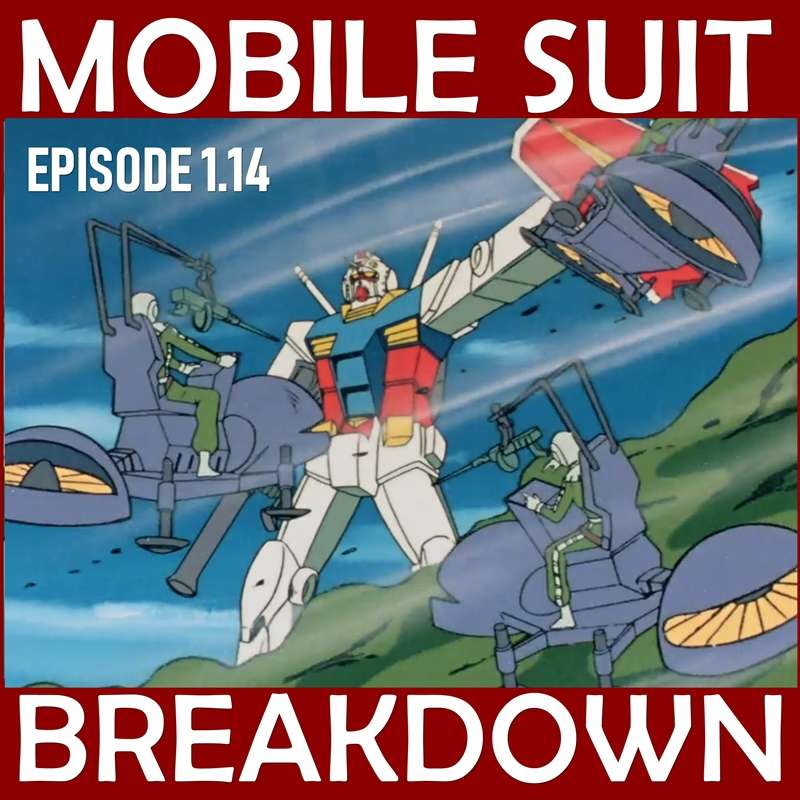
Show Notes This week, we recap and review Mobile Suit Gundam episode 14, "Time, Be Still," discuss our first impressions, and provide commentary and research on: the Neo-Confucian concept of gekokujō and it's importance in prewar and wartime Japan, Audie Murphy, the "Memphis Belle" B-17 bomber, Japanese fighter aces, anti-tank explosives, and the Piasecki "AirGeep" hover-bike. - An explanation of Gekokujō, focusing on its importance in Japanese history. - The life and military career of Audie Murphy. - The "Memphis Belle" B-17 Bomber and it's history and preservation. And a one-sheet about the "Hell's Angels" B-17, that beat the "Belle" to the 25-mission benchmark. - Saburo Sakai and Hiroyoshi Nishizawa, famous Japanese fighter aces. - Detailed explanation of tanks used in the Pacific War. Two articles about the haftholladung German anti-tank explosive, explanation and photos of the Type-99 Japanese anti-tank explosive, and an army intelligence bulletin from 1945, detailing late-stage anti-tank tactics in the Pacific War. - Piasecki's own page on the AirGeep, an overview of the AirGeep development program, and some additional details on the tech. You can subscribe to the Mobile Suit Breakdown for free! on fine Podcast services everywhere and on YouTube, follow us on twitter @gundampodcast, check us out at gundampodcast.com, email your questions, comments, and complaints to [email protected]. The intro music is WASP by Misha Dioxin, and the outro is Long Way Home by Spinning Ratio, both licensed under Creative Commons CC BY 4.0 license. Both have been edited for length. Mobile Suit Breakdown provides critical commentary and is protected by the Fair Use clause of the United States Copyright law. All Gundam content is copyright and/or trademark of Sunrise Inc., Bandai, or its original creator. Mobile Suit Breakdown is in no way affiliated with or endorsed by Sunrise Inc. or Bandai or any of its subsidiaries, employees, or associates and makes no claim to own Gundam or any of the copyrights or trademarks related to it. Copyrighted content used in Mobile Suit Breakdown is used in accordance with the Fair Use clause of the United States Copyright law. Any queries should be directed to [email protected] Find out more at http://gundampodcast.com

S1 Ep 131.13: 1.13 - Mothers are Complex
Show Notes This week, we recap and review Mobile Suit Gundam episode 13, "Coming Home," discuss our first impressions, and provide commentary and research on: the original Pinocchio and some of the Japanese media it inspired, military quartering and billeting, and the martial art judo. - Overview of The Adventures of Pinocchio, Pinocchio as a character, and some of the darker themes of the original story. - Various adaptations of the Pinocchio story, including the 1940 Disney film, Osamu Tezuka's manga adaptation, and the two anime series: Piccolino no Bōken and Pinocchio: The Series. - Text and explanation of the 3rd Ammendment of the US Constitution, first-person accounts of German soldiers quartering and billeting in occupied territory, and a discussion of the US army quartering in private homes on the Aleutian islands. - Judo's origins and other Judo information from the Japanese Ministry of Foreign Affairs and premier English-language judo website, Judo Info. We also consulted this book: Encyclopedia of Japanese Martial Arts, David A. Hall, Kodansha International; 1 edition (February 22, 2013) You can subscribe to the Mobile Suit Breakdown for free! on fine Podcast services everywhere and on YouTube, follow us on twitter @gundampodcast, check us out at gundampodcast.com, email your questions, comments, and complaints to [email protected]. The intro music is WASP by Misha Dioxin, and the outro is Long Way Home by Spinning Ratio, both licensed under Creative Commons CC BY 4.0 license. Both have been edited for length. Mobile Suit Breakdown provides critical commentary and is protected by the Fair Use clause of the United States Copyright law. All Gundam content is copyright and/or trademark of Sunrise Inc., Bandai, or its original creator. Mobile Suit Breakdown is in no way affiliated with or endorsed by Sunrise Inc. or Bandai or any of its subsidiaries, employees, or associates and makes no claim to own Gundam or any of the copyrights or trademarks related to it. Copyrighted content used in Mobile Suit Breakdown is used in accordance with the Fair Use clause of the United States Copyright law. Any queries should be directed to [email protected] Find out more at http://gundampodcast.com

S1 Ep 121.12: 1.12 - Into the Storm
Show Notes This week, we recap and review Mobile Suit Gundam episode 12, "The Threat of Zeon," discuss our first impressions, and provide commentary and research on: large public funerals and their use in politics, is "rookie syndrome" a thing?, the episode directors and their possible influences (or - were they thinking of Samuel Fuller's film "Shock Corridor"?), and some fun analysis of the newly introduced tech. - In talking about funerals, we reference Pericles' funeral oration, Antigone, the Duke of Wellington's funeral, and the funerals of the Meiji and Taisho Emperors. For WWII specific examples, we talk about FDR and his comparatively subdued funeral, Reinhard Heydrich and his elaborate funeral, the rumors about special treatment for Kamikaze pilots, and Admiral Isoroku Yamamoto. For details about Yamamoto, I also referenced this book: Davis, Don. Lightning Strike: the Secret Mission to Kill Admiral Yamamoto and Avenge Pearl Harbor. St. Martin's Griffin, 2006. - Here's a synopsis for Shock Corridor, as well as reviews from the LATimes and Criterion, and the IMDB page, which has plenty of screen grabs so you can see what I meant about the visual style. - Thom's discussion of "Rookie Syndrome" references this article: Japanese Military Suicides During the Asia-Pacific War: Studies of the unauthorized self-killings of soldiers, Asia-Pacific Journal, Vol. 13, Issue 25, June 22, 2015, Janice Matsumura and Diana Wright https://apjjf.org/-Janice-Matsumura--Diana-Wright/4334/article.pdf. - A fan analysis Thom is willing to reference! How many Zaku fit in a Musai? - And for those of you who like this sort of crunch, our source on naval weaponry. You can subscribe to the Mobile Suit Breakdown for free! on fine Podcast services everywhere and on YouTube, follow us on twitter @gundampodcast, check us out at gundampodcast.com, email your questions, comments, and complaints to [email protected]. The intro music is WASP by Misha Dioxin, and the outro is Long Way Home by Spinning Ratio, both licensed under Creative Commons CC BY 4.0 license. Both have been edited for length. Mobile Suit Breakdown provides critical commentary and is protected by the Fair Use clause of the United States Copyright law. All Gundam content is copyright and/or trademark of Sunrise Inc., Bandai, or its original creator. Mobile Suit Breakdown is in no way affiliated with or endorsed by Sunrise Inc. or Bandai or any of its subsidiaries, employees, or associates and makes no claim to own Gundam or any of the copyrights or trademarks related to it. Copyrighted content used in Mobile Suit Breakdown is used in accordance with the Fair Use clause of the United States Copyright law. Any queries should be directed to [email protected] Find out more at http://gundampodcast.com

S1 Ep 111.11: 1.11 - All That Remains
Show Notes Content Warning: Suicide. "What do you mean 'she has lost the will to live?'" This week, we recap and review Mobile Suit Gundam episode 11, "Icelina - Love's Remains," discuss our first impressions, and provide commentary and research on: suicide in Japanese culture, the proper way to get vengeance, meaningful character names, how to roll your Rs, and saying goodbye to the most fabulous characters so far. - A longer definition of shinjū. - More information about the life and works of Chikamatsu Monzaemon. - Detailed synopses of the plays Sonezaki Shinjū and Shinjū ten no Amijima. - Additional explanation of giri and ninjou and their place in Japanese society during the Tokugawa Shogunate. - Journal articles about interpreting shinjū in plays and in society, and discussing the Buddhist influence on Japanese attitudes toward suicide and euthenasia: Heine, Steven. “Tragedy and Salvation in the Floating World: Chikamatsu's Double Suicide Drama as Millenarian Discourse.” The Journal of Asian Studies, vol. 53, no. 2, 1994, pp. 367–393. JSTOR, JSTOR, www.jstor.org/stable/2059839. Becker, Carl B. “Buddhist Views of Suicide and Euthanasia.” Philosophy East and West, vol. 40, no. 4, 1990, pp. 543–556. JSTOR, JSTOR, www.jstor.org/stable/1399357. - Books and articles about Kataki-uchi (the rule-bound and later beaurocratized revenge from medieval and Tokugawa periods): Varley, H. Paul. Japanese Culture. Univ. of Hawaiʻi Press, 2004. Ikegami, Eiko. The Taming of the Samurai: Honorific Individualism and the Making of Modern Japan. Harvard University Press, 2003. The Great Mirror of Male Love (Nanshoku Oukagami) Stanford UP, 1990, Trans. by Paul Gordon Schalow. Jasmin M. Curtis (2012). Drops of Blood on Fallen Snow: The Evolution of Blood-Revenge Practices in Japan. University of Massachusetts Amherst (Masters Thesis). Retrieved from https://scholarworks.umass.edu/cgi/viewcontent.cgi?article=1963&context=theses Mills, D. E. “Kataki-Uchi: The Practice of Blood-Revenge in Pre-Modern Japan.” Modern Asian Studies, vol. 10, no. 4, 1976, pp. 525–542. JSTOR, JSTOR, www.jstor.org/stable/311761. You can subscribe to the Mobile Suit Breakdown for free! on fine Podcast services everywhere and on YouTube, follow us on twitter @gundampodcast, check us out at gundampodcast.com, email your questions, comments, and complaints to [email protected]. The intro music is WASP by Misha Dioxin, and the outro is Long Way Home by Spinning Ratio, both licensed under Creative Commons CC BY 4.0 license. Both have been edited for length. Mobile Suit Breakdown provides critical commentary and is protected by the Fair Use clause of the United States Copyright law. All Gundam content is copyright and/or trademark of Sunrise Inc., Bandai, or its original creator. Mobile Suit Breakdown is in no way affiliated with or endorsed by Sunrise Inc. or Bandai or any of its subsidiaries, employees, or associates and makes no claim to own Gundam or any of the copyrights or trademarks related to it. Copyrighted content used in Mobile Suit Breakdown is used in accordance with the Fair Use clause of the United States Copyright law. Any queries should be directed to [email protected] Find out more at http://gundampodcast.com

S1 Ep 101.10: 1.10 - The Misfortune of Birth
Show Notes Everything continues to go well for the Zabi family. This week, we recap and review Mobile Suit Gundam episode 10, "Garma's Fate," discuss our first impressions, and provide commentary and research on: Where exactly are we? Are we there yet? How long will it take to get there?, the Seattle "Kingdome," carpet-bombing and incendiaries, the first kamikaze pilots, and episode director Yoshikazu Yasuhiko. - A couple of the maps I looked at before Thom told me they are not to be relied upon. - History of the Seattle Kingdome stadium, unexpected architectural star of the episode. - Carpet-bombing and incendiaries explained. Prepare to be sad about the lengths humans go and the creativity employed in the interest of killing each other. - The first kamikaze pilots. - And additional information on episode Director Yoshikazu Yasuhiko (aka YAS), character designer, animation director, artist, and award-winning manga creator (link is to a source in Japanese). I highly recommend doing an image search to see samples of his artwork; it makes his artistic influence on the show much clearer. You can subscribe to the Mobile Suit Breakdown for free! on fine Podcast services everywhere and on YouTube, follow us on twitter @gundampodcast, check us out at gundampodcast.com, email your questions, comments, and complaints to [email protected]. The intro music is WASP by Misha Dioxin, and the outro is Long Way Home by Spinning Ratio, both licensed under Creative Commons CC BY 4.0 license. Both have been edited for length. Mobile Suit Breakdown provides critical commentary and is protected by the Fair Use clause of the United States Copyright law. All Gundam content is copyright and/or trademark of Sunrise Inc., Bandai, or its original creator. Mobile Suit Breakdown is in no way affiliated with or endorsed by Sunrise Inc. or Bandai or any of its subsidiaries, employees, or associates and makes no claim to own Gundam or any of the copyrights or trademarks related to it. Copyrighted content used in Mobile Suit Breakdown is used in accordance with the Fair Use clause of the United States Copyright law. Any queries should be directed to [email protected] Find out more at http://gundampodcast.com

S1 Ep 91.9: 1.9 - Paranoia and Treachery
Show Notes In this episode Thom and Nina discuss Mobile Suit Gundam episode 9, "Fly! Gundam!" , desperate times on the White Base, what Bright actually wants, whether or not there's time for philosophy, a famous slap, and an entirely unnecessary full body pan. We research: Just how a person like Amuro might respond to trauma, and what a post-traumatic stress breakdown might look like: ADAA overview of common reactions to trauma A lengthier and more descriptive discussion of many of the same reactions Veteran's Affairs resources regarding PTSD among soldiers including risk factors Corporal punishment in Japan, and what Tomino thinks about it: An archived copy of a now defunct anime website's Tomino interview. Survey results on corporal punishment in public opinion in Japan Times and Asahi Shinbun. Recent case of suicide due to abuse by coach. Research and analysis of corporal punishment in Japan. Japanese ideals of modern masculinity in the 1970s, and how they relate to *bushido Masculinity and male virtues. Bushido virtues. Hofstede Insights cultural model and specific insights about Japan. Just what is motivation, and how does it work? Psychology Today article on different motivational models. Could old people be... the enemy? Tomino tells an audience that "adults are the enemy." You can subscribe to the Mobile Suit Breakdown for free! on fine Podcast services everywhere and on YouTube, follow us on twitter @gundampodcast, check us out at gundampodcast.com, email your questions, comments, and complaints to [email protected]. The intro music is WASP by Misha Dioxin, and the outro is Long Way Home by Spinning Ratio, both licensed under Creative Commons CC BY 4.0 license. Both have been edited for length. Mobile Suit Breakdown provides critical commentary and is protected by the Fair Use clause of the United States Copyright law. All Gundam content is copyright and/or trademark of Sunrise Inc., Bandai, or its original creator. Mobile Suit Breakdown is in no way affiliated with or endorsed by Sunrise Inc. or Bandai or any of its subsidiaries, employees, or associates and makes no claim to own Gundam or any of the copyrights or trademarks related to it. Copyrighted content used in Mobile Suit Breakdown is used in accordance with the Fair Use clause of the United States Copyright law. Any queries should be directed to [email protected] Find out more at http://gundampodcast.com

S1 Ep 81.8: 1.8 - Family Men Like Us
Show Notes Is this what all mothers are like? This week, we recap and review Mobile Suit Gundam episode 8, "The Winds of War," discuss our first impressions, and provide commentary and research on: Canadian geography and the town of Saints-Anges, Tomino's influences, Akira Kurosawa and Yasujiro Ozu, The Grand Illusion, and what is furusato and why is it so important in Japanese culture? The only source we have for Saints-Anges (St. Anges in the show), is Google maps and the deductions we walk you through in the podcast. Still, we're pretty sure its a reference to a real town. Even if they probably picked it by stabbing a finger at a map. Click here for an overview of Akira Kurosawa's career, style and themes. To learn about Yasujiro Ozu, Senses of Cinema has a wonderful overview of his career and explanation of his style, and the Japan Times has a discussion of Ozu's current popularity in filmmaking circles. You can read more about Jean Renoir's The Grand Illusion (La Grande Illusion) here. This article gives a thorough explanation of the concept of furusato and its place in Japanese culture. If you'd like to listen to the song Furusato, the one all Japanese school-children learn, you can listen here. You can subscribe to the Mobile Suit Breakdown for free! on fine Podcast services everywhere and on YouTube, follow us on twitter @gundampodcast, check us out at gundampodcast.com, email your questions, comments, and complaints to [email protected]. The intro music is WASP by Misha Dioxin, and the outro is Long Way Home by Spinning Ratio, both licensed under Creative Commons CC BY 4.0 license. Both have been edited for length. Mobile Suit Breakdown provides critical commentary and is protected by the Fair Use clause of the United States Copyright law. All Gundam content is copyright and/or trademark of Sunrise Inc., Bandai, or its original creator. Mobile Suit Breakdown is in no way affiliated with or endorsed by Sunrise Inc. or Bandai or any of its subsidiaries, employees, or associates and makes no claim to own Gundam or any of the copyrights or trademarks related to it. Copyrighted content used in Mobile Suit Breakdown is used in accordance with the Fair Use clause of the United States Copyright law. Any queries should be directed to [email protected] Find out more at http://gundampodcast.com

S1 Ep 71.7: 1.7 - Freefallin'
Show Notes Noh drama! A "mother complex!" and Mobile Suit Gundam Episode 7! This week, we recap and review Mobile Suit Gundam episode 7, "The Core Fighter's Escape," discuss our first impressions, and provide commentary and research on: hostage crises and Flight 472, how fighter jets land on aircraft carriers, laser measurement, "fool" and "coward" archetypes in European and Japanese literature and theatre, and what on Earth is a "mother complex"? Wikipedia has a list of major hostage crises, and more detailed information on Flight 472. We only covered the basics of how landing on an aircraft carrier works, but for more information on the myriad bits of technology that contribute to that process, check out this page on How Stuff Works. Here are links with more information on laser range-finding and laser measurement. In our research of possible literary and theatrical bases for Kai's character, we started with this overview of fool archetypes in European literature and theatre. The blog post that started us down the research rabbit-hole of "skeptic" characters in noh drama is here. For English-language information on noh (that isn't behind a paywall), the definitive source seems to be www.the-noh.com. It is from that site that we pulled definitions for the Ayakashi mask, the waki character-role, and the rongi question-and-response section of plays. ** Special note: We included this bit about Acting Captains in the 1.6 show notes, but it was meant to go with this episode. To find our what exactly an "Acting Captain" is, we consulted the United States Navy Regulations, 1990, Department of the Navy, Washington, D.C. Chapter 10: Precedence, Authority, and Command, Section 4, 1074. Some nuances certainly vary from nation to nation, but the Imperial Japanese Navy took Britain's Royal Navy as its model (and the United States Navy originates in the same system). You can subscribe to the Mobile Suit Breakdown for free! on fine Podcast services everywhere and on YouTube, follow us on twitter @gundampodcast, check us out at gundampodcast.com, email your questions, comments, and complaints to [email protected]. The intro music is WASP by Misha Dioxin, and the outro is Long Way Home by Spinning Ratio, both licensed under Creative Commons CC BY 4.0 license. Both have been edited for length. Mobile Suit Breakdown provides critical commentary and is protected by the Fair Use clause of the United States Copyright law. All Gundam content is copyright and/or trademark of Sunrise Inc., Bandai, or its original creator. Mobile Suit Breakdown is in no way affiliated with or endorsed by Sunrise Inc. or Bandai or any of its subsidiaries, employees, or associates and makes no claim to own Gundam or any of the copyrights or trademarks related to it. Copyrighted content used in Mobile Suit Breakdown is used in accordance with the Fair Use clause of the United States Copyright law. Any queries should be directed to [email protected] Find out more at http://gundampodcast.com

S1 Ep 61.6: 1.6 - Welcome to Earth, Gundam!
Show Notes Ever wonder if Char and Garma were more than just friends? There's more evidence to float that ship than you might think... On the Gundam podcast this week, we watch Mobile Suit Gundam episode 6, "Garma Strikes," discuss our first impressions, and provide commentary and research on: soldier psychology, inspiration for the names of Zeon ships and tech, romance between men in Japanese history, and what exactly is an acting captain? For our discussion of soldier psychology, we consulted the helpful and detailed website, Military Science Fiction. Trying to decipher the inspiration for the names of Zeon ships came down to scouring German and Japanese dictionaries on the web (our favorite online Japanese dictionaries are Jim Breen and Jisho. There are a few great resources on romantic and sexual relationships between men in Japanese history. We enjoyed Tofugu's great article "The Gay of the Samurai: All About Homosexuality, Buddhist Monks, Samurai, and the Tokugawa Middle Class". The following books were also helpful in our research: Pflugfelder, Gregory M. Cartographies of Desire: Male-Male Sexuality in Japanese Discourse, 1600-1950. University of California Press, 2007. McLelland, Mark J. Queer Japan from the Pacific War to the Internet Age. Rowman & Littlefield, 2005. To find our what exactly an "Acting Captain" is, we consulted the United States Navy Regulations, 1990, Department of the Navy, Washington, D.C. Chapter 10: Precedence, Authority, and Command, Section 4, 1074. Some nuances certainly vary from nation to nation, but the Imperial Japanese Navy took Britain's Royal Navy as its model (and the United States Navy originates in the same system). You can subscribe to the Mobile Suit Breakdown for free! on fine Podcast services everywhere and on YouTube, follow us on twitter @gundampodcast, check us out at gundampodcast.com, email your questions, comments, and complaints to [email protected]. The intro music is WASP by Misha Dioxin, and the outro is Long Way Home by Spinning Ratio, both licensed under Creative Commons CC BY 4.0 license. Both have been edited for length. Mobile Suit Breakdown provides critical commentary and is protected by the Fair Use clause of the United States Copyright law. All Gundam content is copyright and/or trademark of Sunrise Inc., Bandai, or its original creator. Mobile Suit Breakdown is in no way affiliated with or endorsed by Sunrise Inc. or Bandai or any of its subsidiaries, employees, or associates and makes no claim to own Gundam or any of the copyrights or trademarks related to it. Copyrighted content used in Mobile Suit Breakdown is used in accordance with the Fair Use clause of the United States Copyright law. Any queries should be directed to [email protected] Find out more at http://gundampodcast.com

S1 Ep 51.5: 1.5 The Descendants of Earth
Show Notes This week, we recap and review Mobile Suit Gundam episode 5, "Re-Entry to Earth," discuss our first impressions, and provide commentary and research on: hot towels, the Fukushima Daiichi nuclear disaster, the history of spaceflight, childhood trauma, Japanese migration, and physics in science fiction! with special guest, Iraj. The East Japan Oshibori Cooperative Association has a brief history of hot towels (oshibori) in Japan (site is in Japanese). Wikipedia has a thorough overview of the Fukushima Daiichi nuclear disaster, while the following news articles talk about those who refused to leave the exclusion zone, farmers returning to tend their animals, and the high percentage of returners who are 65 and older. I go over the history of spaceflight very quickly - you can learn more here, and click here to learn specifically about Skylab (the space station that broke up on re-entry, it's pieces crashing into Australia). For our discussion of transitional objects, we reference online articles here, here, and here, as well as this article from the International Journal of Adolescence and Youth: Enrique Roig , Clelia Trelancia Roig & Nancy Soth (1987) The Use of Transitional Objects in Emotionally-Disturbed Adolescent Inpatients, International Journal of Adolescence and Youth, 1:1, 45-58, DOI: 10.1080/02673843.1987.9747625 In case, like me, your high school science knowledge could use a refresher, here is a handy chart of the electromagnetic spectrum, which Iraj references several times in the episode. And here are the promised links with more information about reinforced carbon-carbon and ceramics used on space shuttles. Our discussion of Japanese migration is based on this article from UCLA's Terasaki Center for Japanese Studies, and on this book: Masterson, Daniel M., and Sayaka Funada-Classen. The Japanese in Latin America. University of Illinois Press, 2004. You can subscribe to the Mobile Suit Breakdown for free! on fine Podcast services everywhere and on YouTube, follow us on twitter @gundampodcast, check us out at gundampodcast.com, email your questions, comments, and complaints to [email protected]. The intro music is WASP by Misha Dioxin, and the outro is Long Way Home by Spinning Ratio, both licensed under Creative Commons CC BY 4.0 license. Both have been edited for length. Mobile Suit Breakdown provides critical commentary and is protected by the Fair Use clause of the United States Copyright law. All Gundam content is copyright and/or trademark of Sunrise Inc., Bandai, or its original creator. Mobile Suit Breakdown is in no way affiliated with or endorsed by Sunrise Inc. or Bandai or any of its subsidiaries, employees, or associates and makes no claim to own Gundam or any of the copyrights or trademarks related to it. Copyrighted content used in Mobile Suit Breakdown is used in accordance with the Fair Use clause of the United States Copyright law. Any queries should be directed to [email protected] Find out more at http://gundampodcast.com

S1 Ep 41.4: 1.4 - On the (Space) Road Again
Show Notes On this episode: space-refugees, soldiers as police, cultural changes in the Japanese post-war period, the "granddaddy" of anime, and anime history and aesthetics. To learn more about Japan's response to the Indochina Refugee Crisis, check out these articles: Havens, Thomas R.H. “Japan's Response to the Indochinese Refugee Crisis.” Southeast Asian Journal of Social Science, vol. 18, no. 1, 1990, pp. 166–181. JSTOR, JSTOR, www.jstor.org/stable/24491760. Wain, Barry. "The Indochina Refugee Crisis." Foreign Affairs, Council on Foreign Relations, Fall 1979. Web. 21 Sept. 2018. https://www.foreignaffairs.com/articles/cambodia/1979-09-01/indochina-refugee-crisis I'm not posting links to photos of soldiers and civilians from the Vietnam War years, because there are hundreds and it's depressing, but a Google image search will quickly show you what we mean if you're unfamiliar with photography of the period. In the US, when we learn about Japanese history it is usually in the context of WWII. For a great overview of Japan in the post-war period, check out this book: Hane, Mikiso. Eastern Phoenix: Japan since 1945. Westview Press, 1998. Wikipedia has an extensive overview of anime (with a great bibliography of further reading!). I also enjoyed the two books below. The first, on the history of Might Atom/Astroboy, is written by Frederick L. Schodt who also translated the Gundam novels Tomino wrote between first Gundam and the compilation movies. The second provides some analysis of anime aesthetics and philosophy which I didn't always agree with but did find interesting. Schodt, Frederik L. The Astro Boy Essays: Osamu Tezuka, Mighty Atom, and the Manga/Anime Revolution. Calif., 2007. Brophy, Philip. 100 Anime. BFI Publishing, 2006. You can subscribe to the Mobile Suit Breakdown for free! on fine Podcast services everywhere and on YouTube, follow us on twitter @gundampodcast, check us out at gundampodcast.com, email your questions, comments, and complaints to [email protected]. The intro music is WASP by Misha Dioxin, and the outro is Long Way Home by Spinning Ratio, both licensed under Creative Commons CC BY 4.0 license. Both have been edited for length. Mobile Suit Breakdown provides critical commentary and is protected by the Fair Use clause of the United States Copyright law. All Gundam content is copyright and/or trademark of Sunrise Inc., Bandai, or its original creator. Mobile Suit Breakdown is in no way affiliated with or endorsed by Sunrise Inc. or Bandai or any of its subsidiaries, employees, or associates and makes no claim to own Gundam or any of the copyrights or trademarks related to it. Copyrighted content used in Mobile Suit Breakdown is used in accordance with the Fair Use clause of the United States Copyright law. Any queries should be directed to [email protected] Find out more at http://gundampodcast.com

S1 Ep 31.3: 1.3 - Mistakes Were Made
Show Notes In this episode: Astrography of the Gundamverse in UC79, what keeps the sides in-place?, collective decision-making, introducing the Minovsky particle, and developments in physics of the 1970s prove Clarke's Third Law, that "Any sufficiently advanced technology is indistinguishable from magic." A map of Lagrange Points and a map of the UC79 Gundamverse, showing the sides and Luna II. (Ignore the maps that refer to future series)" The Zaku I, which seems inspired by Roman gladiators. It's worth pointing out, many empires throughout history (including the Nazis in WWII) have styled themselves after the Roman Empire. All of the sources we read on collective decision-making focus on a business context, but the practice has it's foundation in Japanese history and so will certainly affect other aspects of Japanese society. You can read a detailed breakdown of the process here and here. A timeline of developments in physics. Pay special attention to developments during the post-war period, when a number of sub-atomic particles were discovered. This more detailed explanation of quantum entanglement is well worth a read. And finally, a report by the US Energy Research and Development Administration on the projected timelines for development of fusion power, published in 1976. Skip to page 10 for a chart of development progress over time as a function of research spending. You can subscribe to the Mobile Suit Breakdown for free! on fine Podcast services everywhere and on YouTube, follow us on twitter @gundampodcast, check us out at gundampodcast.com, email your questions, comments, and complaints to [email protected]. The intro music is WASP by Misha Dioxin, and the outro is Long Way Home by Spinning Ratio, both licensed under Creative Commons CC BY 4.0 license. Both have been edited for length. Mobile Suit Breakdown provides critical commentary and is protected by the Fair Use clause of the United States Copyright law. All Gundam content is copyright and/or trademark of Sunrise Inc., Bandai, or its original creator. Mobile Suit Breakdown is in no way affiliated with or endorsed by Sunrise Inc. or Bandai or any of its subsidiaries, employees, or associates and makes no claim to own Gundam or any of the copyrights or trademarks related to it. Copyrighted content used in Mobile Suit Breakdown is used in accordance with the Fair Use clause of the United States Copyright law. Any queries should be directed to [email protected] Find out more at http://gundampodcast.com

S1 Ep 21.2: 1.2 - No, She's Too Strong!
Show Notes In this episode: Space-Okinawa, society has a short memory, was childhood ever sacred?, nuclear allegory, fancy uniforms, and mutually assured Gundams. You can read more about the Battle of Okinawa in these pages. While estimates of the number of Tekketsu Kinnotai boys (middle-school aged conscripts) vary, we are going with the 1,780 local Okinawan estimate given by their Peace Museum. Wikipedia has a good overview of the use of child soldiers in WWII generally, including the fact that the International Criminal Court did not make use of child soldiers a war crime until 1998 (and they define "child" as "under the age of fifteen years." Further reading about Yasukuni Shrine and the controversies around it. Did you know the Treaty of Mutual Cooperation and Security between the United States and Japan "has lasted longer than any other alliance between two great powers since the 1648 Peace of Westphalia"? The essay I mention, that discusses anime portrayals of childhood, is: Ito, Mizuko. “Migrating Media: Anime Media and the Childhood Imagination.” Designing Modern Childhoods: History, Space, and the Material Culture of Children, by Marta Gutman and Ning De Coninck-Smith, Rutgers University Press, 2008, p. 301. These Prussian uniforms are reminiscent of the uniforms on Zeon's rank-and-file, while all Zeon soldiers, including the officers, wear helms inspired by the coal-scuttle-shaped helmets of the German Empire circa WWI. Char's uniform is more specific, harkening back to the uniforms of Prussian cavalry officers circa 1868. Note in particular the collar (like the Zeon uniforms it is a stand-up style, in red with gold detailing), the similarly decorated cuffs, the epaulets, and the single-breasted tunic-style jacket. While none of these features is unique to Prussian cavalry officers or Zeon, the combination of all of them in one uniform is quite rare. You can subscribe to the Mobile Suit Breakdown for free! on fine Podcast services everywhere and on YouTube, follow us on twitter @gundampodcast, check us out at gundampodcast.com, email your questions, comments, and complaints to [email protected]. The intro music is WASP by Misha Dioxin, and the outro is Long Way Home by Spinning Ratio, both licensed under Creative Commons CC BY 4.0 license. Both have been edited for length. Mobile Suit Breakdown provides critical commentary and is protected by the Fair Use clause of the United States Copyright law. All Gundam content is copyright and/or trademark of Sunrise Inc., Bandai, or its original creator. Mobile Suit Breakdown is in no way affiliated with or endorsed by Sunrise Inc. or Bandai or any of its subsidiaries, employees, or associates and makes no claim to own Gundam or any of the copyrights or trademarks related to it. Copyrighted content used in Mobile Suit Breakdown is used in accordance with the Fair Use clause of the United States Copyright law. Any queries should be directed to [email protected] Find out more at http://gundampodcast.com

S1 Ep 11.1: 1.1 - To Live and Die in Space
Episode Notes In this episode: the 70s in our universe and in the Universal Century, in belum medium, aesthetics musical and visual, and... what's my age again? (what's my age again?) High-level overviews of events of the 1970s, in the world and in Japan. Here is the book cover (center) that Thom mentioned, with an example of Tomino's preferred color-scheme for the White Base. You can find more great information from the translator at his website The Zeon "Zaku II" mobile suit, and a photo of Japanese soldiers from the Special Naval Landing Force in the gas masks that, we think, inspired the design of the Zaku. Additional information about The Death of the Author and its place in literary criticism. And finally the intro song, "Tobe! Gandamu" (for pre-karaoke practice!). You can subscribe to the Mobile Suit Breakdown for free! on fine Podcast services everywhere and on YouTube, follow us on twitter @gundampodcast, check us out at gundampodcast.com, and email your questions, comments, and complaints to [email protected]. The intro music is WASP by Misha Dioxin, and the outro is Long Way Home by Spinning Ratio, both licensed under Creative Commons CC BY 4.0 license. Both edited for length. Mobile Suit Breakdown provides critical commentary and is protected by the Fair Use clause of the United States Copyright law. All Gundam content is copyright and/or trademark of Sunrise Inc., Bandai, or its original creator. Mobile Suit Breakdown is in no way affiliated with or endorsed by Sunrise Inc. or Bandai or any of its subsidiaries, employees, or associates and makes no claim to own Gundam or any of the copyrights or trademarks related to it. Copyrighted content used in Mobile Suit Breakdown is used in accordance with the Fair Use clause of the United States Copyright law. Any queries should be directed to [email protected] Find out more at http://gundampodcast.com
0.0 - Gundam Podcast Rises
bonusEpisode Notes In this episode, we discuss who we are, what this is, and why we're doing it. Read this and future show notes for visual aids like photos, charts, and videos, bibliography and research references, and miscellaneous ephemera related to each episode. Speaking of which... Here is an example of the early Clover models, chunkier and less detailed than the models many of us are familiar with, and a TV commercial from 1982, for the various Bandai model kits created for first Gundam. You can subscribe to the Mobile Suit Breakdown for free! on fine Podcast services everywhere and on YouTube, follow us on twitter @gundampodcast, check us out at gundampodcast.com, email your questions, comments, and complaints to [email protected]. The intro music is WASP by Misha Dioxin, and the outro is Long Way Home by Spinning Ratio, both licensed under Creative Commons CC BY 4.0 license. Both edited for length. Mobile Suit Breakdown provides critical commentary and is protected by the Fair Use clause of the United States Copyright law. All Gundam content is copyright and/or trademark of Sunrise Inc., Bandai, or its original creator. Mobile Suit Breakdown is in no way affiliated with or endorsed by Sunrise Inc. or Bandai or any of its subsidiaries, employees, or associates and makes no claim to own Gundam or any of the copyrights or trademarks related to it. Copyrighted content used in Mobile Suit Breakdown is used in accordance with the Fair Use clause of the United States Copyright law. Any queries should be directed to [email protected]