Episode 19
Why Nvidia's primary memory supplier is aiming for a U.S. listing
This article is by Lee Jae-lim and read by an artificial voice. [NEWS ANALYSIS] SK hynix, which is still believed to be undervalued despite being the world's leading memory maker and a key supplier to Nvidia, is preparing to boost its valuation by pur...
Korea JoongAng Daily - Daily News from Korea · LEE JAE-LIM
March 30, 20267m 24s
Audio is streamed directly from the publisher (cdn.beyondwords.io) as published in their RSS feed. Play Podcasts does not host this file. Rights-holders can request removal through the copyright & takedown page.
Show Notes
This article is by Lee Jae-lim and read by an artificial voice.
[NEWS ANALYSIS]
SK hynix, which is still believed to be undervalued despite being the world's leading memory maker and a key supplier to Nvidia, is preparing to boost its valuation by pursuing a U.S. listing in the second half of 2026 through American depositary receipts (ADRs).
At the same time, the company is investing a significant amount to expand its supply chain footprint across Korea and the United States.
However, the ADR listing plan has sparked debate among shareholders and analysts. Supporters argue that a U.S. listing could help narrow the "Korea discount" — in which local shares trade below their value — that has long weighed on domestic equities. Critics, on the other hand, warn that issuing new shares could dilute existing shareholders' stakes.
The uncertainty persists because the listing process is at the initial stage, with no detailed plans regarding the ADR structure and issuance.
TSMC is being cited as a relevant successful precedent. The Taiwanese chipmaker listed its ADRs on the New York Stock Exchange in 1997, just three years after its domestic initial public offering, or IPO, in September 1994. Since then, TSMC's market capitalization has increased more than 220-fold to $1.7 trillion.
So what is the dispute?
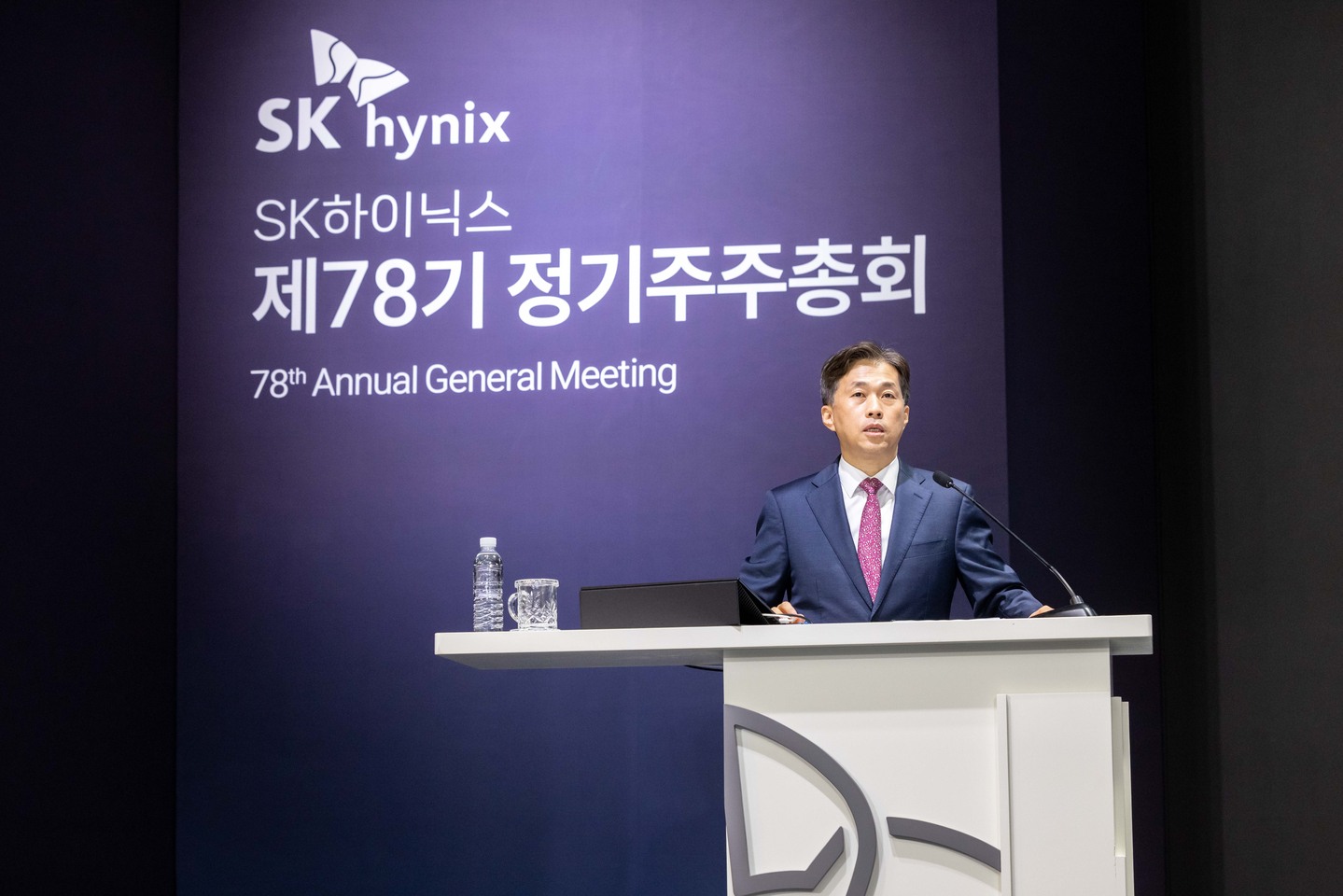
Domestic shareholders are concerned that issuing new shares could dilute existing ones. At the general meeting, a retail investor questioned whether the company would issue new shares to support ADRs, noting that it had already canceled its treasury shares.
SK hynix did not answer the question directly and instead commented that details on size and structure have not yet been finalized.
Market participants estimate that new shares worth 10 to 15 trillion won ($6.6 billion to $9.9 billion) could be issued.
Despite this, global market sentiment regarding SK hynix stock remains optimistic. Nomura Securities recently revised its target price for SK hynix upward to 1.93 million won, citing the Korean company's U.S. listing effort — which would reduce the valuation gap with Micron — as a key rationale. Goldman Sachs and Mirae Asset Securities estimated SK hynix's target price at 1.35 million and 1.54 million won. Goldman Sachs described the current period as the "strongest upcycle in memory history," forecasting SK hynix's 2026 operating profit to reach 202 trillion won. Korean analysts have also been overly positive about the company's U.S. listing effort due to the fact that memory shortages will likely persist throughout 2028; chip prices, in turn, will remain elevated from the supply bottleneck.
"If a valuation gap emerges between ADRs and domestic common shares, [that gap] could lift the valuation of the underlying shares," said Mirae Asset Research analyst Kim Young-gun.
A valuation gap between ADRs and domestic shares refers to the same company trading at different prices or valuation multiples across markets.
While ADRs and Korean-listed shares should theoretically be priced equally after accounting for exchange rates and conversion ratios, ADRs can sometimes trade at a premium due to stronger demand from global investors, with better market access and a reduced Korea discount. If ADRs trade higher, arbitrage activity, in which investors buy cheaper Korean shares and convert them into ADRs, may drive up the domestic share price, ultimately lifting the underlying valuation.
This is important when assessing the potential dilution from a new share issuance. While issuing new shares increases the total number of outstanding shares, thereby diluting existing ownership, the impact may be limited if the issuance is small. In such cases, any valuation rerating driven by an ADR listing could outweigh the dilution effect, especially if the listing helps narrow the company's discount relative to global peers. This is the reason that SK Square, SK hynix's largest shareholder, is expected to maintain its 20.5 percent stake.
Kim Rok-ho, an a...
[NEWS ANALYSIS]
SK hynix, which is still believed to be undervalued despite being the world's leading memory maker and a key supplier to Nvidia, is preparing to boost its valuation by pursuing a U.S. listing in the second half of 2026 through American depositary receipts (ADRs).
At the same time, the company is investing a significant amount to expand its supply chain footprint across Korea and the United States.
However, the ADR listing plan has sparked debate among shareholders and analysts. Supporters argue that a U.S. listing could help narrow the "Korea discount" — in which local shares trade below their value — that has long weighed on domestic equities. Critics, on the other hand, warn that issuing new shares could dilute existing shareholders' stakes.
The uncertainty persists because the listing process is at the initial stage, with no detailed plans regarding the ADR structure and issuance.
TSMC is being cited as a relevant successful precedent. The Taiwanese chipmaker listed its ADRs on the New York Stock Exchange in 1997, just three years after its domestic initial public offering, or IPO, in September 1994. Since then, TSMC's market capitalization has increased more than 220-fold to $1.7 trillion.
So what is the dispute?
Domestic shareholders are concerned that issuing new shares could dilute existing ones. At the general meeting, a retail investor questioned whether the company would issue new shares to support ADRs, noting that it had already canceled its treasury shares.
SK hynix did not answer the question directly and instead commented that details on size and structure have not yet been finalized.
Market participants estimate that new shares worth 10 to 15 trillion won ($6.6 billion to $9.9 billion) could be issued.
Despite this, global market sentiment regarding SK hynix stock remains optimistic. Nomura Securities recently revised its target price for SK hynix upward to 1.93 million won, citing the Korean company's U.S. listing effort — which would reduce the valuation gap with Micron — as a key rationale. Goldman Sachs and Mirae Asset Securities estimated SK hynix's target price at 1.35 million and 1.54 million won. Goldman Sachs described the current period as the "strongest upcycle in memory history," forecasting SK hynix's 2026 operating profit to reach 202 trillion won. Korean analysts have also been overly positive about the company's U.S. listing effort due to the fact that memory shortages will likely persist throughout 2028; chip prices, in turn, will remain elevated from the supply bottleneck.
"If a valuation gap emerges between ADRs and domestic common shares, [that gap] could lift the valuation of the underlying shares," said Mirae Asset Research analyst Kim Young-gun.
A valuation gap between ADRs and domestic shares refers to the same company trading at different prices or valuation multiples across markets.
While ADRs and Korean-listed shares should theoretically be priced equally after accounting for exchange rates and conversion ratios, ADRs can sometimes trade at a premium due to stronger demand from global investors, with better market access and a reduced Korea discount. If ADRs trade higher, arbitrage activity, in which investors buy cheaper Korean shares and convert them into ADRs, may drive up the domestic share price, ultimately lifting the underlying valuation.
This is important when assessing the potential dilution from a new share issuance. While issuing new shares increases the total number of outstanding shares, thereby diluting existing ownership, the impact may be limited if the issuance is small. In such cases, any valuation rerating driven by an ADR listing could outweigh the dilution effect, especially if the listing helps narrow the company's discount relative to global peers. This is the reason that SK Square, SK hynix's largest shareholder, is expected to maintain its 20.5 percent stake.
Kim Rok-ho, an a...