Episode 48
'Thank you, BTS': National Gugak Center’s art director hopes to share ‘Arirang’ stage next time
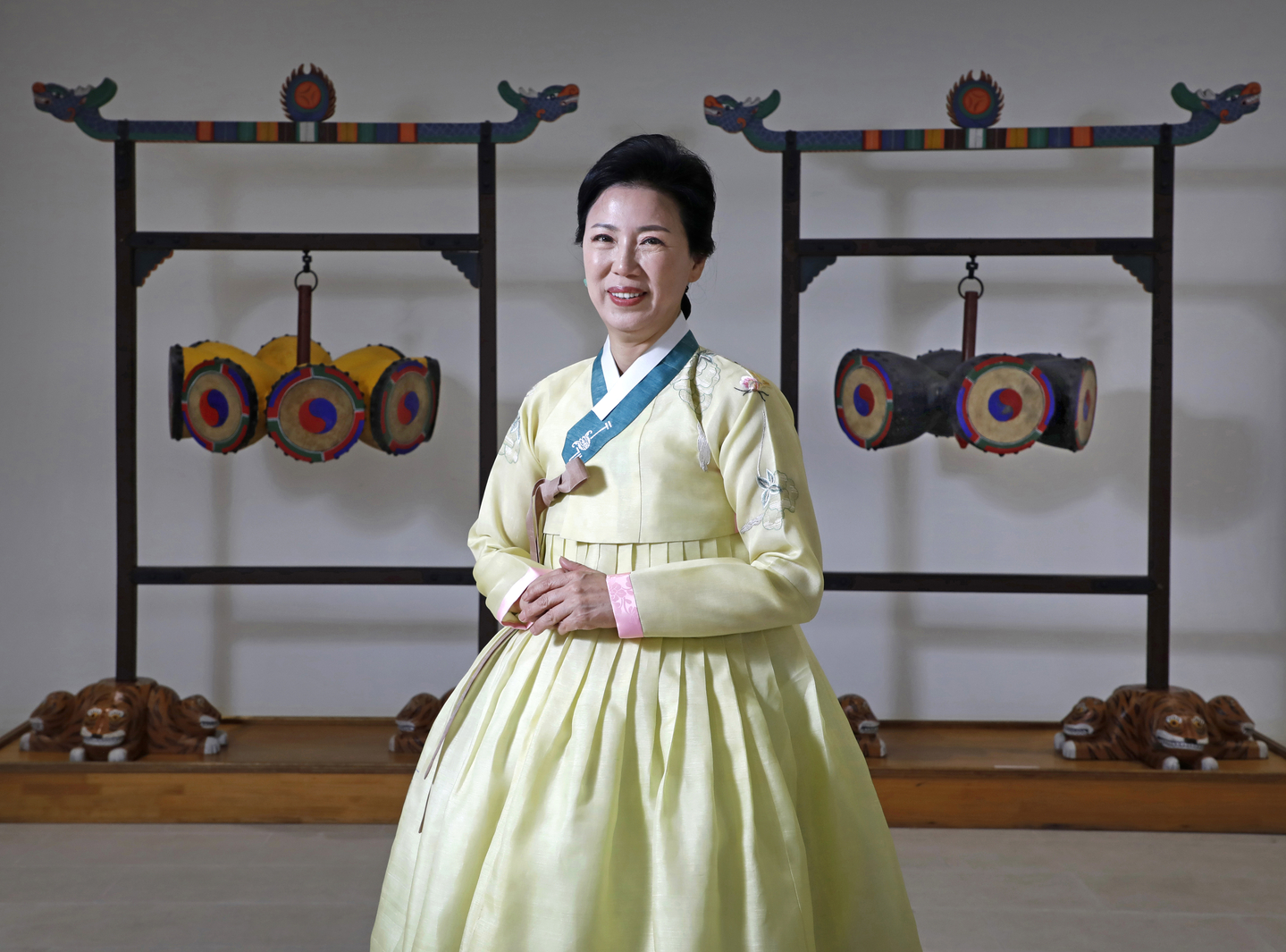
This article is by Jin Eun-soo and read by an artificial voice. [INTERVIEW] Yu Ji-suk, art director of the National Gugak Center's folk orchestra and certified instructor of seodo sori (a genre of Korean folk song that originated from the northwestern...
Korea JoongAng Daily - Daily News from Korea · JIN EUN-SOO
April 2, 20267m 26s
Audio is streamed directly from the publisher (cdn.beyondwords.io) as published in their RSS feed. Play Podcasts does not host this file. Rights-holders can request removal through the copyright & takedown page.
Show Notes
This article is by Jin Eun-soo and read by an artificial voice.
[INTERVIEW]
Yu Ji-suk, art director of the National Gugak Center's folk orchestra and certified instructor of seodo sori (a genre of Korean folk song that originated from the northwestern provinces), has recently added an unusual entry to her illustrious career: performing "Arirang" in front of Gwanghwamun for K-pop megaband BTS's comeback performance.
"It was quite a tough project, but whether it was big or small, my team and I were able to play a role in performing 'Arirang' to the global audience, and it will be remembered as a happy memory," the 63-year-old director said in a recent interview with the Korea JoongAng Daily.
" Gugak [Korean traditional music] is such a highly specialized and niche music genre, but the fact that it was able to be played at the symbolic Gwanghwamun Square means something."
Yu and her team, comprising four vocalists and eight instrumentalists, performed about a minute of "Arirang" on March 21 before some 22,000 ticket holders gathered to celebrate BTS's comeback after nearly four years. Geomungo player Lee Jae-ha, a member of the folk orchestra, participated in remixing the "Arirang" music for the performance as well.
"We rehearsed walking out of [Gyeongbok Palace] when rehearsing at Kintex [an exhibition hall in Goyang], but when we actually did it, the organizer ought to have thought that it didn't deliver as well as expected. Since it was going to be livestreamed, there needed to be no accident whatsoever, so we changed at the last minute to performing standing still," she said.
Toward the end of "Body to Body," which opened the Gwanghwamun performance, the melody of "Arirang" overlapped with the song's predominant hip-hop rhythm before taking over for about 30 seconds, which was the part responsible for by Yu's team. When the part starts, the camera, which had been focused on BTS on a special stage at Gwanghwamun Square, moves back to the woldae [elevated stone walkway] area in front of Gwanghwamun, where Yu and her team were standing by.
"If reviving gugak and Korean tradition is one of their motifs after all, then performing 'Arirang' on stage with a master singer of Korea's folk songs — even if it's not me — would be meaningful."
The following interview has been edited for length and clarity.
Q. You are a master of seodo sori, songs that have roots in Hwanghae and Pyeongan Provinces, known for their sorrowful yet bold sounds. What was it like for you to record "Arirang"?
A. When I first received the demo for the part that I was going to sing, the notes were slightly different compared to the "Arirang" that I knew. It was a bit more rhythmic. It felt unfamiliar, but at the same time quite interesting. They suggested recording it instead of performing it live on site. I thought, "Oh, that would make the job much easier." I sang the first verse and sang together with my team for the second verse. The music director told me that my vocals were more sorrowful compared to others, probably because that's the sentiment of seodo sori. I wanted to record a bit more, but they said they could fine-tune it. When I heard the final version, they had refined it, of course, especially the high pitch. "Arirang" has a very high note, so it's quite hard to make it sound solid and full-bodied. I got the feeling that they made it sound brighter and more upbeat.
The team's wardrobe is not what's usually worn for a Korean traditional music performance. What was the intention?
We're used to wearing hanbok (Korean traditional clothes) and putting on a low bun, but the outfits presented for the Gwanghwamun concert were quite modern. We thought it didn't match, so we asked for a few fixes, such as taking in the waist of the skirt. Our male performers' outfits were mostly shades of blue, while the females' were red. At first, male performers were also considering wearing gat (a Korean traditional hat for males). They explained that the overall co...
[INTERVIEW]
Yu Ji-suk, art director of the National Gugak Center's folk orchestra and certified instructor of seodo sori (a genre of Korean folk song that originated from the northwestern provinces), has recently added an unusual entry to her illustrious career: performing "Arirang" in front of Gwanghwamun for K-pop megaband BTS's comeback performance.
"It was quite a tough project, but whether it was big or small, my team and I were able to play a role in performing 'Arirang' to the global audience, and it will be remembered as a happy memory," the 63-year-old director said in a recent interview with the Korea JoongAng Daily.
" Gugak [Korean traditional music] is such a highly specialized and niche music genre, but the fact that it was able to be played at the symbolic Gwanghwamun Square means something."
Yu and her team, comprising four vocalists and eight instrumentalists, performed about a minute of "Arirang" on March 21 before some 22,000 ticket holders gathered to celebrate BTS's comeback after nearly four years. Geomungo player Lee Jae-ha, a member of the folk orchestra, participated in remixing the "Arirang" music for the performance as well.
"We rehearsed walking out of [Gyeongbok Palace] when rehearsing at Kintex [an exhibition hall in Goyang], but when we actually did it, the organizer ought to have thought that it didn't deliver as well as expected. Since it was going to be livestreamed, there needed to be no accident whatsoever, so we changed at the last minute to performing standing still," she said.
Toward the end of "Body to Body," which opened the Gwanghwamun performance, the melody of "Arirang" overlapped with the song's predominant hip-hop rhythm before taking over for about 30 seconds, which was the part responsible for by Yu's team. When the part starts, the camera, which had been focused on BTS on a special stage at Gwanghwamun Square, moves back to the woldae [elevated stone walkway] area in front of Gwanghwamun, where Yu and her team were standing by.
"If reviving gugak and Korean tradition is one of their motifs after all, then performing 'Arirang' on stage with a master singer of Korea's folk songs — even if it's not me — would be meaningful."
The following interview has been edited for length and clarity.
Q. You are a master of seodo sori, songs that have roots in Hwanghae and Pyeongan Provinces, known for their sorrowful yet bold sounds. What was it like for you to record "Arirang"?
A. When I first received the demo for the part that I was going to sing, the notes were slightly different compared to the "Arirang" that I knew. It was a bit more rhythmic. It felt unfamiliar, but at the same time quite interesting. They suggested recording it instead of performing it live on site. I thought, "Oh, that would make the job much easier." I sang the first verse and sang together with my team for the second verse. The music director told me that my vocals were more sorrowful compared to others, probably because that's the sentiment of seodo sori. I wanted to record a bit more, but they said they could fine-tune it. When I heard the final version, they had refined it, of course, especially the high pitch. "Arirang" has a very high note, so it's quite hard to make it sound solid and full-bodied. I got the feeling that they made it sound brighter and more upbeat.
The team's wardrobe is not what's usually worn for a Korean traditional music performance. What was the intention?
We're used to wearing hanbok (Korean traditional clothes) and putting on a low bun, but the outfits presented for the Gwanghwamun concert were quite modern. We thought it didn't match, so we asked for a few fixes, such as taking in the waist of the skirt. Our male performers' outfits were mostly shades of blue, while the females' were red. At first, male performers were also considering wearing gat (a Korean traditional hat for males). They explained that the overall co...