Episode 2
SeMA director Choi Eun-ju balances autonomy, uniqueness with eight branches
This article is by Lee Jian and read by an artificial voice. [INTERVIEW] Running one museum is demanding. So imagine what it's like for Choi Eun-ju, the director of the Seoul Museum of Art (SeMA), who runs eight. With the opening of the Seo-Seoul Muse...
Korea JoongAng Daily - Daily News from Korea · LEE JIAN
March 25, 20268m 15s
Audio is streamed directly from the publisher (cdn.beyondwords.io) as published in their RSS feed. Play Podcasts does not host this file. Rights-holders can request removal through the copyright & takedown page.
Show Notes
This article is by Lee Jian and read by an artificial voice.
[INTERVIEW]
Running one museum is demanding. So imagine what it's like for Choi Eun-ju, the director of the Seoul Museum of Art (SeMA), who runs eight.
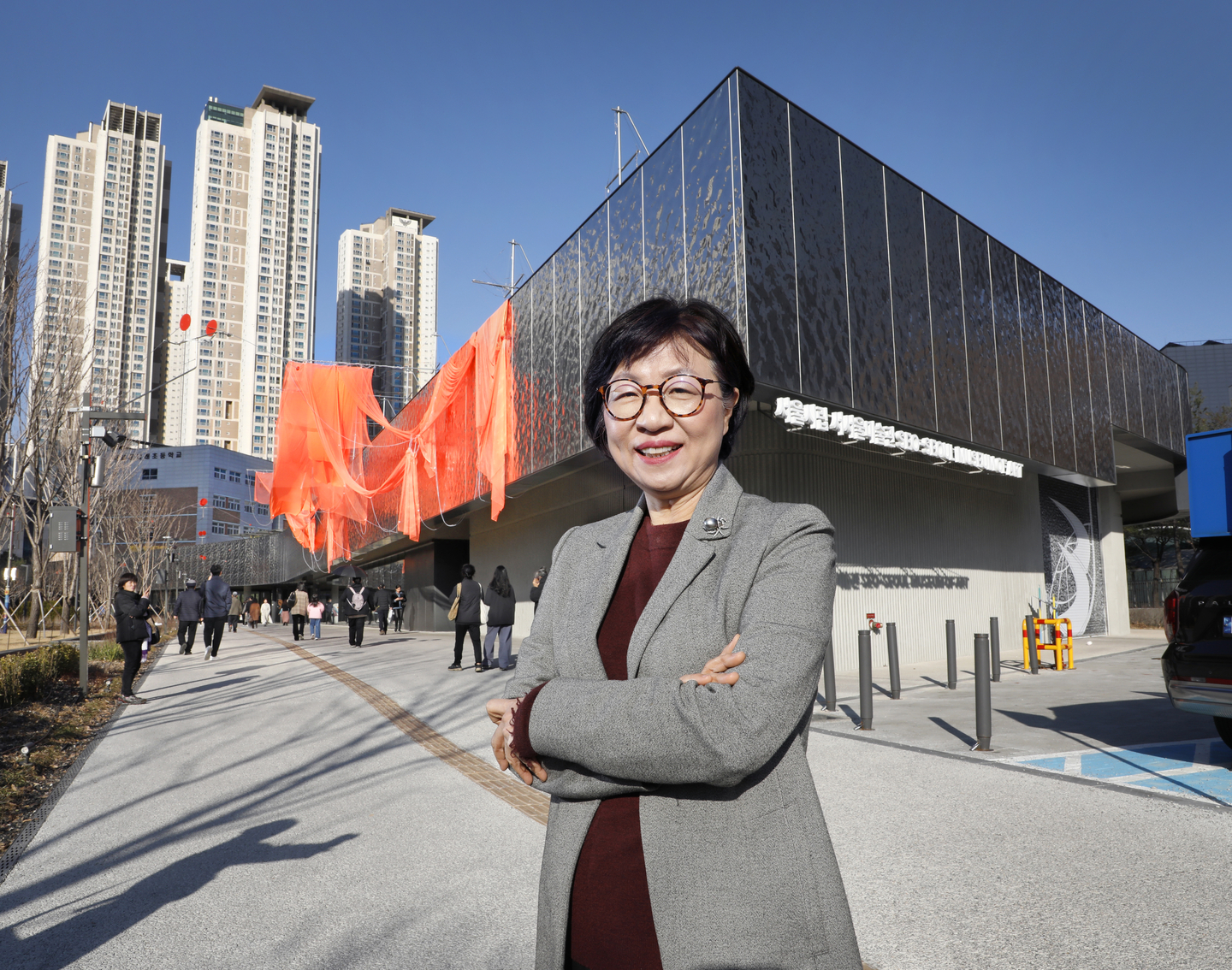
With the opening of the Seo-Seoul Museum of Art in Geumcheon District, southern Seoul, earlier this month, the Seoul Metropolitan Government has completed its yearslong project to build an eight-branch network of museums across the capital.
The first SeMA was founded in 1988 and moved to its current location next to the Deoksu Palace in Jung District, central Seoul, in 2002, occupying a former Supreme Court building dating back to 1928.
The six others are the Seoul Museum of Art, also in Jung District; Buk SeMA in Nowon District, northern Seoul; Nam SeMA in Gwanak District, eastern Seoul; AA (Art Archives) SeMA in Jongno District, central Seoul; Photo SeMA in Dobong District, northern Seoul; Nanji Residency SeMA in Mapo District, western Seoul; and Paik Ground SeMA in Jongno District.
In 2026, SeMA plans to stage 39 exhibitions across the eight venues, alongside 634 educational programs with a total curatorial and research staff of 50. The institution as a whole employs about 250 people and is supported by an annual operating budget of approximately 30 to 40 billion won ($20 to 27 million).
In charge of all of this is Choi.
"Many people, especially from abroad, ask if I am the only director of all SeMA facilities," she said. "And then they ask, 'How is that possible?'"
Whether the question is driven by curiosity or concern, Choi is unfazed.
"Of course, there have been many twists and turns, and a number of policy decisions along the way. But yes, it is possible, and it's being received very positively. I believe we have completed a system that other museums don't have," she told the Korea JoongAng Daily in an interview at the Seo-Seoul Museum of Art on March 13.
Choi studied Western painting at Seoul National University and later earned advanced degrees in art theory and education. She has held senior roles at the National Museum of Modern and Contemporary Art, as well as director positions at the Gyeonggi Museum of Modern Art and the Daegu Art Museum.
Since her SeMA appointment in March 2023, she has overseen the opening of three new branches, including the Art Archives Seoul Museum of Art and the Photography Seoul Museum of Art.
"And now, we've opened this museum in Seo-Seoul. It is the first public art museum to open in the southwest region of Seoul. I feel truly proud," she said.
But the goal wasn't only expansion in a geographical sense. Choi wanted to build a system that offers the public not just widespread access but also a greater variety of contemporary art.
"We wanted the museums linked but not overlapping," she said. "If location were the only difference, exhibitions across the main building and branches could easily become similar over time. Contemporary art tends to follow certain directions and trends, so exhibitions can start to look alike."
So instead, each branch has a distinct area or discipline of focus. Photo SeMA, for instance, curates shows on photography and video. Nam-Seoul SeMA concentrates on modern sculpture. Art Archives SeMA operates as a research- and materials-based institution. The newly opened Seo-Seoul Museum is dedicated to new media and interdisciplinary practices, the first public institution to center its program on these fields.
Another benefit of a network structure is the ability to collaborate across branches, said Choi. A recent exhibition at Photo SeMA, for instance, drew a large portion of its exhibit from the main SeMA museum's collection to explore how fine art artists in the 1960s and 1970s used photography as an experimental medium, reframing familiar works through the lens of a completely different discipline.
"Each branch operates with its own autonomy and specialization, while still being unified under the umbrella of SeMA as a single institution," Choi said. "...
[INTERVIEW]
Running one museum is demanding. So imagine what it's like for Choi Eun-ju, the director of the Seoul Museum of Art (SeMA), who runs eight.
With the opening of the Seo-Seoul Museum of Art in Geumcheon District, southern Seoul, earlier this month, the Seoul Metropolitan Government has completed its yearslong project to build an eight-branch network of museums across the capital.
The first SeMA was founded in 1988 and moved to its current location next to the Deoksu Palace in Jung District, central Seoul, in 2002, occupying a former Supreme Court building dating back to 1928.
The six others are the Seoul Museum of Art, also in Jung District; Buk SeMA in Nowon District, northern Seoul; Nam SeMA in Gwanak District, eastern Seoul; AA (Art Archives) SeMA in Jongno District, central Seoul; Photo SeMA in Dobong District, northern Seoul; Nanji Residency SeMA in Mapo District, western Seoul; and Paik Ground SeMA in Jongno District.
In 2026, SeMA plans to stage 39 exhibitions across the eight venues, alongside 634 educational programs with a total curatorial and research staff of 50. The institution as a whole employs about 250 people and is supported by an annual operating budget of approximately 30 to 40 billion won ($20 to 27 million).
In charge of all of this is Choi.
"Many people, especially from abroad, ask if I am the only director of all SeMA facilities," she said. "And then they ask, 'How is that possible?'"
Whether the question is driven by curiosity or concern, Choi is unfazed.
"Of course, there have been many twists and turns, and a number of policy decisions along the way. But yes, it is possible, and it's being received very positively. I believe we have completed a system that other museums don't have," she told the Korea JoongAng Daily in an interview at the Seo-Seoul Museum of Art on March 13.
Choi studied Western painting at Seoul National University and later earned advanced degrees in art theory and education. She has held senior roles at the National Museum of Modern and Contemporary Art, as well as director positions at the Gyeonggi Museum of Modern Art and the Daegu Art Museum.
Since her SeMA appointment in March 2023, she has overseen the opening of three new branches, including the Art Archives Seoul Museum of Art and the Photography Seoul Museum of Art.
"And now, we've opened this museum in Seo-Seoul. It is the first public art museum to open in the southwest region of Seoul. I feel truly proud," she said.
But the goal wasn't only expansion in a geographical sense. Choi wanted to build a system that offers the public not just widespread access but also a greater variety of contemporary art.
"We wanted the museums linked but not overlapping," she said. "If location were the only difference, exhibitions across the main building and branches could easily become similar over time. Contemporary art tends to follow certain directions and trends, so exhibitions can start to look alike."
So instead, each branch has a distinct area or discipline of focus. Photo SeMA, for instance, curates shows on photography and video. Nam-Seoul SeMA concentrates on modern sculpture. Art Archives SeMA operates as a research- and materials-based institution. The newly opened Seo-Seoul Museum is dedicated to new media and interdisciplinary practices, the first public institution to center its program on these fields.
Another benefit of a network structure is the ability to collaborate across branches, said Choi. A recent exhibition at Photo SeMA, for instance, drew a large portion of its exhibit from the main SeMA museum's collection to explore how fine art artists in the 1960s and 1970s used photography as an experimental medium, reframing familiar works through the lens of a completely different discipline.
"Each branch operates with its own autonomy and specialization, while still being unified under the umbrella of SeMA as a single institution," Choi said. "...