Heretic Hereafter Podcast
72 episodes — Page 1 of 2
Are Coming-of-Age Rituals Key to Making Good Men?
Public Humiliation is Not Justice
Building Boys: Live Chat with Katharine Strange & Jennifer Fink
The Secret Lives of Christian Wives
I Thought I Had Gender Roles Figured Out. Then I Had a Son.
Love in the ER
The Other Third Places We Need
A Police Defunder Has Some Regrets
The Hardest Goodbye
Text the Friend You're Thinking About
A Post for When You Hate Everyone
WE'RE DOOMED: Great Card Game, Terrible Outlook on Life
Stop Threatening to Move to Canada
The Scariest Thing I Have Ever Done
Relax, Hell isn't Real!
'Stranger Danger' is Bullshit
Why "Faith Over Fear" T-Shirts Creep Me Out
Everything I Feared About China Was Wrong
How to Make Friends with Fear
What Will People Think?
Confessions of a Scaredy-Cat
The Sacred Power of an Off-Key Beatles Song
Why Rules-Based Morality Falls Short
S3 Ep 14Progressives Need Better Stories
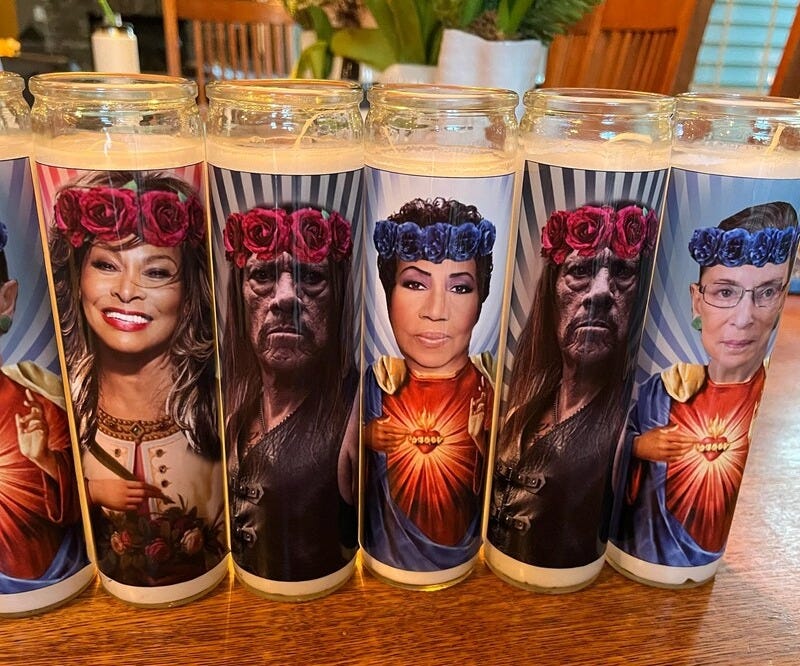
How do you feel about these “secular saints” candles? Are they a funny joke? A cringe Millennial trend? The desperate grasping of a culture that has lost its way?I’ll admit, I’ve owned a few of these (Harriet Tubman, RBG.) My husband received a Jeff Bezos one as a gag gift that I keep threatening to smash. This is one of the problems with living heroes—they keep revealing problematic behavior. It’s why every Tesla bumper in Seattle now looks like this:Maybe this is why Roman Catholics require at least 5 years pass before canonization can begin, time for all the skeletons to emerge from a potential saint’s closet.And yet, the recent revelations about labor organizer Cesar Chavez have shown that it can take a long time (33 years in this case) for the dark truth about a “hero” to come out. For years we’ve been having a conversation about how to deal with heroes who have done monstrous things. Is it still okay to listen to Michael Jackson? Watch Roman Polanski movies? Ought we still have statues of great American statesmen who also enslaved African Americans or slaughtered Indigenous Peoples?Heretic Hereafter is a reader-supported publication. To receive new posts and support my work, consider becoming a free or paid subscriber.Many conservatives seem intent to put their fingers in their ears and stress that it was a different time, that Thomas Jefferson, for instance, couldn’t possibly have known that it was wrong to father children with his teenaged slave, Sally Hemings, then enslave those children until their early adulthood.(To be sure, many white American men at that time had no problems with this arrangement, which was common enough to have the moniker “shadow family.” Nevertheless, abolition has always been part of American political thought. The truth is always out there, if you know who to listen to.) On the other hand, liberals have been anxious to be seen tearing down our national mythology without anything to replace them with. Remember when the San Francisco Board of Education spent the pandemic debating school names instead of, you know, focusing on reopening schools?It’s important to be able to grapple honestly with our history and culture. At the same time, I wonder: what does it mean to be American without The American Dream? Without glazing George Washington and his ilk? Where are the stories that a multicultural, multiracial, religiously plural society can unite around? The more polarized we become, the harder it is to find common ground.It seems to me there’s a hunger for mythology and heroes, whether it’s the eight billion movies in The Avengers franchise or the enduring popularity of Greek mythology. And I do think we need common stories. Whereas lectures and laws dictate, stories invite us in. They have a way of sneaking past our defenses and engaging us at an emotional level—we empathize with the characters and find ourselves weighing moral questions we would never otherwise consider.Stories are also not black-and-white. As any English teacher worth their salt would tell you, stories ask us to bring our lived experience and external knowledge to our interpretations. In discussing stories together, we learn to question our preconceived notions and see through others’ eyes.I mean, it’s no coincidence that beloved religious teachers like Jesus, Buddha, and Muhammad taught in parables and analogies. But the problem with idolizing living folks is the “man in the hole” problem. I believe it was Kurt Vonnegut who said there are basically two story structures: man falls into a hole, and man climbs out of a hole. In either case, you need a change in status—the lowly are elevated, the lofty are brought low. Maybe human beings simply aren’t fit for life on the pedestal. If Martin Luther is right, we are each sinners and each saints. This duality, or “and-ness” as I like to call it, can’t be ignored for long. Saints will disappoint and sinners will surprise. Maybe we need gods and mythologies. At any rate, if the Left is going to win the culture war against Christian Nationalism, we need a grander illustration of moral imagination. What do you think? Do we have common stories/heroes anymore? Who would be on your personal Mount Rushmore of great Americans?As always, I love to hear your thoughts, ramblings, pushback, and recommendations in the comments or via email/DM.Thanks for reading Heretic Hereafter! If you enjoyed this post, why not share it? This helps others find the Substack.BONUS MATERIALS:* Ugh the Cesar Chavez revelations…still, this article provides some interesting context* ICYMI, this podcast is a reliable hit with the kiddosHeretic Hereafter is a reader-supported publication. To receive new posts and support my work, consider becoming a free or paid subscriber. Get full access to Heretic Hereafter at heretichereafter.substack.com/subscribe

S3 Ep 13Easter for Doubters & Skeptics
It’s Holy Week for many of the world’s 2.6 billion Christians (for Eastern Orthodox, it’s next week.) Easter marks the most important holiday in the Christian calendar—the date of Jesus’ alleged resurrection. But what if you don’t believe? Or if you have major questions about it? Does Easter still matter? Can this holiday still be meaningful if you’re not sure about the whole bodily resurrection thing?Fifteen years ago, I would’ve said, absolutely not. If you don’t believe in the resurrection, there’s no point and you’re not in the club!!!For those of us who were raised to read the Bible literally, questioning the resurrection is dangerous territory. In these traditions, miracles are proof of God’s existence, the very cornerstone of faith—if you don’t believe in them, everything else falls apart. In this black-and-white worldview, any speck of doubt can put you on the path to Hell.Heretic Hereafter is a reader-supported publication. To receive new posts and support my work, consider becoming a free or paid subscriber.I spent years trying to convince myself to believe Bible stories were factually true, even as scientific evidence and my own lived experience contradicted this interpretation. I was the red-faced teen who tried to argue her high school biology teacher out of teaching evolution. Luckily, I lost. During this era, I felt constantly at war with myself. How could I silence my doubts while still living in integrity? Answer: I couldn’t. It was a losing battle. And so I went to the opposite extreme: scientific materialism. My family quit church. I stopped believe in God or anything else that couldn’t be historically or scientifically verified.But that didn’t satisfy me either. Science is a wonderful tool, but it doesn’t provide a moral framework or answer big life questions about meaning and purpose. I had torn down my old belief structure that was no longer serving me, but I didn’t have anything to replace it with.The 3+ years of this Substack has been me finding my way to something new—a new way to think about ethics and morality (and how to teach those things to my kids) and to feed the spiritual hunger that’s always been a part of me. And one of the conclusions I’ve been circling is this: belief is not the most important thing. It might not even be top 10! Basing an entire theory of salvation on belief seems hopeless, because beliefs fluctuate. They evolve. Any system that encourages people to stay frozen at the moment of conversion is, frankly, ridiculous.Imagine, for example, a marriage where the wedding ceremony was the most important part. Every day that you loved your spouse as much as you did on your wedding day counted as success. But every time you fought with them or checked out a stranger at the gym or envied a single friend meant failure. People under this situation would likely grit their teeth and try to avoid changing (which is impossible) or just give up and get divorced.In marriage, we recognize that feelings fluctuate. Staying married is arguably more about what you do than what you feel or believe at a given moment. You honor your promises, sometimes joyfully and sometimes sulkily. The point is: you show up. I think the church (and, TBH, society as a whole) would be a lot healthier if we stopped prioritizing litmus tests and instead focused on showing up. Sure, you might say, showing up is important, but what about the resurrection? Isn’t belief in the resurrection kind of a dealbreaker for being a Christian?Eh, I don’t think so? And I’d argue there’s good evidence on my side. In her latest book, Miracles and Wonder, religion scholar Elaine Pagels argues that the authors of the gospel, the apostle Paul, and many of the early church patriarchs disagreed on what actually happened at the resurrection and what it all meant. Pagels reminds us that the gospels were constructed with the intent to persuade particular audiences, as well as to refute disparaging remarks that were circulating about Jesus in the years after his death.In the hands of these gospel writers, the most shameful marks against Jesus (his out-of-wedlock birth and his execution by the Roman government) were transformed into holy and miraculous stories that highlighted his divinity.Keen readers will recognize that this theme of reversal is present in many beats of the gospel stories: the formula is typically “Society/religion/the government values ___, but what’s really valuable is the opposite.” The story of Jesus is, again and again, about the foolishness of those in authority and the wisdom of the poor and marginalized.Pagels offers up plausible alternate theories about Jesus’ birth and death, but never rules out the miraculous, telling us that’s not her lane as a historian. And I like that approach. I think it’s okay to say we don’t know how these events unfolded. Even if we don’t believe they literally happened, we can appreciate the value these stories have held for people throughout history and for us, today.And

S3 Ep 13A Code of Ethics for the Chronically Online
It’s been 35 days since I logged onto social media. Apart from some minor boredom, it hasn’t been that bad. During my time away, I’ve delved into research on how the socials work and spent time reevaluating my own relationship to them. Here are some lessons I’ve learned and how I’m going to change my behavior going forward.Social media really is that bad. Virtually all the platforms I researched are designed for subscriber growth and profit over any sort of responsibility. Twitter/X is a cesspool of revenge porn and death threats. Instagram has been found legally liable in one case of teenaged suicide and accused in countless others. Facebook has been implicated in genocide in Myanmar and political violence in countries such as the Philippines and Ethiopia, to say nothing of its role in American political violence. Heretic Hereafter is a reader-supported publication. To receive new posts and support my work, consider becoming a free or paid subscriber.We’ve had whistleblower after whistleblower come forward to show that these sites prioritize user engagement over basic health and safety concerns and have a devil-may-care attitude towards election interference. As Sarah Wynn-Williams amply illustrated in Careless People, the people who run these platforms simply do not care. This is wrong. The greater one’s power, the greater one’s responsibility. These companies (and the people who lead them) need to be held accountable for their reckless pursuit of profits over the safety of their fellow human beings.I’m no longer a huge Bible quoter, but I can’t think of a more apt description for these folks than Matthew 6:24: “No one can serve two masters...You cannot serve God and be enslaved to money.”Even overlooking the most extreme cases, these platforms are built on an amoral foundation which encourages polarization and vitriol over relationship building and lets people anonymously bully each other with zero accountability. All that being said, I think there’s a strong moral case to be made for disengaging from social media as much as one can. But I’ve also been thinking about Dietrich Bonhoeffer’s argument against moral purity, which Hanna Reichel summarizes in her great devotional book, For Such a Time is This:“…when [authority] is rotten, personal integrity is also endangered. In his posthumously published Ethics, Bonhoeffer even denounces the desire to preserve one’s moral purity as a temptation. The only way to stay innocent, he muses, would be to have no part of history.”Is leaving a platform akin to dropping out of a conversation we may have a positive influence on? By logging off, do we abdicate these platforms to the trolls and neo-Nazis? I, along with many other Liberals, quit Twitter/X after Elon Musk’s takeover, but our boycott barely registered. So I question whether simply deleting one’s account is the moral slam dunk it seems like.Furthermore, as a person whose vocation is bound up in finding readers, quitting social media doesn’t feel like a realistic option. These platforms are incredibly flawed and skewed away from content like mine, but they are still discovery engines for creatives like me.So, I plan on reengaging with social media once Lent is over. But I have come up with some new guidelines for myself and my kids around social media/screen time. NEW RULES FOR MYSELF:* Scroll mindfully. Before you open the app, name the reason you’re logging on and how you’re feeling at the moment. (Doing it aloud is a great trick for accountability!) Log on to complete a work-related post, then log off.What I noticed most about the absence of social media this month was that I was longing for connection. The problem is, social media doesn’t provide the type of deep connection we need. Which brings me to my next rule:* Opt for High-Context Communication. If I want to talk to someone, the best option is face-to-face. A phone call is next best; texting is a distant third. Recognize that social media creates parasocial relationships not real relationships. It can be a tool for keeping in touch with friends you’ve made IRL, but it’s not a good way to “meet” people. As a busy mom, one app I like for keeping in touch is Marco Polo, which lets you send video messages to friends to watch and respond to at their convenience. * Resist Addiction. Recognize that social media was designed to be addictive. Turn off notifications. Log on for a purpose and severely limit time spent on social media using timers and apps (I like Minimalist Phone.) If you find yourself regularly going over your allotted time limit, make a contract with yourself such as, “If I go over ___ minutes, I will log off for __ days.” * No Phubbing. (aka “phone snubbing.”) If you’re lucky enough to be face-to-face with someone, put your phone away. Introduce phone-free zones in your home (such as the table) and times (such as meals.)* Big Screens > Little Screens. Choose communal screentime over individual. The same goes for sharing a Bluetooth speaker r
S3 Ep 12"If I'd Just Done Good Things, I Would've Never Blown Up on the Internet"
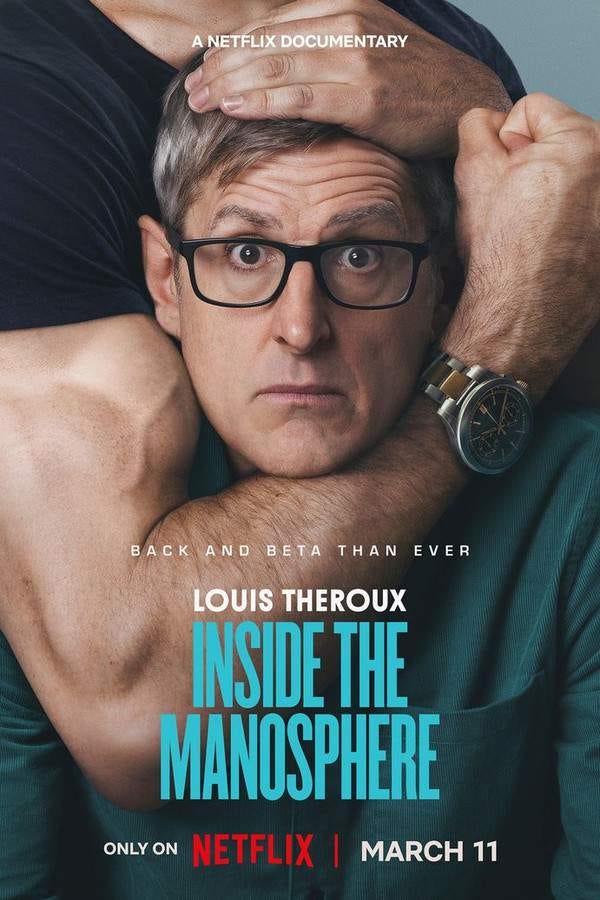
This quote comes from red pill influencer, Harrison Sullivan, in Louis Theroux’s latest documentary, Inside the Manosphere. Theroux was prodding Sullivan about the influence he wields over young boys. As an audience, we’d just witnessed Sullivan and his crew catfish and then physically assault a gay man who thought Sullivan had asked him on a date.In the aftermath of this unprovoked attack, Sullivan seems momentarily shaken. He’d been live with his viewers, who’d been encouraging the group towards violence, but Sullivan seems shocked at what actually transpired. Wary of further legal troubles (he had already fled a warrant in the UK for reckless driving and fleeing the scene of accident) he quickly deletes the video.The quote struck me as a rare moment of honesty. Harrison is admitting that he sees how social media works and has decided to ride that train to money and fame at the cost of his integrity. If the choice was between being a good person and being a successful influencer, he chose the latter.Heretic Hereafter is a reader-supported publication. To receive new posts and support my work, consider becoming a free or paid subscriber.The manosphere has been a concern and fascination for me in the last few years. As a feminist raising tween and teen sons, I worry about the messages they’re exposed to online. I’ve seen the YouTube algorithm lead my 13-year-old, A, from videos on proper pull-up form to a stream of rise-and-grind fitness influencers who promote six-hour-plus “morning routines” and tout body transformations that are impossible absent heavy steroid use. And I worry that darker corners await.A and I watched the Netflix doc together; as much as it pissed me off, it provided good discussion fodder. From our talks I’ve gathered that the manosphere’s appeal for young boys is:* they provide a clear roadmap to becoming “a man” in a confusing landscape of quickly changing social mores around gender. (Adolescents are in the process of figuring out their identities, so they’re particularly receptive to these sorts of messages)* they promote agency in a culture that’s increasingly bent towards passive consumption/entertainment* they’re selling a so-called “proven” path towards power (abs, crypto) to a group who often feels disempoweredAs we talked, I tried to affirm A’s feelings and desires. It’s normal to crave clarity in a confusing world and it’s great to tap into your own agency and make positive changes in your life. We want young men to have healthy self-esteem and work towards building competence and independence.The problem is that while these influencers start with a kernel of truth, they serve it up alongside a pile of BS, conspiracy theories, and hate.Like most kids his age, A is puzzling out his identity: what does he like and not like, what labels will he accept or reject? At his school, there are clubs and affinity groups for Black boys, for girls, and for LGBT youth. As a straight white boy, A sometimes complains about being left out. I believe these affinity groups have value, but I also empathize with A: where is the safe space for guys like him?Into this vacuum comes the manosphere. On one hand, they promise that boys can take charge of their lives, and on the other they’re hawking the same passive consumption that all influencers do. It’s never just “work out and feel good about yourself” it’s “buy my supplements” and “invest on my day trading app” and “pay for my monthly program.”Worse still, these manfluencers don’t just promote pride in one’s masculinity, they actively promote beliefs that dehumanize women, LGBT people, and Jewish people. Their view of masculinity has zero intersection with any recognizable form of morality. And the funny thing was, when Theroux confronted these men with their own horrific quotes, they grew defensive but lacked any coherent argument to back up what their claims. It made me suspect that either a.) they’re mindlessly repeating this stuff or b.) that they didn’t really believe these things, they’re just doing it for the clicks.Where previous visions of masculinity said things like “a man is only as good as his word,” these men’s words have no weight at all, that is, except to the millions of boys who are listening. Their bald hypocrisy also reveals the rot at the heart of social media. When most platforms (such as Facebook) began, they relied on chronological feeds. In those early days, I remember regularly hitting the end of my Facebook newsfeed because I’d read all my friends’ updates.But in the 2010s, platforms began to move from chronological feeds to algorithmic ones. Engagement drove popularity, rather than recency or your relationship to the poster. And the most engaging content? Rage bait and controversy, of course!These algorithms prioritize lies over facts and bad actors over common decency. Behavior that would get a person kicked out of any halfway functional community club is rewarded on these platforms, often handsomely.And that’s not to
S3 Ep 11Everything is TV Now
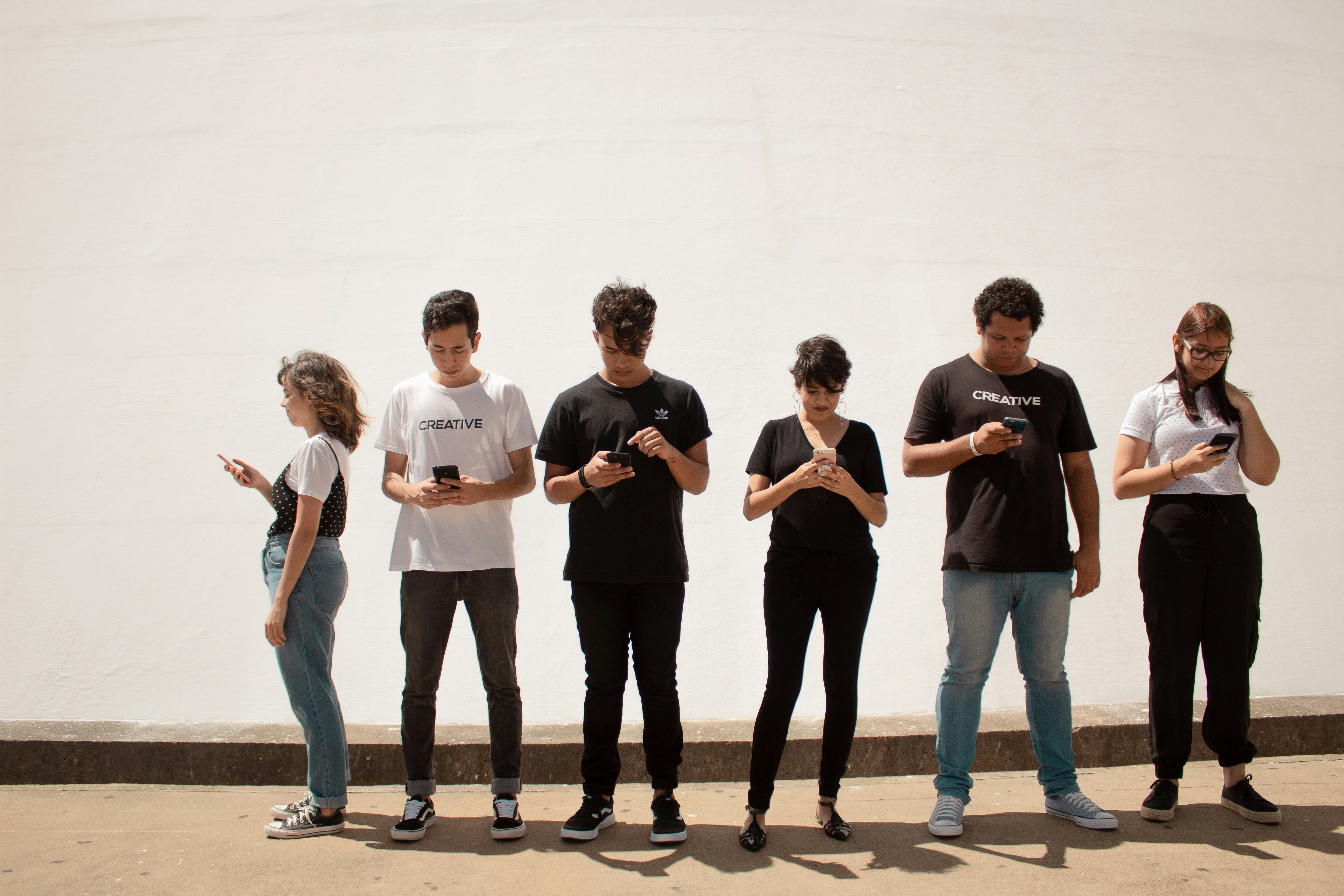
What do you spend most of your day looking at? Listening to? Thinking about? If you’re like most Americans, the answer is probably a screen. In fact, the average American spends between 4-6 hours a day staring at their phone, and that’s not counting our laptops and TVs. I’m certainly not exempt. As mindful as I try to be, phone addiction continually creeps up on me. It’s a “quick scroll” before I get out of bed because I am soooooooo tired and isn’t blue light supposed to help wake you up? Then it’s a “short break” when I’m stuck on a writing project, followed by a little screentime during lunch or while I’m cooking dinner.But my biggest chunk of phone usage is afterschool. Despite all my aspirations to model screen sense to my kids, between when they arrive home from school and the time I need to start cooking dinner, I spend MANY minutes absently scrolling. Heretic Hereafter is a reader-supported publication. To receive new posts and support my work, consider becoming a free or paid subscriber.What else am I meant to do? Any task I undertake is liable to be interrupted by random kid questions. And if I actively try to spend time with these surly tweens, they’ll generally make themselves scarce (that is, until I try to pick up another task.)This may be the height of Potted Plant Parenting, but this sort of unpredictable, ill-defined time is ripe for the siren song of my cellphone. And there are a million justifications: Facebook hosts many community groups. And aren’t authors encouraged to be constantly self-promoting on social media? Doesn’t sharing a funny Tiktok with my tween count as “bonding”? I’m just logging on to check on one quick thing and suddenly 40 minutes have gone by!The thing with addiction is that you turn to a substance or behavior for a reason, but addiction rarely delivers. Studies have shown that intermittent positive reinforcement is actually the most addictive form of reinforcement, and there’s good evidence that social media was designed with this in mind. In most cases, the anticipation of pleasure/relief is actually greater than what that item delivers. When I’m able to bring mindfulness to scrolling, what I find is that I’m turning to social media typically because I feel stressed, sad, or bored. What I want is to see a funny meme or short video that will cheer me up.But most of my feed is ads and influencers I’m not interested in. And even when I find a truly hilarious video, it doesn’t actually resolve my underlying emotional state. Don’t get me wrong, distraction is a necessary coping skill and probably an inevitable part of being human. Turns out, people who have their phones taken away still spend a lot of time being distracted.My own trauma work has shown me the value of alternating time spent sitting with difficult emotions (such as grief) and distracting oneself. As much as we might like to imagine ourselves as stoic little productivity robots who can stay on task, that’s just not realistic. But I do worry about what all that phone staring is replacing: actual conversation with the people that matter, engagement with the natural world, sustained attention to long-form writing and other more complex forms of art and design.The final straw came when I was attempting to double-screen a mediocre TV show and Instagram Reels. I realized I wasn’t actually watching either, because the once-photo-dominated Instagram was now just a second TV. When I thought about it, all of social media was just TV.Maybe this is obvious to you, but realizing this changed how I thought about my social media usage. I’ve never been one of those people who left the TV on all day. In fact, I typically don’t watch until I’ve finished my day, usually around 8pm. If I’m so stringent about TV, then why did I now need to have YouTube/Facebook/Tiktok/Instagram on while I was putting on makeup? Making lunch? Waiting for my kid to finish his chores? It felt less like a conscious choice I was making and more like addictive behavior.So when Lent rolled around, I decided to go cold turkey: no Tiktok, no Instagram, no Facebook. (I’d already quit Twitter/X several months ago.) For the month of March, I’m interested in examining social media and its ubiquity in modern life. Here are some questions I have:* What are we missing out on by seeking constant entertainment? Is hedonism the center of most people’s lives now?* How does addictive social media impact our relationships? * What about our creativity and ability to think through complex problems?And, as always, I’d love to hear from you, either in the comments or via email:* Do you double-screen? * What limits do you have for yourself on phone use?* If you’re a parent, do you have the same standards for technology use for yourself as for your kids? (If so, please tell me how!)Heretic Hereafter is a reader-supported publication. To receive new posts and support my work, consider becoming a free or paid subscriber. Get full access to Heretic Hereafter at hereticherea
S3 Ep 10Okay, but Can We Shame Billionaires?
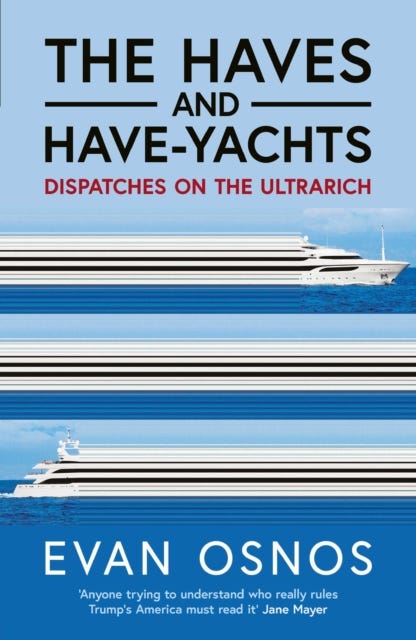
Lately, the misdeeds of the wealthy feel inescapable. Whether it’s Trump’s blatant corruption and grifting (which has netted him $3 billion so far this term) or the Epstein Files, I can’t recall a period in my life where it has been clearer that the wealthy are not bound by the same laws and sense of morality as us mere mortals.One of the clearest distillations of this distinction can be found in The Haves and Have Yachts: Dispatches on the Ultrarich. In it, journalist Evan Osnos writes: “America’s record in recent years suggests that shamelessness might be a larger problem [than shame].” To support this claim, he examines in lavish detail the spending sprees and controversies of the ultrarich: everything from the cost of flying in an aging rapper to emcee your birthday to throwing an adult temper tantrum on a Monaco pier because your superyacht got a less-desirable berth. Heretic Hereafter is a reader-supported publication. To receive new posts and support my work, consider becoming a free or paid subscriber.Reading this book is an exercise in toggling between astonishment and rage; on the one hand, fantasizing about what that lifestyle must be like before snapping back to disgust that people could spend this selfishly while around the world children are starving and dying of preventable diseases. (Peter Singer WOULD NEVER.) As I have argued at countless Seattle cocktail parties, no human needs a billion dollars. A billion is a thousand million. It’s a number so large that it’s hard for us to comprehend.In the United States, we have 902 billionaires. Worldwide, there are 2,640. Depending on how stock valuations go, Elon Musk may become the world’s first trillionaire. That’s a thousand billions!Have these billionaires achieved such levels of wealth by generously compensating their employees? Absolutely not! While Bezos spent roughly $50 million on his second wedding, Amazon fulfillment workers lack air conditioning and bathroom breaks. Rob Walton spent $4.65 billion to buy the Denver Broncos while paying Wal-Mart employees poverty wages that push a large proportion of full-time workers onto government assistance.This is greed, pure and simple. It’s superyachts for me and food banks for thee! I can only guess that billionaires rely on a thick blanket of denial to get to sleep at night.So, is Osnos right? In our era of superrich exploitation, is shamelessness more of a problem than shame? Should we start MASS SHAMING BILLIONAIRES?Not so fast. As we looked at earlier this month, the urge to shame can come from different needs, like a lack of accountability. In the case of the Have-Yachts, the problem of “shamelessness” doesn’t mean that we necessarily want rich people to be publicly pilloried, but that we want them to develop a sense of morality and responsibility. I mean, even Spiderman knew that “with great power comes great responsibility,” but billionaires often act as if they don’t owe anyone anything. And they’re propped up by a trio of American cultural beliefs around wealth. We believe that the wealthy deserve their riches because:* They’re self-made. Read enough rich people biographies and you’ll notice a pattern. All of these wealthy folks actually came from humble beginnings! They’ve worked so hard to get here, and they’re not even really that rich, more like “middle class.” Again and again, they downplay the loans, gifts, and personal connections that got them where they are. * They’re smarter than us. Or so the story goes. For all the media doting on figures like Musk and Bezos and touting their intelligence, I’ve seen little evidence of it. Anyone who’s worked for their companies knows how much chaos and mismanagement goes on behind-the-scenes at their companies. And that’s not even taking into account things like Musk’s ketamine-fueled gibberish tweet storms. The truth is there are plenty of very intelligent people working construction or ringing up groceries at this very moment; intelligence is not a guarantee of economic success.* They “attracted” their fortune. Bro, do you even know how wealthy you could be if you had the right MINDSET? Oh, excuse me…GRINDSET? Even discounting the numerous influencers who peddle “mindset coaching” there are books like The Secret and The Alchemist. It’s like there’s a whole industry trying to convince people that they’re in complete control of how much money they earn. If you’re wealthy, it’s because you deserve it, same if you’re poor. For an especially devious twist on this belief, add in the Prosperity Gospel heresy (as exemplified by charlatans like Joel Osteen) that God “blesses” the best Christians with material wealth. This mythology was built to justify greed. If I alone am responsible for my wealth, I have no obligation to reinvest in the community that got me here. If we are all in complete control of our economic destinies, there is no need to worry about the poor, who should probably just work harder. These myths, (along with those like “rich peopl
S3 Ep 9Accountability isn't the Opposite of Compassion
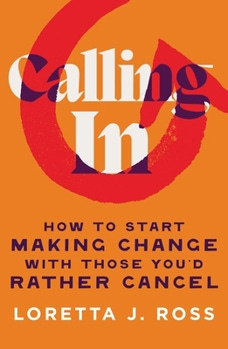
We’ve been looking at shame this month. Is it always a bad thing? And what’s the difference between shame and accountability?In our polarized society, sometimes it feels like we have two choices: you can be a squishy liberal who loves everyone and passively tolerates everything, or you can be a merciless conservative who longs to inflict draconian punishments in an attempt to control the behavior of others.But the more I’ve been thinking about it, the more I think love and accountability are two things that have to live in tension. Heretic Hereafter is a reader-supported publication. To receive new posts and support my work, consider becoming a free or paid subscriber.Two books are currently influencing my thinking on this topic: Calling In by Loretta Ross, and The Power of Parting by Eamon Dolan. Ross talks about the importance of relationship building and gentleness when confronting others (“calling in” vs. “calling out”) while Dolan stresses that we need not tolerate abusive behavior, even and especially from those closest to us.Both authors, I think, hold this tension: that we can love people and treat their mistakes with kindness while refusing to tolerate ongoing abuse. They insist on giving people chances to change, but not an infinite amount. We can have limits and compassion.What would this kind of compassionate accountability look like? An example (though an imperfect one) might be something that happened in my church as I was growing up. It’s an incident with a man I’ll call “Paul.” (I’ve changed names and identifying details in this story.)Paul had an advanced degree but worked in a public service capacity with vulnerable youth. Let’s say he was a lawyer who worked in the family court system with runaway teens. Paul was well-liked and served in several capacities in church leadership, including as a youth group leader when I was in high school. I regularly babysat Paul’s kids and he drove me home several times. I found Paul funny and charming. But sometimes our interactions had a weird vibe I couldn’t quite put my finger on. He was maybe a little overly familiar, treating us youth group kids more like peers than children. To be honest, part of me was thrilled: what teen doesn’t want to feel more grown up? But another part was wary.Then, one day, Paul wasn’t in youth group anymore. At first, all I knew was that he’d been asked to step down from leadership, but gradually it came out that he’d moved one of his teenaged clients into his family’s home and begun “having an affair” with her. (Viewing this scenario in 2026, I’m doubtful this relationship could be considered truly consensual, but at that time, the teen was seen as a willing participant.)Paul’s wife demanded that he end the relationship and that the teen move out, among other things. Paul refused. So, she took the problem to the board of elders. Two elders met with Paul and tried to get him to see the error of his ways, but Paul refused to end his relationship.Following this refusal, the board of elders called Paul into a larger meeting and again confronted him. When Paul wouldn’t back down, he was stripped of his church membership.Even though he was no longer at church, because we lived in a small town, I heard things about Paul. I knew Paul’s wife filed for divorce and ended up moving out of state with their kids. I knew he lost his job and his law license, but also that he eventually married his teenaged victim and that they were active in many other civic groups, including ones involving youth. Was this justice? Maybe? Partially? I think a few things went right here:* the church believed the victim, despite the perpetrator’s relatively higher status* the church supported the victim (or at least one of the victims—more on that below) * the church attempted to call Paul in before calling him out* the church acted to protect young people* likewise, professional organizations recognized his unacceptable behavior and blocked him from perpetrating further Then again, I can’t help but think his teenaged victim did not get the justice she deserved. She needed a legal advocate and instead was taken advantage of. They’re still together. As an outside observer, I can only speculate as to why criminal charges were never filed against Paul. Maybe the criminal justice system, itself, is a poor remedy, but without it, this “accountability” feels incomplete. I’m sure Paul’s wife and kids didn’t find this resolution satisfying, and I couldn’t help but think about how easily that poor girl could’ve been me or one of my friends.What we really want, in Paul’s case, would be repentance and repair. But we can’t make other people do the right thing. I’m hesitant to recommend excommunication as a means of accountability—I know it has been weaponized against women fleeing domestic violence and queer people simply for being who they are. Losing your community at a vulnerable time can be very traumatic. But in cases like Paul’s, where someone poses a threat to

S3 Ep 8When Systems Protect Abusers, Shame Steps In
One of the many things that has struck me in recent weeks is the instances of Minneapolis protestors chanting, “Shame!” at ICE agents. It’s notable because many of these protestors are presumably Brené Brown-loving liberals who are, generally, not fans of shame. Where does this impulse come from? I’ve been chewing on the comments left by my amazing readers on last week’s post, and they’ve helped me realize that this impulse towards shame points to a broken system.One thing that a few deft readers pointed out is the difference between shame and accountability. Reader Stephanie Alter Jones put it this way:“…a lot of shamelessness among the powerful makes it seem like they "need" to be brought down in that way since they refuse to do it on their own. But rules-based social orders work better as accountability mechanisms for community behavior. I'd rather see rules or guidelines strengthened and followed rather than more public flogging.”And reader Christina added:“I do think consequences are more important than shame. I would much rather some of our shameless leaders be removed from power than for them to feel shame. Again, accountability but at the political rather than the personal level.”I think, in my defense of “healthy shame” what I was actually looking for was accountability. Heretic Hereafter is a reader-supported publication. To receive new posts and support my work, consider becoming a free or paid subscriber.When accountability is in short supply (as with ICE agents breaking the law with impunity) people fall back on shame as a last resort. It’s as if we’re saying, “Even if the government allows this, how could you? Didn’t your parents teach you better?”Shame feels like a last resort, the sign of a system that is straining to define unacceptable behavior and hold people accountable for it. To my mind, the rise of public shaming is a response to a watershed moment of rapid social changes: * wealth and power being concentrated with the elite who evade accountability (*cough* Epstein Files *cough)* increasing distrust in institutions* the breakdown of local communities (which can offer context to a person’s actions)* the power the internet confers on the masses* quickly shifting social moresThis results in a sort of mob justice which sometimes gets it right but frequently lacks nuance and can cause real harm.Oh, and once you’ve been shamed there’s no agreed upon path back. The local communities and institutions who might’ve once offered a way for you to redeem yourself no longer have the authority to do so, and the internet never forgets.I was listening to Ezra Klein interview the wonderful Priya Parker this week when she brought up this lack of ability to repair. Paraphrasing a student who had committed campus sexual assault, Parker said, “There is no place for me to go. There is no place for me to come back to. Do you want me to commit suicide?”Don’t get me wrong, sexual assault is a serious crime that causes grave harm. Far too often, perpetrators are never held accountable. This causes further harm to their victims and to our communities as a whole when such behavior is normalized and even expected.All that is true, and I would venture that a perpetrator committing suicide is not the remedy we would advocate for. Indeed, such a “solution” speaks to the selfish side of shame that focuses on the perpetrator’s emotional state rather than centering the victim’s needs.This focus is, I think, one of the key differences between shame and accountability. Are we centering our own feelings, or are we putting our victim’s needs ahead of our own by humbling ourselves and making amends? While some crimes may not be reparable, it’s laudable when people show remorse, change their behavior, and take steps to making amends that satisfy their victims.As a culture, we need to normalize screwing up and apologizing. We need to be willing to sit with those we’ve harmed and witness their hurt. We need to reflect deeply on why we harmed them and take steps to change. How would it look for our culture to embrace this kind of accountability? Maybe it would look like A.A. and other 12-step programs which encourage people to take inventory of their misdeeds and share them with at least one other trusted person. Having done one such 4th step inventory, I can admit that it is a process that begins in terror and ends in relief: the worst thing you’ve ever done? Yeah, you’re not the only one. Shame cannot survive this sort of disclosure. Of course, taking personal accountability is a lot easier than injecting accountability into a broken system. But I have hope that this season of political madness will end, our present injustices will be exposed, and their perpetrators will face accountability. It may seem far off, but history offers us examples: the Nuremberg Trials, South Africa’s Truth and Reconciliation Commission, Canada’s Truth and Reconciliation Commission regarding the residential school system. I have faith that things

S3 Ep 7Brené Brown is Wrong About Shame
“Shame is “I am bad.” Guilt is “I did something bad.” …Guilt: I’m sorry. I made a mistake. Shame: I’m sorry. I am a mistake.”-Brené Brown, PhDDon’t get me wrong, I’m a huge fan. I sobbed through the end of her Netflix special. Brown has done amazing work bringing the vocabulary of emotions to the masses and demonstrating the power of vulnerability.But while I find her to be a winning and gifted communicator, I don’t think she’s entirely right about shame, and I worry about how the above definition impacts our ability to form communities.Brown has described us as living in an “epidemic” of shame. She points out the negative health outcomes associated with people who exhibit high levels of shame, including depression, eating disorders, and suicide.Heretic Hereafter is a reader-supported publication. To receive new posts and support my work, consider becoming a free or paid subscriber.In a way, I agree—we’re living in an era defined by shame. But is it an over proliferation of shame? There I’m not so sure. It feels like many good people are feeling too much shame while others (including many in power) are completely shameless.Speaking for the anti-shame side, let’s look at social media shaming. Sometimes necessary, as in the Weinstein case. But there are a fair number of folks out here catching strays. (Remember that white teen who went to prom in a Chinese-style prom dress?) Public shame is a clumsy cudgel, flattening context and often leveling behaviors several magnitudes apart. Too often it’s cancel first, investigate later.Shame doesn’t feel good, and so it’s perhaps natural that we don’t want to inflict it on others. That’s very “love your neighbor,” right? Plus, shame can be such an overwhelming emotion that it triggers defensiveness rather than sober reflection.On the other hand, I have a creeping feeling that our anti-shame movement can be detrimental to community building. That’s because shame has a social aspect. Psychology Today puts it this way:“Shame makes people behave in ways that allow them to co-exist with others, and it makes people adhere to cultural norms and laws. In that way, occasional shame isn’t always a bad thing. Shame can foster humility and teach people about boundaries; without healthy shame, we would have no way to understand how our behavior affects others and manage it.”(Emphasis mine.)Shame is the threat that certain behaviors will lead to social exclusion and ostracization. It’s saying, “This behavior is outside the bounds of our group. You cannot keep doing this and still belong with us.”I fear that our hyper-individualistic society prioritizes individual comfort over group safety. When working in schools, I’ve seen parents who insist their kids should be able to do things like yell in hallways or run around the classroom if they feel like it, failing to imagine the impact such behavior has on other students or the learning environment as a whole.And while Trump and his ilk are in a different stratosphere of shamelessness than your average helicopter parent, I do think both come from a worldview that prioritizes the self far above the group as a whole. Trump cheated on each of his wives? Was best friends with a pedophile? Has been convicted of 34 felonies? Who cares? #winningDon’t get me wrong, shaming others is the nuclear option. There’s something primal about this threat; it triggers some ancient, evolutionary reaction which equates social isolation with death.But as harsh as it may be, I’m hesitant to label shame as inherently “toxic.” We need some mechanism for enforcing boundaries in a group. Is there a loving way to hold people accountable and avoid triggering shame? What about overcoming our own shame?So, in this month famous for Valentine’s Day and Seasonal Depression, I want to look at shame. Here are some questions I have. Let me know your thoughts in the comments. I also love to hear your recommendations on things to read, watch, listen to, etc!* Are we in an epidemic of shame? Or an epidemic of shamelessness?* What’s the impact of powerful narcissists like Trump on our national shame level?* Is there a connection, as Brown says, between low-self-worth and shame?* Does “healthy shame” exist? Is it different than guilt?* How can we agree on what’s shame-worthy during a time of massive cultural upheaval?Heretic Hereafter is a reader-supported publication. To receive new posts and support my work, consider becoming a free or paid subscriber. Get full access to Heretic Hereafter at heretichereafter.substack.com/subscribe
S3 Ep 6Don't Give Up
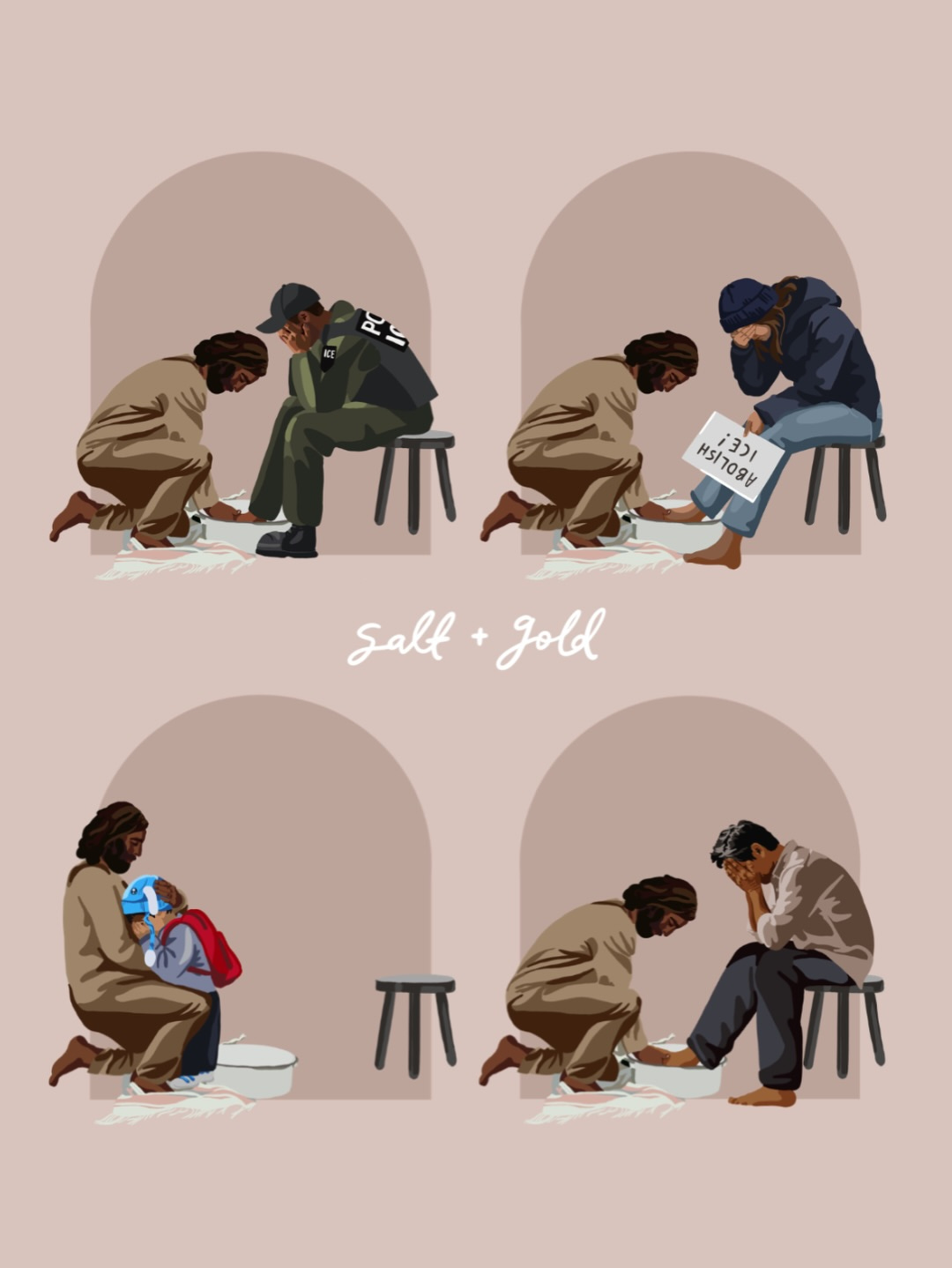
On Monday, when I sat down to plan out my week, it all felt a little pointless. What good is my measly writing in the face of government goons murdering citizens in the streets? Is anyone going to show up to my meeting about racially segregated schools while ICE is abducting people? It feels like there’s no point in meal planning or going to the gym in the face of state-sponsored terror.After the horrifying murder of Alex Pretti, anything I could do feels impossibly small. Nonviolence and community care seem inadequate to the task of preserving democracy for our children. Heretic Hereafter is a reader-supported publication. To receive new posts and support my work, consider becoming a free or paid subscriber.Trump, like a all wannabe authoritarians, manufactures emergencies. Fear is his preferred method of manipulation—he creates a problem (a so-called “migrant crisis”) then manufactures a solution (violent, often illegal deportations) all while distracting and dividing the American public from the things most of us actually care about (affordability, the Epstein Files.) Like a skilled magician, he controls us by keeping us focused on whatever latest threat he’s dangling before us.That’s not to say the threats aren’t real. We’ve seen the videos. We know that innocent people have lost their lives. But how do we respond in the face of such constructed emergencies? It feels like I’m walking a tightrope—on one side, there’s hopelessness and terror, on the other denial. Surely, things can’t be that bad, right? Probably people are overreacting and our government is still trustworthy??Part of the problem with Trump is that he is basically a chocolate bunny—all surface, hollow on the inside. He is not animated by personal integrity, morality, or any coherent system of values (other than his own greed.) He seems incapable of self-reflection or even testing his ideas beyond their ability to draw cheers at rallies. To avoid being sucked into his madness, we need to go within ourselves and connect with our own sense of integrity/values/purpose. And that’s because fighting back is tough. It’s inconvenient to boycott, to show up at rallies, to try and organize a motley crew of neighbors into a safety watch. But knowing our cause is just gives meaning to any suffering we may undertake. What is our cause, or purpose, here? We may define it differently, but I want to offer up two images that have been helpful to me.The first comes, incidentally, from The White Lotus. When wealthy patriarch, Timothy Ratliff, asks a Buddhist monk what happens when we die, the monk replies:“When you’re born, you’re like a single drop of water, flying upward, separated from the one, giant consciousness. You get older, you descend back down. You die, you land back into the water, become one with the ocean again. No more separated, no more suffering, one consciousness. Death is a happy return, like coming home.”The second, what is referred to in Christianity as “The Greatest Commandment,” is its complement. For me, thinking of ourselves as part of one great consciousness has breathed new life into Jesus’ commands to love God (or we could say the One Consciousness) with all our hearts and to love others as ourselves. Because while our hyper-competitive, macho, capitalist society tells us to look out for ourselves, the road to wisdom is being able to look into the eyes of someone who’s very different from you and see your shared worth.Alex Pretti’s final actions were to shield a woman from the border patrol agent who was trying to pepper spray her. That’s love in action. In these troubling times, this is the challenge: to neither turn away from the suffering of others, nor to let it consume us. To hold onto our purpose and let it sustain us. To resist using violence or dehumanizing language towards our enemies. To continue to exercise and call our friends and eat our veggies in and among our emergency preparations. To know we will mess up, and to try and fail and try again.In the prophetic words of Dr. King, “If you can't fly, then run. If you can't run, then walk. If you can't walk, then crawl, but whatever you do, you have to keep moving."May we keep crawling towards a more just world.BONUS MATERIALS:* if you’re in Washington State, WAISN is worth supporting* looking for rapid response teams in other parts of the country? Check it out here* for a much-needed laugh break, this and thisHeretic Hereafter is a reader-supported publication. To receive new posts and support my work, consider becoming a free or paid subscriber. Get full access to Heretic Hereafter at heretichereafter.substack.com/subscribe

S3 Ep 5In Times of Darkness, Choose Something Like a Star
I have prided myself on my ability to put my head down and get on with business, despite all the chaos of the Trump administration. I knew my lane and I stayed in it, trying to let go of what I could not control. But this week, the heaviness of our political reality has felt inescapable. Undoubtedly, I have been naive. I’ve indulged in the fantasy of a modern-day French resistance without ever really grappling with what that resistance cost. (I blame A French Village, which affords its main characters plenty of plot armor.) But witnessing the rampaging cruelty of ICE agents in Minneapolis has stripped away my illusions of safety. My naivety comes with a heavy side of privilege. Middle-class white women like me are typically seen as non-threatening and are often treated respectfully by law enforcement. I know my Black and brown neighbors often aren’t afforded that same benefit of the doubt. Heretic Hereafter is a reader-supported publication. To receive new posts and support my work, consider becoming a free or paid subscriber.Logically, I knew that this kind of government-sanctioned brutality happened, but I hadn’t experienced the fear of it in my body until I saw my fellow wine moms reporting how they’d been groped, beaten, and detained simply for being in the wrong place at the wrong time.None of this is by accident. Intimidation is the whole plan. Trump is a bully who can only rule by coercion and fear. This administration wants people like me to look at the murder of Renee Good and see that the cost of resistance is simply too high. But then I remember purpose. Why am I here on earth? Is it simply to preserve my own life for as long as possible? To maximize my material comforts, even if it means shutting the door while my neighbors suffer? Or am I here to be part of a community? Am I here to point my life towards something bigger than myself? Will I struggle towards ideals I can never achieve, even if it means failing, again and again?Is there beauty in that struggle?In the midst of all this fear and grappling, I remembered one of my favorite poems:“Choose Something Like a Star,” by Robert Frost:O Star (the fairest one in sight),We grant your loftiness the rightTo some obscurity of cloud –It will not do to say of night,Since dark is what brings out your light.Some mystery becomes the proud.But to be wholly taciturnIn your reserve is not allowed.Say something to us we can learnBy heart and when alone repeat.Say something! And it says “I burn.”But say with what degree of heat.Talk Fahrenheit, talk Centigrade.Use language we can comprehend.Tell us what elements you blend.It gives us strangely little aid,But does tell something in the end.And steadfast as Keats’ Eremite,Not even stooping from its sphere,It asks a little of us here.It asks of us a certain height,So when at times the mob is swayedTo carry praise or blame too far,We may choose something like a starTo stay our minds on and be staid.(Emphasis mine.) Like our mysterious star, much remains unknown. We can’t say, for sure, where ICE will show up, whether the courts will be able to constrain them, whether things will get worse. That uncertainty is hard to live with. But I also know that when fear comes, the thing to do is take an action, no matter how small. Without going into too much detail publicly, I’ll say that groups are organizing and plans are being made to help keep our neighborhood safe. As a friend in Minneapolis told me this week, we can’t wait for outside forces to save us. We will have to count on each other. We can’t know for sure whether our actions will end up making a difference. Everyone must tally the cost and be prepared to pay it. But I believe fixing our gaze on something higher than ourselves can give us strength to bear those costs. Bonus Materials:* this encouraging post by Heather Cox Richardson* I still think you should watch A French Village* for the Christians among us, I’m also finding this devotional book helpfulHeretic Hereafter is a reader-supported publication. To receive new posts and support my work, consider becoming a free or paid subscriber. Get full access to Heretic Hereafter at heretichereafter.substack.com/subscribe
S3 Ep 4When Survival Mode Pretends to Be Purpose
Have you ever read a book that has you questioning your whole personality? Like, there you were, thinking yourself a unique individual, only to have some random author read you for filth?This happened to me, recently, when I came across the following two books: For those who haven’t gone as far down the self-help rabbit hole, “fawning” is the most recent addition to the Four Fs of Trauma Response:* fight* flight* freeze* fawnPsychologist Pete Walker coined the term, describing it as “a response to a threat by becoming more appealing to the threat.” It’s being submissive and cute, giggling when you actually feel terrified. It’s probably the origin of fundie baby voice.Fawners disconnect from our own needs to merge with the whims of a more powerful person. It’s a response common in people who grew up in volatile, abusive households. We’re great at reading rooms and terrible at reading ourselves.Heretic Hereafter is a reader-supported publication. To receive new posts and support my work, consider becoming a free or paid subscriber.I’ve known for a long time that fawning was my primary response to stress, but only in reading these books did I realize how pervasive this trauma response was in my behaviors and desires. When I think about my pie-in-the sky dreams about writing, service work, or parenting, at the root of much of it is a desire for approval. Has fawning become my entire personality? How much of my life is simply following a script I picked up in childhood?At least I’m not alone in my reliance on autopilot. Recent research estimates that 65% of daily human behavior is performed simply out of habit rather than by conscious choice. Anyone who’s had a loved one with memory loss can testify to how often people repeat the same conversations (and even jokes!) word-for-word. Even given that habits are a big part of getting through the day, I don’t want my life to be governed by trauma responses. I want to access my “higher self” and choose my behaviors. We could call this living intentionally, which is annoying thing yoga teachers say, but, nonetheless, has moral validity.If intentionality is the countervailing force to reactivity, maybe “purpose” is the north star that all those intentions are steering towards? Or does the word “purpose” necessitate a creator making each human with one specific job in mind? I reject the idea that we each have one, singular purpose in life—we’re human beings, not steak knives. But I also know that one tension of being human is that we want to be loved unconditionally AND we also want to be of use to our community. After all, one thing that’s come up in the “boys are in trouble” discourse during the past few years is how many young men feel useless—our tech-charged consumer culture pushes them towards irresponsibility and pleasure-seeking, but they paradoxically need to feel needed by their communities. We all do!So, if we’re to take the black-and-white, hellfire god out of the equation, maybe it would look like this:Purpose = Values (or Ideals) + Being Useful to the Community + Deep JoyThoughts?By the way, I loved reading your comments from last week. You guys are so smart! The big takeaways for me were:* y’all hate Rick Warren with the fire of a thousand suns* many of you tend to focus more on living by a set of values than purpose* I need to read Martin Luther on vocationAs always, I’d love to hear what you think. Do you like my “purpose” equation? How do you orient yourself towards your values? What’s your North Star? Get full access to Heretic Hereafter at heretichereafter.substack.com/subscribe
S3 Ep 3If God's Not Using Me, Am I Useless?
It’s 2026 and I feel completely unprepared. What is this year? What are we doing? After entertaining my kids all through Christmas break, I could use a vacation. But while I’d rather be hibernating and procrasti-baking, life continues apace!In this time of new year’s resolutions and grand plans, I’ve been thinking about purpose—as in, do we all have one? Just one? And who gets to decide such a thing? Answers were simpler before I deconstructed my faith. When I was confirmed, I had to recite answers to the Westminster Catechism including this exchange:Q: “What is the chief end of man?”A: “To glorify God and enjoy Him forever.”Even as an eager-to-please 11-year-old, this answer struck me as fishy. Didn’t people spend their whole lives trying to figure out the meaning of life? Was I just supposed to accept the Westminster Catechism at face value and never seek out the answers for myself? Then, as now, that was very much NOT MY VIBE.Heretic Hereafter is a reader-supported publication. To receive new posts and support my work, consider becoming a free or paid subscriber.As I grew older and entered into more Evangelical spaces, capital-P Purpose got further dumbed down. There were worship songs and ranting prayers about being “tools for God” and letting God “use” us. Being used by God was, in that worldview, the best-case scenario. In my Calvinist upbringing, we were taught that humans were inherently evil and incapable of doing good. Ergo, the only way to escape this cycle of evil was to hollow oneself out, become a mere vessel for the will of God. And since we were inherently evil, our intuition couldn’t be trusted; joy was suspect. We couldn’t count on our own feelings to point us towards purpose! Instead, we ought to obey a higher calling—whatever that was. Obedience was the only way to be safe, and suffering was evidence of a job well done. It’s a black-and-white, all-or-nothing kind of life, either you’re following God’s mysterious plan for your life (probably to become a missionary) or risking his wrath. It’s telling that, in no other relationship, would we be okay with this kind of rhetoric. Imagine your friend was dating a guy who repeatedly told her she was evil and couldn’t do anything right. Imagine she tells you that her only desire is to be “used” by him. We would call that abuse.I know all this, and yet, it’s hard to un-learn this “I’m a piece of shit” theology. When I ask questions about purpose, is it out of fear of an angry god? Or is it just the garden-variety imposter syndrome of a middle-aged freelancer? So, this month I want to look at Purpose:* Does everyone have a purpose?* If so, do we have one purpose, or many?* Who determines that purpose? If it’s us, how do we know it’s a good one?* Is believing in purpose just an anxiety response?* Or is seeking purpose an innate desire to connect with something higher/outside of ourselves?* How do you know if you’re fulfilling your purpose?* Should I read Rick Warren’s best-selling The Purpose-Driven Life and report back?I would absolutely love to hear your thoughts on this—via email, text, or the comments section. What should I be reading/listening to/thinking about re: purpose?Heretic Hereafter is a reader-supported publication. To receive new posts and support my work, consider becoming a free or paid subscriber. Get full access to Heretic Hereafter at heretichereafter.substack.com/subscribe

S3 Ep 2What's Your Favorite "Dead Week" Ritual?
We’re in that odd spot in the calendar, the week between Christmas and New Year’s. The excitement of Christmas has faded but the kids are still out of school and many adults (such as myself) are kicking around the house feeling like we ought to be doing something, but what?I used to dread this post-Christmas break, but in recent years, I’ve actually started to look forward to it. Partly this is due to my kids being older and needing less rainy day entertainment from me, but I also have come to think of this week as a time to check-in and reset.So, while the world is quieter and life feels slower, I’d love to hear your ideas for what to do in this post-Christmas lull. Do you have a favorite New Year’s ritual? How do you relax and recharge? Let’s crowdsource our ideas in the comment section below! I’ll kick us off with some of my favorite activities for this time of year.* Rest without guilt: hey you! You’re a mammal, right? And you know what many mammals do this time of year? Hibernate! The human version may look like eating leftovers on the couch while watching sappy movies. Embrace the term “Dead Week” and resist the urge to be productive. That’s some next-week energy.* Prep work: Yeah, I know I just advocated resting. Feel free to opt out of this one, but, if you’re type-A like me, you know the deepest relaxation comes when you feel prepared. What would make you feel like you’re ready the next season? Is it swapping out your warm weather clothes from the closet? Doing a big meal plan and compiling a grocery list? Personally, I love to do a closet purge right after Christmas and ogle the storage stuff at The Container Store while fantasizing about how organized I will be in the new year. A girl can dream, right?* Reflection time: Maybe this means taking a yoga class or doing a “first day hike.” Maybe it’s journaling or pulling some tarot cards. Can you take some time to give yourself credit for all that you accomplished last year with a reverse to-do list? Instead of trying to shame ourselves into changing via new year’s resolutions, how about coming up with a “word of the year” that reflects how you want to show up in 2026? * Coziness: what are the things that would help you enjoy the dark and cold? Candles or twinkle lights? Big sweaters and blankets? A lasagna in the oven or a stew on the stovetop? Planning a board game or movie night? * Witchy Stuff: I’m pretty new to this, but I’m enjoying trying out rituals from various Instagram witches. Will you bury a piece of bread in the ground to call forth abundance in the new year? Maybe burn some rosemary? Now it’s your turn, how are you celebrating “Dead Week”? Share your ideas and wishes in the comments.BONUS MATERIALS:* this hilarious vid for those of you contemplating The Artist’s Way this new year* a little inspo from Joseph YooHeretic Hereafter is a reader-supported publication. To receive new posts and support my work, consider becoming a free or paid subscriber. Get full access to Heretic Hereafter at heretichereafter.substack.com/subscribe

S3 Ep 1In Defense of Depressing Christmas
Hi, I’m back. It’s been odd, not writing to you weekly this fall, even as launching and serializing my novel have been huge, bucket-list items for me.I’m looking forward to getting back into this weekly rhythm, even though it is CHRISTMAS and I am a MOM, so I’m also staring down a to-do list a mile long and my husband and I are having to engage quantum physics to coordinate logistics for all our kids’ activities and, on top of all that I CAN’T FIND MY TRANSIT CARD!!?! (Seriously, where is it???)I am a Christmas-lover, I want to decorate and party and wrap gifts while drinking a festive cocktail under the glow of my Christmas tree. I want to embrace the coziness and make magical memories and pass on traditions to my kids. AND YET, life is continuing to life.I think of this as the Hallmark Christmas problem:Complicated Family Relationships + Sky-High Expectations + “Mandatory” Traditions + Added Expenses + The Same 24 Hours in a Day = Guaranteed DisappointmentNobody in a Hallmark movie ever has to deal with their packages getting delivered to the wrong house or a hormonal tween who suddenly HATES decorating the Christmas tree and thinks it is SO CRINGE, MOM!!!(No shade to those of you who love these movies—I know plenty of people who like them because they are unrealistic.)But even apart from all the stresses of this time of year, part of me wonders if it’s even right to celebrate when there are so many awful things going on in the world.I mean, we have our share of tragedies: ICE raids, Trump chaos, Gazans living in flooded refugee camps…I could go on! Here in western Washington, many folks are suffering huge losses from ongoing floods.Are we just supposed to pretend the bad stuff isn’t happening? Sometimes it feels like a single negative emotion wanders through your brain in December you are FAILING AT CHRISTMAS.This is where the picture-perfect fantasy Christmas falls short: life isn’t beautiful because it’s flawless, it’s the flaws that make us appreciate the beauty. Is it disappointing that my kid refused to participate in tree decorating? Sure. And also, I wouldn’t trade my sarcastic, cantankerous tween for any wide-eyed Hallmark tyke.So, instead of micromanaging Christmas magic, this year I’m going to try:* Setting my expectations lower: no, however low you’re thinking, lower than that.* Not running from negativity: embrace the parts of Christmas that just suuuuuuuuuuuuuuck. I’m looking at you, 8-hour drive on I-90.* Prioritizing: pick a few things that matter most to you and your family over being pressured to adhere to “traditions.” And yes, this will cause drama. Stay strong!Am I arguing for Depressing Christmas? Not exactly. Instead, I propose a holiday season that holds space for the “and-ness,” of life as I like to call it: life is beautiful and horrible, funny and sad; it’s absurd and it makes sense. I wrote about experiencing this and-ness watching the sunrise the morning after my brother died.Interestingly enough, the OG Christmas story has plenty of darkness: accusations of infidelity, difficult travels, and, oh yeah, a massacre of babies. It’s a far cry from the sanitized version that’s so often printed on Christmas cards.Or, to put it in less religious terms: sometimes I think we get so focused on the candles and Christmas lights that we look past the (metaphorical and literal) darkness of this season. But ignoring the darkness doesn’t make our holidays brighter. Only embracing the duality of the season will do that: life is beautiful and hard. Christmas is magical and disappointing. People are hurting and still I can feel joy.Wishing you all and beautiful, hard, real holiday season.Questions: What holiday traditions would you like to let go of? What are you looking forward to? What are you grieving this holiday season? Also, WHERE IS MY TRANSIT CARD???BONUS MATERIALS:* in case you missed a chapter during the Manly Man of God inbox deluge, here’s the completed Table of Contents, with links to all the chapters!* friend of the ‘stack, Jen Zug is hosting a Safe Space to Complain About Holiday Overwhelm! Join us!* I’m typically a “classics only” Christmas music person, but this music video was too funny (and real!) to pass upHeretic Hereafter is a reader-supported publication. To receive new posts and support my work, consider becoming a free or paid subscriber. Get full access to Heretic Hereafter at heretichereafter.substack.com/subscribe
S2 Ep 28Manly Man of God, pt. 28
EDearest listener,This book has been free to read, but it wasn’t free to make. If you’ve been enjoying this series, please support the work by buying a copy or becoming a paid subscriber to this newsletter.During our Black Friday Sale, get the Kindle edition only for $2.99! Or in paperback for $13.99! Get full access to Heretic Hereafter at heretichereafter.substack.com/subscribe
S2 Ep 27Manly Man of God, pt. 27
EDearest listener,This book has been free to read, but it wasn’t free to make. If you’ve been enjoying this series, please support the work by buying a copy or becoming a paid subscriber to this newsletter.During our Black Friday Sale, get the Kindle edition only for $2.99! Or in paperback for $13.99! Get full access to Heretic Hereafter at heretichereafter.substack.com/subscribe
S2 Ep 26Manly Man of God, pt. 26
EDearest listener,This book has been free to read, but it wasn’t free to make. If you’ve been enjoying this series, please support the work by buying a copy or becoming a paid subscriber to this newsletter.During our Black Friday Sale, get the Kindle edition only for $2.99! Or in paperback for $13.99! Get full access to Heretic Hereafter at heretichereafter.substack.com/subscribe
S2 Ep 25Manly Man of God, pt. 25
EDearest listener,This book has been free to read, but it wasn’t free to make. If you’ve been enjoying this series, please support the work by buying a copy or becoming a paid subscriber to this newsletter.During our Black Friday Sale, get the Kindle edition only for $2.99! Or in paperback for $13.99! Get full access to Heretic Hereafter at heretichereafter.substack.com/subscribe
S2 Ep 24Manly Man of God, pt. 24
EDearest listener,This book has been free to read, but it wasn’t free to make. If you’ve been enjoying this series, please support the work by buying a copy or becoming a paid subscriber to this newsletter.During our Black Friday Sale, get the Kindle edition only for $2.99! Or in paperback for $13.99! Get full access to Heretic Hereafter at heretichereafter.substack.com/subscribe
S2 Ep 23Manly Man of God, pt. 23
EDearest listener,This book has been free to read, but it wasn’t free to make. If you’ve been enjoying this series, please support the work by buying a copy or becoming a paid subscriber to this newsletter.During our Black Friday Sale, get the Kindle edition only for $2.99! Or in paperback for $13.99! Get full access to Heretic Hereafter at heretichereafter.substack.com/subscribe
S2 Ep 22Manly Man of God, pt. 22
EDearest listener,This book has been free to read, but it wasn’t free to make. If you’ve been enjoying this series, please support the work by buying a copy or becoming a paid subscriber to this newsletter.During our Black Friday Sale, get the Kindle edition only for $2.99! Or in paperback for $13.99! Get full access to Heretic Hereafter at heretichereafter.substack.com/subscribe
S2 Ep 21Manly Man of God, pt. 21
EDearest listener,This book has been free to read, but it wasn’t free to make. If you’ve been enjoying this series, please support the work by buying a copy or becoming a paid subscriber to this newsletter.During our Black Friday Sale, get the Kindle edition only for $2.99! Or in paperback for $13.99! Get full access to Heretic Hereafter at heretichereafter.substack.com/subscribe
S2 Ep 20Manly Man of God, pt. 20
EDearest listener,This book has been free to read, but it wasn’t free to make. If you’ve been enjoying this series, please support the work by buying a copy or becoming a paid subscriber to this newsletter.During our Black Friday Sale, get the Kindle edition only for $2.99! Or in paperback for $13.99! Get full access to Heretic Hereafter at heretichereafter.substack.com/subscribe
S2 Ep 19Manly Man of God, pt. 19
EDearest listener,This book has been free to read, but it wasn’t free to make. If you’ve been enjoying this series, please support the work by buying a copy or becoming a paid subscriber to this newsletter.During our Black Friday Sale, get the Kindle edition only for $2.99! Or in paperback for $13.99! Get full access to Heretic Hereafter at heretichereafter.substack.com/subscribe
S2 Ep 18Manly Man of God, pt. 18
EDearest listener,This book has been free to read, but it wasn’t free to make. If you’ve been enjoying this series, please support the work by buying a copy or becoming a paid subscriber to this newsletter.During our Black Friday Sale, get the Kindle edition only for $2.99! Or in paperback for $13.99! Get full access to Heretic Hereafter at heretichereafter.substack.com/subscribe
S2 Ep 17Manly Man of God, pt. 17
EDearest listener,This book has been free to read, but it wasn’t free to make. If you’ve been enjoying this series, please support the work by buying a copy or becoming a paid subscriber to this newsletter.During our Black Friday Sale, get the Kindle edition only for $2.99! Or in paperback for $13.99! Get full access to Heretic Hereafter at heretichereafter.substack.com/subscribe